Hyster RS45-27CH, RS45-31CH, RS46-29CH, RS46-33CH (C289) Reachstacker Operation And Maintenance Manual
$20.00
- Type Of Manual: Operation And Maintenance Manual
- Number of Pages: 678
- Size: 13.4MB
- Format: PDF
Description
-
Model List:
- RS45-27CH, RS45-31CH, RS46-29CH, RS46-33CH (C289) Reachstacker
- 1. C289-U-OM-EN-(08-2017)
- 1.1. Foreword
- 1.1.1. To OWNERS, USERS, and OPERATORS
- 1.2. Warning
- 1.3. Model Description
- 1.3.1. General
- 1.3.2. Operator Protection Equipment
- 1.3.3. Nameplate
- 1.3.4. Safety Labels
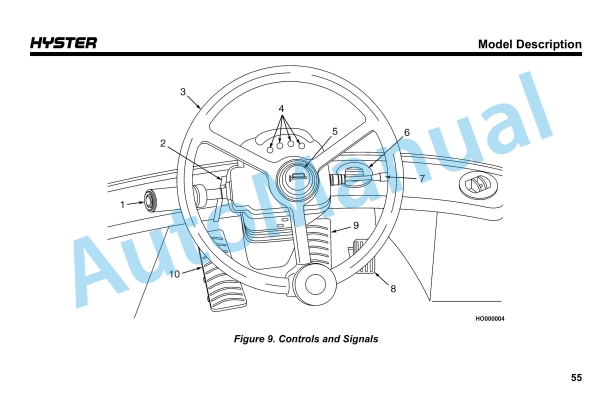
- 1.3.5. Controls, Instruments, Indicators, and Switches
- 1.3.5.1. Regeneration
- 1.3.5.2. Stationary Regeneration Procedure
- 1.3.5.3. LLMI (Longitudinal Load Moment Indicator) Indicator Lights
- 1.3.6. Container Handler Control Box
- 1.3.7. Automatic Greasing System Display (Optional)
- 1.3.8. Rear View Camera
- 1.4. Operating Procedures
- 1.4.1. General
- 1.4.1.1. Know Your ReachStacker
- 1.4.1.2. Stability and Center of Gravity
- 1.4.1.3. Capacity (Weight and Load Center)
- 1.4.1.4. LLMI (Longitudinal Load Moment Indicator)
- 1.4.2. Inspection Before Operation
- 1.4.2.1. Checks With the Engine Stopped
- 1.4.3. Starting Procedures
- 1.4.3.1. Starting a truck with Telemetry Acces Option
- 1.4.3.2. Starting a truck with Telemetry Verification Option
- 1.4.3.3. Starting the Truck
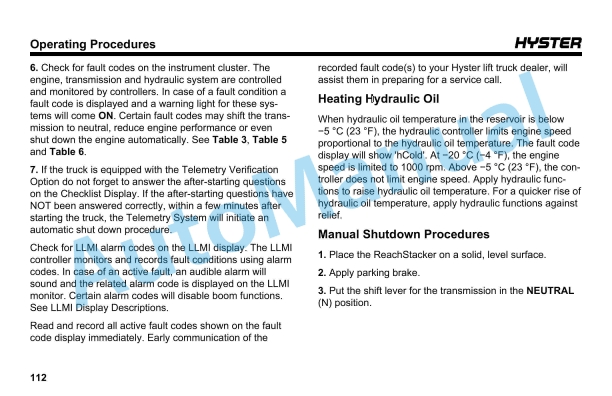
- 1.4.4. Heating Hydraulic Oil
- 1.4.5. Manual Shutdown Procedures
- 1.4.6. Derating and Automatic Shutdown Procedures
- 1.4.6.1. Empty Seat Engine Shutdown
- 1.4.6.2. Operator Presence System (OPS)
- 1.4.7. Non-Power Sliding Cab System
- 1.4.8. Powered Sliding Cab System
- 1.4.8.1. Emergency Evacuation
- 1.4.9. Automatic Greasing System (Optional)
- 1.4.10. Checks With the Engine Running
- 1.4.11. Operating Techniques
- 1.4.11.1. Basic Operating Procedures
- 1.4.11.2. Driving and Direction Changes
- 1.4.11.3. Inching/Braking
- 1.4.11.4. Steering (Turning)
- 1.4.11.5. Traveling
- 1.4.11.6. The Longitudinal Load Moment Indicator (LLMI)
- 1.4.11.7. Stabilizer Operation
- 1.4.11.8. Load Handling, How to Handle Containers
- 1.4.11.9. Load Handling
- 1.4.11.10. System Interrupts
- 1.4.11.11. System Interrupt Overrides
- 1.4.11.12. Degree Rotation Override
- 1.4.11.13. LLMI Override
- 1.4.11.14. Emergency Lowering
- 1.4.11.15. Lift Interrupt Override
- 1.4.11.16. Lowering Interrupt Override
- 1.4.11.17. Twist Lock Override
- 1.4.11.18. Load Handling, Using a Sling
- 1.4.12. Attachments
- 1.4.13. Stopping
- 1.4.14. Parking
- 1.5. Maintenance
- 1.5.1. General
- 1.5.1.1. Serial Number Data
- 1.5.2. How to Move a Disabled ReachStacker
- 1.5.2.1. How to Tow the ReachStacker
- 1.5.3. How to Put a ReachStacker on Blocks
- 1.5.3.1. How to Raise the Drive Tires
- 1.5.3.2. How to Raise the Steer Tires
- 1.5.4. How to Clean a ReachStacker
- 1.6. Periodic Maintenance Schedule
- 1.7. Container Attachment Maintenance
- 1.7.1. Initial Inspection
- 1.7.2. Periodic Maintenance
- 1.8. Maintenance Procedures Every 8 Hours or Daily
- 1.8.1. How to Make Checks With the Engine Stopped
- 1.8.1.1. Warning and Safety Labels
- 1.8.1.2. Boom, Rotator, and Spreader
- 1.8.1.3. Hydraulic Tank Breathers
- 1.8.1.4. Fuel, Oil, or Coolant Leaks
- 1.8.1.5. Radiator Sections for Engine Coolant, Charge Air Cooler, Transmission and Hydraulic Oil
- 1.8.1.6. Windshield Washer Fluid
- 1.8.1.7. Hydraulic System Oil
- 1.8.1.8. Engine Oil Level
- 1.8.2. How to Make Checks With Engine Running
- 1.8.2.1. Seat Belt, Seat Rails, and Steering Column
- 1.8.2.2. Steering Column Latch
- 1.8.2.3. Gauges, Lights, Horn, Fuses, and Relays
- 1.8.2.4. Windows and Mirrors
- 1.8.2.5. Fault Codes
- 1.8.2.6. Engine Air Filter
- 1.8.2.7. Coolant Level
- 1.8.2.8. High Pressure Brake Cooling Filter
- 1.8.2.9. Engine Oil Pressure
- 1.8.2.10. Fuel Level
- 1.8.2.11. DEF Level
- 1.8.2.12. Control Levers and Pedals
- 1.8.2.13. Parking Brake
- 1.8.2.14. Service Brakes
- 1.8.2.15. Steering System
- 1.8.2.16. Boom, Rotator, and Spreader Operation
- 1.8.2.17. Signals From the Container Handler Control System
- 1.8.2.18. Signals From the LLMI
- 1.8.2.19. Transmission
- 1.8.2.20. Operator Presence System
- 1.8.3. How to Add Fuel to the ReachStacker
- 1.8.4. How to Add DEF to the Lift Truck
- 1.8.5. Wheels, Tires and Tire Pressure
- 1.8.5.1. Daily and Every 250 Hours
- 1.8.5.2. Remove Wheels from Lift Truck
- 1.8.5.3. Remove Tire from Wheel
- 1.8.5.4. Install Tire on Wheel
- 1.8.5.5. Adding Air Pressure to Tires
- 1.8.5.6. Install Wheels on Lift Truck
- 1.8.5.7. Wheel Nuts on Drive and Steer Wheels
- 1.8.6. How to Put Internal Combustion Engine (ICE) ReachStacker in Storage
- 1.8.6.1. Short-Term Storage
- 1.8.6.2. Long-Term Storage
- 1.8.7. While the ReachStacker is in Storage
- 1.8.8. How to Put Batteries in Storage
- 1.8.9. Putting a Stored ReachStacker Back Into Service
- 1.8.10. How to Move a ReachStacker on a Transport
- 1.8.10.1. Loading
- 1.8.10.2. Unloading
- 1.8.11. Preparation After Transport
- 1.8.12. Operating Procedures for a New or Rebuilt Engine
- 1.9. Capacities and Specifications
- 1.9.1. Fuses and Relays
- 1.9.1.1. Main Electrical Supply
- 2. C289 Op Manual ELME Spreader
- 2.1. Foreword
- 2.1.1. To OWNERS, USERS, and OPERATORS
- 2.2. Warning
- 2.3. Model Description
- 2.3.1. General
- 2.3.2. Operator Protection Equipment
- 2.3.3. Nameplate
- 2.3.4. Safety Labels
- 2.3.5. Controls, Instruments, Indicators, and Switches
- 2.3.5.1. Regeneration
- 2.3.5.2. Stationary Regeneration Procedure
- 2.3.5.3. LLMI (Longitudinal Load Moment Indicator) Indicator Lights
- 2.3.6. Container Handler Control Box
- 2.3.7. Automatic Greasing System Display (Optional)
- 2.3.8. Rear View Camera
- 2.4. Operating Procedures
- 2.4.1. General
- 2.4.1.1. Know Your ReachStacker
- 2.4.1.2. Stability and Center of Gravity
- 2.4.1.3. Capacity (Weight and Load Center)
- 2.4.1.4. LLMI (Longitudinal Load Moment Indicator)
- 2.4.2. Inspection Before Operation
- 2.4.2.1. Checks With the Engine Stopped
- 2.4.3. Starting Procedures
- 2.4.3.1. Starting a truck with Telemetry Acces Option
- 2.4.3.2. Starting a truck with Telemetry Verification Option
- 2.4.3.3. Starting the Truck
- 2.4.4. Heating Hydraulic Oil
- 2.4.5. Manual Shutdown Procedures
- 2.4.6. Derating and Automatic Shutdown Procedures
- 2.4.6.1. Empty Seat Engine Shutdown
- 2.4.6.2. Operator Presence System (OPS)
- 2.4.7. Non-Power Sliding Cab System
- 2.4.8. Powered Sliding Cab System
- 2.4.8.1. Emergency Evacuation
- 2.4.9. Automatic Greasing System (Optional)
- 2.4.10. Checks With the Engine Running
- 2.4.11. Operating Techniques
- 2.4.11.1. Basic Operating Procedures
- 2.4.11.2. Driving and Direction Changes
- 2.4.11.3. Inching/Braking
- 2.4.11.4. Steering (Turning)
- 2.4.11.5. Traveling
- 2.4.11.6. The Longitudinal Load Moment Indicator (LLMI)
- 2.4.11.7. Stabilizer Operation
- 2.4.11.8. Load Handling, How to Handle Containers
- 2.4.11.9. Load Handling
- 2.4.11.10. System Interrupts
- 2.4.11.11. System Interrupt Overrides
- 2.4.11.12. Degree Rotation Override
- 2.4.11.13. LLMI Override
- 2.4.11.14. Emergency Lowering
- 2.4.11.15. Lift Interrupt Override
- 2.4.11.16. Lowering Interrupt Override
- 2.4.11.17. Twist Lock Override
- 2.4.11.18. Load Handling, Using a Sling
- 2.4.12. Attachments
- 2.4.13. Stopping
- 2.4.14. Parking
- 2.5. Maintenance
- 2.5.1. General
- 2.5.1.1. Serial Number Data
- 2.5.2. How to Move a Disabled ReachStacker
- 2.5.2.1. How to Tow the ReachStacker
- 2.5.3. How to Put a ReachStacker on Blocks
- 2.5.3.1. How to Raise the Drive Tires
- 2.5.3.2. How to Raise the Steer Tires
- 2.5.4. How to Clean a ReachStacker
- 2.6. Periodic Maintenance Schedule
- 2.7. Container Attachment Maintenance
- 2.7.1. Initial Inspection
- 2.7.2. Periodic Maintenance
- 2.8. Maintenance Procedures Every 8 Hours or Daily
- 2.8.1. How to Make Checks With the Engine Stopped
- 2.8.1.1. Warning and Safety Labels
- 2.8.1.2. Boom, Rotator, and Spreader
- 2.8.1.3. Hydraulic Tank Breathers
- 2.8.1.4. Fuel, Oil, or Coolant Leaks
- 2.8.1.5. Radiator Sections for Engine Coolant, Charge Air Cooler, Transmission and Hydraulic Oil
- 2.8.1.6. Windshield Washer Fluid
- 2.8.1.7. Hydraulic System Oil
- 2.8.1.8. Engine Oil Level
- 2.8.2. How to Make Checks With Engine Running
- 2.8.2.1. Seat Belt, Seat Rails, and Steering Column
- 2.8.2.2. Steering Column Latch
- 2.8.2.3. Gauges, Lights, Horn, Fuses, and Relays
- 2.8.2.4. Windows and Mirrors
- 2.8.2.5. Fault Codes
- 2.8.2.6. Engine Air Filter
- 2.8.2.7. Coolant Level
- 2.8.2.8. High Pressure Brake Cooling Filter
- 2.8.2.9. Engine Oil Pressure
- 2.8.2.10. Fuel Level
- 2.8.2.11. DEF Level
- 2.8.2.12. Control Levers and Pedals
- 2.8.2.13. Parking Brake
- 2.8.2.14. Service Brakes
- 2.8.2.15. Steering System
- 2.8.2.16. Boom, Rotator, and Spreader Operation
- 2.8.2.17. Signals From the Container Handler Control System
- 2.8.2.18. Signals From the LLMI
- 2.8.2.19. Transmission
- 2.8.2.20. Operator Presence System
- 2.8.3. How to Add Fuel to the ReachStacker
- 2.8.4. How to Add DEF to the Lift Truck
- 2.8.5. Wheels, Tires and Tire Pressure
- 2.8.5.1. Daily and Every 250 Hours
- 2.8.5.2. Remove Wheels from Lift Truck
- 2.8.5.3. Remove Tire from Wheel
- 2.8.5.4. Install Tire on Wheel
- 2.8.5.5. Adding Air Pressure to Tires
- 2.8.5.6. Install Wheels on Lift Truck
- 2.8.5.7. Wheel Nuts on Drive and Steer Wheels
- 2.8.6. How to Put Internal Combustion Engine (ICE) ReachStacker in Storage
- 2.8.6.1. Short-Term Storage
- 2.8.6.2. Long-Term Storage
- 2.8.7. While the ReachStacker is in Storage
- 2.8.8. How to Put Batteries in Storage
- 2.8.9. Putting a Stored ReachStacker Back Into Service
- 2.8.10. How to Move a ReachStacker on a Transport
- 2.8.10.1. Loading
- 2.8.10.2. Unloading
- 2.8.11. Preparation After Transport
- 2.8.12. Operating Procedures for a New or Rebuilt Engine
- 2.9. Capacities and Specifications
- 2.9.1. Fuses and Relays
- 2.9.1.1. Main Electrical Supply
- 3. C289 Op Manual TIL Spreader
- 3.1. Foreword
- 3.1.1. To OWNERS, USERS, and OPERATORS
- 3.2. Warning
- 3.3. Model Description
- 3.3.1. General
- 3.3.2. Operator Protection Equipment
- 3.3.3. Nameplate
- 3.3.4. Safety Labels
- 3.3.5. Controls, Instruments, Indicators, and Switches
- 3.3.5.1. Regeneration
- 3.3.5.2. Stationary Regeneration Procedure
- 3.3.5.3. LLMI (Longitudinal Load Moment Indicator) Indicator Lights
- 3.3.6. Container Handler Control Box
- 3.3.7. Automatic Greasing System Display (Optional)
- 3.3.8. Rear View Camera
- 3.4. Operating Procedures
- 3.4.1. General
- 3.4.1.1. Know Your ReachStacker
- 3.4.1.2. Stability and Center of Gravity
- 3.4.1.3. Capacity (Weight and Load Center)
- 3.4.1.4. LLMI (Longitudinal Load Moment Indicator)
- 3.4.2. Inspection Before Operation
- 3.4.2.1. Checks With the Engine Stopped
- 3.4.3. Starting Procedures
- 3.4.3.1. Starting a truck with Telemetry Acces Option
- 3.4.3.2. Starting a truck with Telemetry Verification Option
- 3.4.3.3. Starting the Truck
- 3.4.4. Heating Hydraulic Oil
- 3.4.5. Manual Shutdown Procedures
- 3.4.6. Derating and Automatic Shutdown Procedures
- 3.4.6.1. Empty Seat Engine Shutdown
- 3.4.6.2. Operator Presence System (OPS)
- 3.4.7. Non-Power Sliding Cab System
- 3.4.8. Powered Sliding Cab System
- 3.4.8.1. Emergency Evacuation
- 3.4.9. Automatic Greasing System (Optional)
- 3.4.10. Checks With the Engine Running
- 3.4.11. Operating Techniques
- 3.4.11.1. Basic Operating Procedures
- 3.4.11.2. Driving and Direction Changes
- 3.4.11.3. Inching/Braking
- 3.4.11.4. Steering (Turning)
- 3.4.11.5. Traveling
- 3.4.11.6. The Longitudinal Load Moment Indicator (LLMI)
- 3.4.11.7. Stabilizer Operation
- 3.4.11.8. Load Handling, How to Handle Containers
- 3.4.11.9. Load Handling
- 3.4.11.10. System Interrupts
- 3.4.11.11. System Interrupt Overrides
- 3.4.11.12. Degree Rotation Override
- 3.4.11.13. LLMI Override
- 3.4.11.14. Emergency Lowering
- 3.4.11.15. Lift Interrupt Override
- 3.4.11.16. Lowering Interrupt Override
- 3.4.11.17. Twist Lock Override
- 3.4.11.18. Load Handling, Using a Sling
- 3.4.12. Attachments
- 3.4.13. Stopping
- 3.4.14. Parking
- 3.5. Maintenance
- 3.5.1. General
- 3.5.1.1. Serial Number Data
- 3.5.2. How to Move a Disabled ReachStacker
- 3.5.2.1. How to Tow the ReachStacker
- 3.5.3. How to Put a ReachStacker on Blocks
- 3.5.3.1. How to Raise the Drive Tires
- 3.5.3.2. How to Raise the Steer Tires
- 3.5.4. How to Clean a ReachStacker
- 3.6. Periodic Maintenance Schedule
- 3.7. Container Attachment Maintenance
- 3.7.1. Initial Inspection
- 3.7.2. Periodic Maintenance
- 3.8. Maintenance Procedures Every 8 Hours or Daily
- 3.8.1. How to Make Checks With the Engine Stopped
- 3.8.1.1. Warning and Safety Labels
- 3.8.1.2. Boom, Rotator, and Spreader
- 3.8.1.3. Hydraulic Tank Breathers
- 3.8.1.4. Fuel, Oil, or Coolant Leaks
- 3.8.1.5. Radiator Sections for Engine Coolant, Charge Air Cooler, Transmission and Hydraulic Oil
- 3.8.1.6. Windshield Washer Fluid
- 3.8.1.7. Hydraulic System Oil
- 3.8.1.8. Engine Oil Level
- 3.8.2. How to Make Checks With Engine Running
- 3.8.2.1. Seat Belt, Seat Rails, and Steering Column

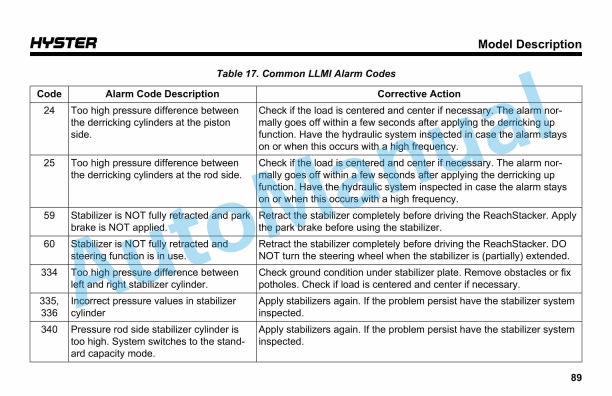
%20Reachstacker%20Operation%20And%20Maintenance%20Manual&url=https://pdfrepairmanual.com/docs/hyster-rs45-27ch-rs45-31ch-rs46-29ch-rs46-33ch-c289-reachstacker-operation-and-maintenance-manual/&media=https://pdfrepairmanual.com/wp-content/uploads/2026/01/hyster-rs45-27ch-rs45-31ch-rs46-29ch-rs46-33ch-c289-reachstacker-operation-and-maintenance-manual-1.jpg)
%20Operating%20Manual&url=https://pdfrepairmanual.com/docs/hyster-pc1-5-pcs1-5ut-a6w9-operating-manual/&media=https://pdfrepairmanual.com/wp-content/uploads/2026/01/hyster-pc15-pcs15ut-a6w9-operating-manual-1.jpg)
%20Operating%20Manual&url=https://pdfrepairmanual.com/docs/hyster-pc1-5-a6w9-operating-manual/&media=https://pdfrepairmanual.com/wp-content/uploads/2026/01/hyster-pc15-a6w9-operating-manual-1.jpg)
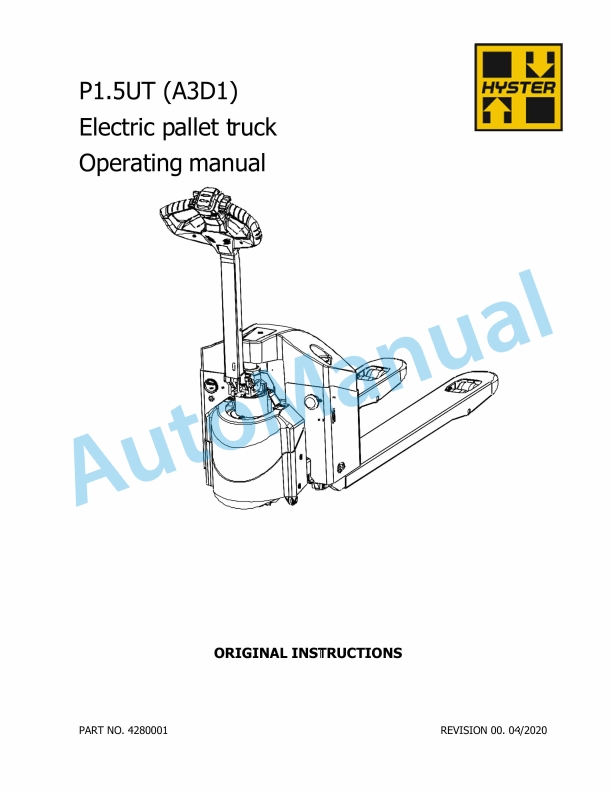
%20Electric%20Pallet%20Truck%20Operating%20Manual&url=https://pdfrepairmanual.com/docs/hyster-p1-5ut-a3d1-electric-pallet-truck-operating-manual/&media=https://pdfrepairmanual.com/wp-content/uploads/2026/01/hyster-p15ut-a3d1-electric-pallet-truck-operating-manual-1.jpg)
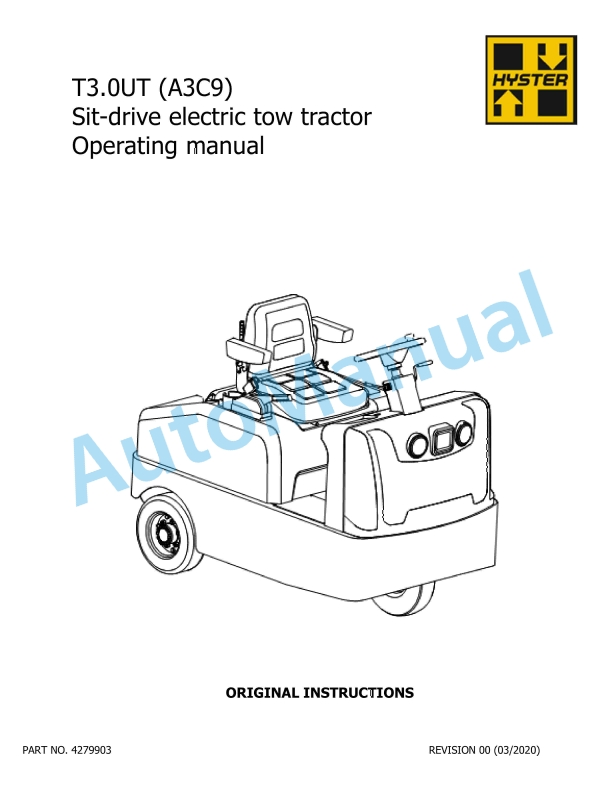
%20Sit-Drive%20Electric%20Tow%20Tractor%20Operation%20And%20Maintenance%20Manual&url=https://pdfrepairmanual.com/docs/hyster-t3-0ut-a3c9-sit-drive-electric-tow-tractor-operation-and-maintenance-manual/&media=https://pdfrepairmanual.com/wp-content/uploads/2026/01/hyster-t30ut-a3c9-sit-drive-electric-tow-tractor-operation-and-maintenance-manual-1.jpg)
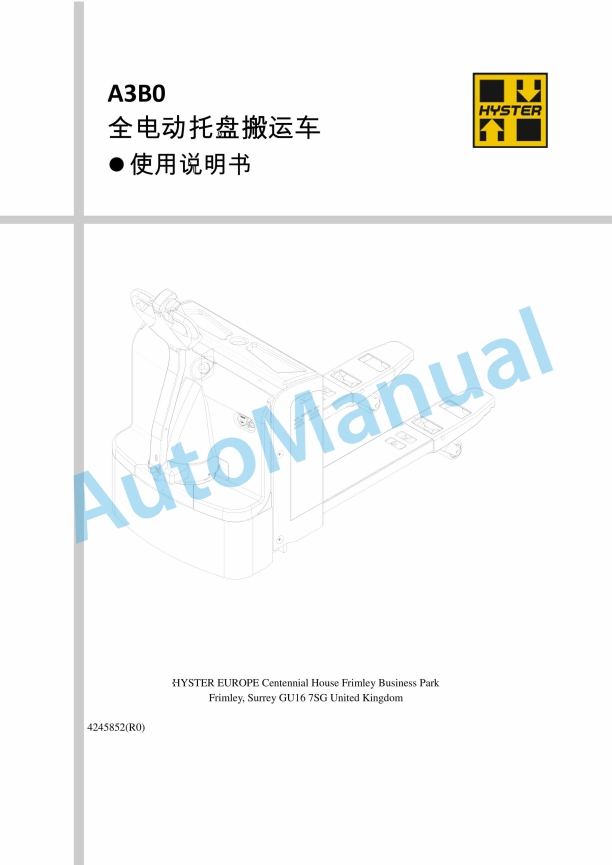
%20Pedestrian%20Pallet%20Truck%20Operation%20Manual&url=https://pdfrepairmanual.com/docs/hyster-p2-0k-ut-a3b0-pedestrian-pallet-truck-operation-manual/&media=https://pdfrepairmanual.com/wp-content/uploads/2026/01/hyster-p20k-ut-a3b0-pedestrian-pallet-truck-operation-manual-1.jpg)
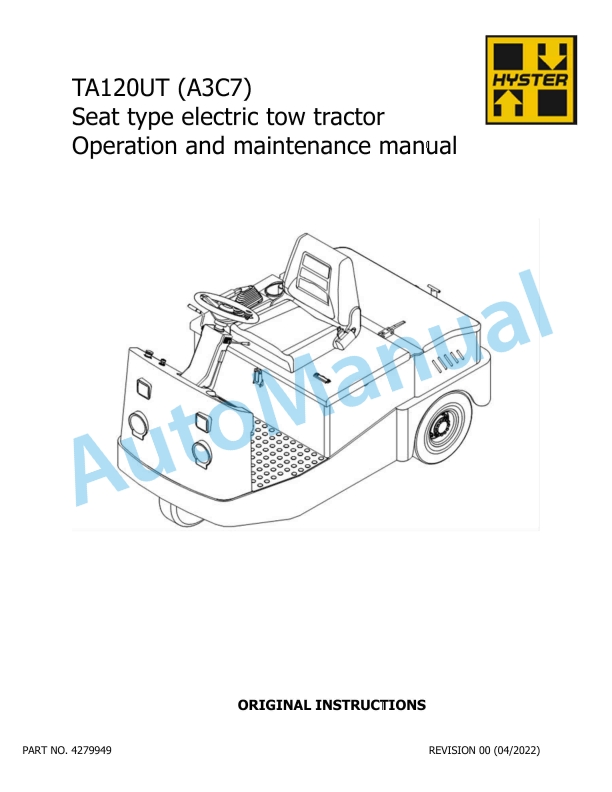
%20Seat%20Type%20Electric%20Tow%20Tractor%20Operation%20And%20Maintenance%20Manual&url=https://pdfrepairmanual.com/docs/hyster-ta120ut-a3c7-seat-type-electric-tow-tractor-operation-and-maintenance-manual/&media=https://pdfrepairmanual.com/wp-content/uploads/2026/01/hyster-ta120ut-a3c7-seat-type-electric-tow-tractor-operation-and-maintenance-manual-1.jpg)
There are no reviews yet.