
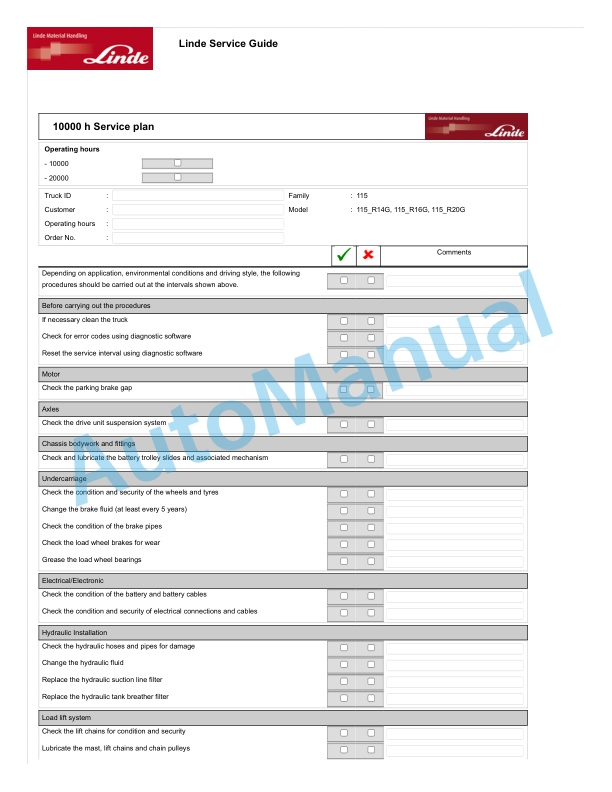
Description
-
Model List:
- R14
- R14G
- R16
- R16G
- R20
- R20G
- 1. Electric reach truckR10C.12C.14C11, R14.16.2012…N12, R14HD.16HD12
- 1.1. Table of content
- 1.2. Introduction and general description
- 1.2.1. Introduction
- 1.2.2. Legal requirements for placing on the market
- 1.2.3. General description
- 1.3. Safety
- 1.3.1. Operator safety guidelines
- 1.3.2. Residual risks
- 1.3.3. Stability
- 1.3.4. In the event of tipover
- 1.3.5. Noise emission levels
- 1.3.6. Frequency characteristic for human body vibrations
- 1.4. Getting to know the truck
- 1.4.1. Location of identification plates and labels
- 1.4.2. Truck type.capacity plate
- 1.4.3. General view of truck
- 1.4.4. Operating controls and indicators
- 1.4.5. Operators display
- 1.4.6. Lift height indicator (LHI)
- 1.4.7. Definition of direction of travel
- 1.5. Operation
- 1.5.1. Runningin instructions
- 1.5.2. Preshift checks
- 1.5.3. The battery
- 1.5.4. Operator adjustments
- 1.5.5. Braking twin pedal
- 1.5.6. Braking single pedal
- 1.5.7. Driving twin pedal
- 1.5.8. Driving single pedal
- 1.5.9. Travelling on an incline
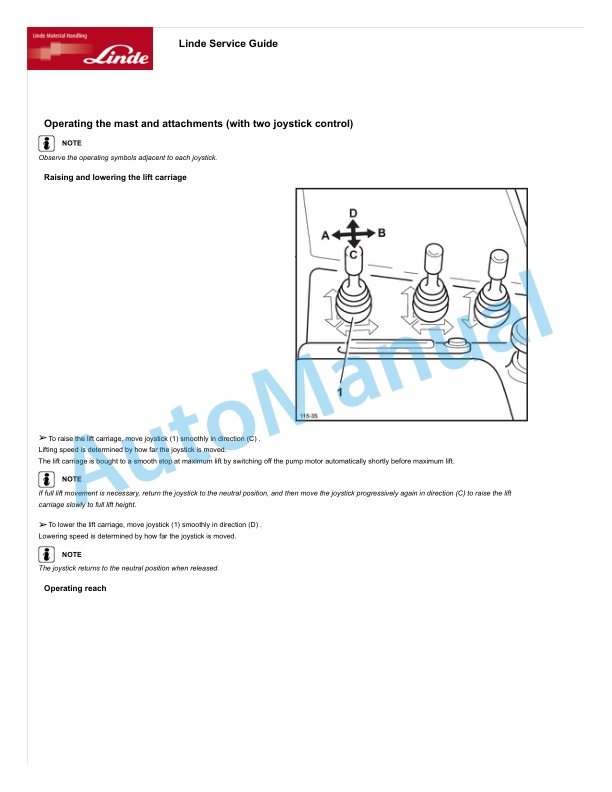
- 1.5.10. Operating the mast and attachments (with two joystick control)
- 1.5.11. Operating the mast and attachments (with four joystick control)
- 1.5.12. Handling loads
- 1.5.13. Before leaving the truck
- 1.5.14. Cold store cabin
- 1.5.15. Ambient temperature cabin
- 1.5.16. Steering (Option)
- 1.5.17. Opposite direction steering (Option)
- 1.5.18. Height preselector LPS (option)
- 1.5.19. Operator code entry (Option)
- 1.5.20. Data Logger (Option)
- 1.5.21. Truck data management LFM (Option)
- 1.5.22. Side guidance for drivein racking
- 1.5.23. Closed circuit television
- 1.6. Maintenance
- 1.6.1. Maintenance safety guidelines
- 1.6.2. Report of Thorough Examination
- 1.6.3. Covers and cowlings
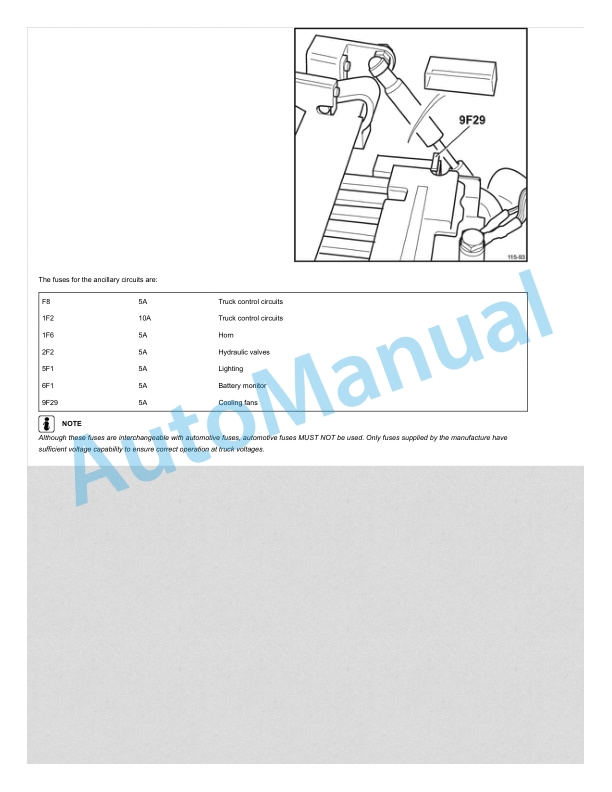
- 1.6.4. Fuses
- 1.6.5. Emergency lower
- 1.6.6. Emergency steering and parking brake release
- 1.6.7. Slinging the truck
- 1.6.8. Securing for transportation
- 1.6.9. Jacking the truck
- 1.6.10. Towing procedure
- 1.6.11. Mast unit
- 1.6.12. Securing the mast against tilting (Compact version)
- 1.6.13. Recommended lubricants
- 1.6.14. Inspection and maintenance data
- 1.6.15. Inspection and maintenance schedule
- 1.6.16. Inspection and maintenance as required
- 1.6.17. hr Inspection and maintenance (250 hr cold store)
- 1.6.18. hr Inspection and maintenance (1000 hr cold store)
- 1.6.19. hr Inspection and maintenance (2500 hr cold store)
- 1.6.20. hr Inspection and maintenance (5000 hr cold store)
- 1.6.21. Taking the truck out of operation
- 1.6.22. Decommissioning the truck
- 1.7. Technical data
- 1.7.1. Battery data
- 1.7.2. Dimensions
- 1.7.3. Technical data 1.4 tonne capacity
- 1.7.4. Technical data 1.4 tonne capacity (heavy duty)
- 1.7.5. Technical data 1.4 tonne capacity (narrow chassis)
- 1.7.6. Technical data 1.6 tonne capacity
- 1.7.7. Technical data 1.6 tonne capacity (heavy duty)
- 1.7.8. Technical data 1.6 tonne capacity (narrow chassis)
- 1.7.9. Technical data 2.0 tonne capacity
- 1.7.10. Technical data 2.0 tonne capacity (narrow chassis)
- 1.7.11. Mast variations
- 1.7.12. Dimensions (compact version)
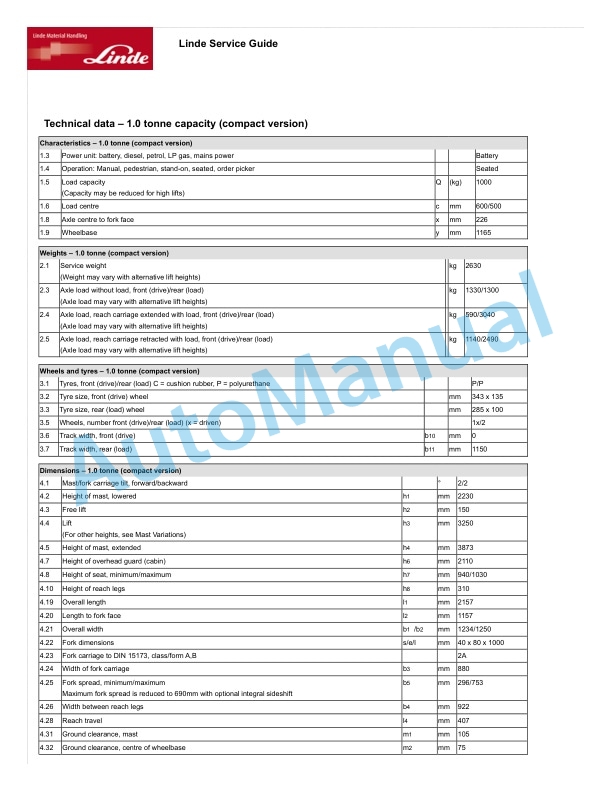
- 1.7.13. Technical data 1.0 tonne capacity (compact version)
- 1.7.14. Technical data 1.2 tonne capacity (compact version)
- 1.7.15. Technical data 1.4 tonne capacity (compact version)
- 1.7.16. Mast variations (compact version)
- 2. Electric reach truckR14G12, R16G12, R20G12
- 2.1. Table of content
- 2.2. Introduction and general description
- 2.2.1. Introduction
- 2.2.2. EC declaration of conformity
- 2.2.3. General description
- 2.3. Safety
- 2.3.1. Operator safety guidelines
- 2.3.2. Residual risks
- 2.3.3. Stability
- 2.3.4. In the event of tipover
- 2.3.5. Noise emission levels
- 2.3.6. Frequency characteristic for human body vibrations
- 2.4. Getting to know the truck
- 2.4.1. Location of identification plates and labels
- 2.4.2. Truck type.capacity plate
- 2.4.3. General view of truck
- 2.4.4. Operating controls and indicators
- 2.4.5. Operators display
- 2.4.6. Definition of direction of travel
- 2.5. Operation
- 2.5.1. Runningin instructions
- 2.5.2. Preshift checks
- 2.5.3. The battery
- 2.5.4. Operator adjustments
- 2.5.5. Braking twin pedal
- 2.5.6. Braking single pedal
- 2.5.7. Driving twin pedal
- 2.5.8. Driving single pedal
- 2.5.9. Travelling on an incline
- 2.5.10. Operating the mast and attachments (with two joystick control)
- 2.5.11. Operating the mast and attachments (with four joystick control)
- 2.5.12. Handling loads
- 2.5.13. Before leaving the truck
- 2.5.14. Opposite direction steering (Option)
- 2.5.15. Operator code entry (Option)
- 2.5.16. Data Logger (Option)
- 2.5.17. Truck data management LFM (Option)
- 2.5.18. Ambient temperature cabin
- 2.6. Maintenance
- 2.6.1. Maintenance safety guidelines
- 2.6.2. Report of Thorough Examination
- 2.6.3. Covers and cowlings
- 2.6.4. Fuses
- 2.6.5. Emergency lower
- 2.6.6. Emergency steering and parking brake release
- 2.6.7. Slinging the truck
- 2.6.8. Securing for transportation
- 2.6.9. Jacking the truck
- 2.6.10. Towing procedure
- 2.6.11. Mast unit
- 2.6.12. Recommended lubricants
- 2.6.13. Inspection and maintenance data
- 2.6.14. Routine inspection and maintenance
- 2.6.15. Service plans
- 2.6.16. Motor
- 2.6.17. Axles
- 2.6.18. Chassis, bodywork and fittings
- 2.6.19. Undercarriage
- 2.6.20. Controls
- 2.6.21. Electrical . Electronic
- 2.6.22. Hydraulic installation
- 2.6.23. Load lift system
- 2.6.24. Special equipment and accessories
- 2.6.25. Taking the truck out of operation
- 2.6.26. Decommissioning the truck
- 2.7. Technical data
- 2.7.1. Battery data
- 2.7.2. Dimensions
- 2.7.3. Technical data 1.4 tonne capacity
- 2.7.4. Technical data 1.6 tonne capacity
- 2.7.5. Technical data 2.0 tonne capacity
- 2.7.6. Mast variations
- 3. Lithiumion batteryWNE, WEB Lithium BatteryWNE lithiumion battery
- 3.1. Table of content
- 3.2. Overview
- 3.2.1. Purpose of use
- 3.2.2. Lithium battery product series
- 3.2.3. Scope of use
- 3.2.4. Target personnel
- 3.2.5. Environmental protection
- 3.3. Safety
- 3.3.1. Safety philosophy
- 3.3.2. Customer obligations
- 3.3.3. Personnel qualification requirements
- 3.3.4. General safety requirements
- 3.3.5. Responding to emergencies
- 3.3.6. Explanation of technical terms
- 3.4. General view
- 3.4.1. Product appearance
- 3.5. Operating instructions
- 3.5.1. Operating instructions
- 3.5.2. Safety matters and precautions
- 3.5.3. Battery temperature properties
- 3.5.4. Battery system transportation requirements
- 3.5.5. Predriving inspection
- 3.5.6. Requirements for vehicles in normal operation
- 3.5.7. Requirements for vehicles in longterm storage
- 3.5.8. Procedure for the user to connect and disconnect electricity for discharge
- 3.5.9. User charging procedure and precautions
- 3.5.10. Lithium battery replacement
- 3.5.11. Description of display unit screens
- 3.5.12. Differences between integrated and nonintegrated product malfunction displays
- 3.6. Maintenance
- 3.6.1. Battery maintenance operations
- 3.6.2. Regular inspection requirements
- 3.7. Warranty description
- 3.7.1. Quality assurance and warranty period
- 3.7.2. Scope of quality assurance and warranty responsibility exemptions



There are no reviews yet.