
Description
-
Model List:
- L12 EXAP
- L12 EXL
- L12 EXL AP
- L12 EXL SP
- L12 EXSP
- L14 EXAP
- L14 EXL
- L14 EXL AP
- L14 EXL SP
- L14 EXSP
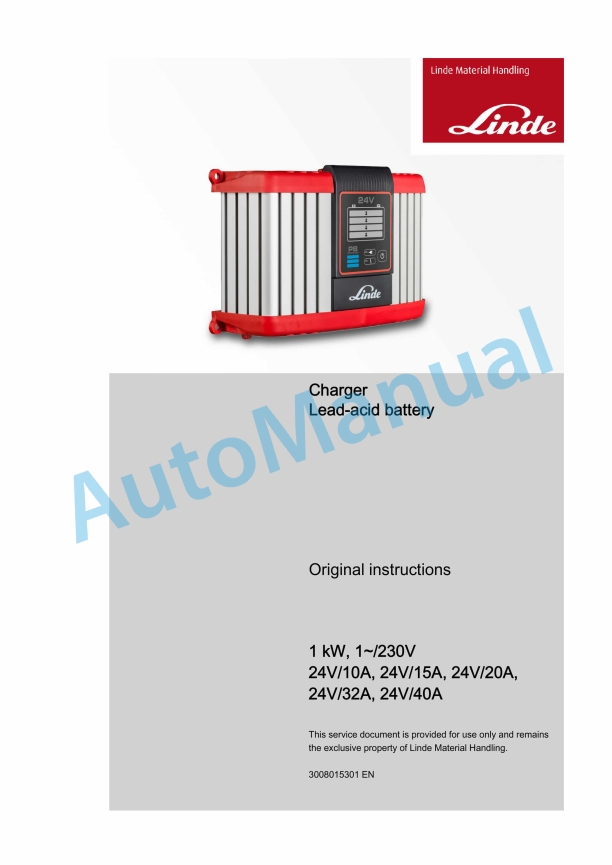
- 1. Leadacid battery charger 24V
- 2. Leadacid battery charger 24V . 48V
- 3. Leadacid battery charger 24V . 48V . 80V
- 4. Pallet stacker .Double pallet stackerL12.14 L AP.SP EX, D14 SP Ex
- 4.1. Table of content
- 4.2. Introduction
- 4.2.1. Your industrial truck
- 4.2.2. Conformity marking
- 4.2.3. Declaration that reflects the content of the declaration of conformity
- 4.2.4. Intended use
- 4.2.5. Impermissible use
- 4.2.6. Basic information on explosion protection
- 4.2.7. Symbols used
- 4.2.8. Taking delivery of the industrial truck
- 4.2.9. Documentation
- 4.2.10. Disposing of gel and lead batteries
- 4.3. Safety
- 4.3.1. Explosion protection safety guidelines
- 4.3.2. Protective equipment for explosion protection
- 4.3.3. Residual risks
- 4.3.4. Stability
- 4.3.5. Noise emission values
- 4.3.6. Vibration values for upper limbs
- 4.3.7. Competent person
- 4.4. Overview
- 4.4.1. Labels
- 4.4.2. Nameplate
- 4.4.3. Truck overview
- 4.4.4. Console
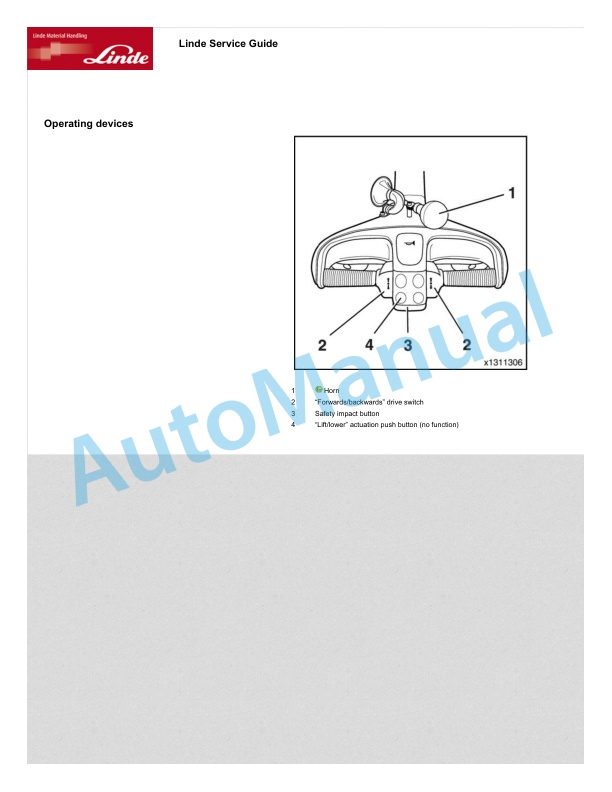
- 4.4.5. Operating devices
- 4.5. Operation
- 4.5.1. Technical description
- 4.5.2. Industrial trucks with explosion protection
- 4.5.2.1. Description of use and climatic conditions
- 4.5.2.2. Technical description of explosion protection
- 4.5.2.3. Regular testing
- 4.5.2.4. Batteries for explosion protection
- 4.5.2.5. Wheels and tyres for explosion protection
- 4.5.2.6. Checking the tyres
- 4.5.2.7. Checking the leak resistance
- 4.5.2.8. Handling consumables
- 4.5.2.9. Towing
- 4.5.3. Testing prior to initial commissioning
- 4.5.4. Preshift checks
- 4.5.5. Switching the truck on and off
- 4.5.6. Driving
- 4.5.7. Forward travel
- 4.5.8. Reverse travel
- 4.5.9. Changing the drive direction
- 4.5.10. Driving, driver on fixed platform
- 4.5.11. Steering
- 4.5.12. Using the truck on a gradient
- 4.5.13. Impact button Safety switchover
- 4.5.14. Braking
- 4.5.15. Horn
- 4.5.16. Emergency off switch
- 4.5.17. Working with a load
- 4.5.17.1. Capacity of L12L14, D12D14, D12 HP versions
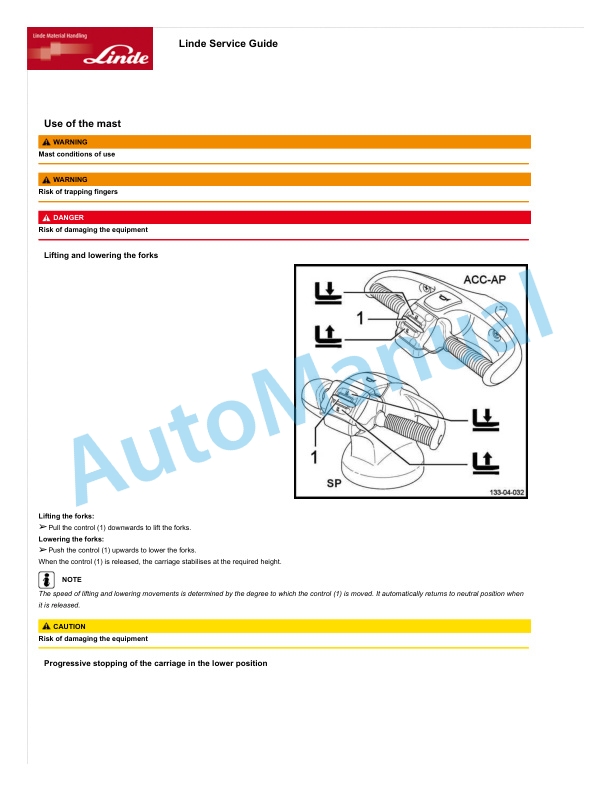
- 4.5.17.2. Use of the mast
- 4.5.17.3. Handling a single load
- 4.5.17.4. Handling two stacked pallets
- 4.5.18. Suspended platform (option)
- 4.5.19. Symmetrical handlebar (option)
- 4.5.20. Transporting and lifting the industrial truck
- 4.5.20.1. Slinging the truck
- 4.5.20.2. Lifting the truck
- 4.6. Maintenance
- 4.6.1. Safety information regarding servicing work
- 4.6.2. Technical data for inspection and maintenance
- 4.6.3. Recommended lubricants
- 4.6.4. Inspection and maintenance overview
- 4.6.4.1. Regular maintenance
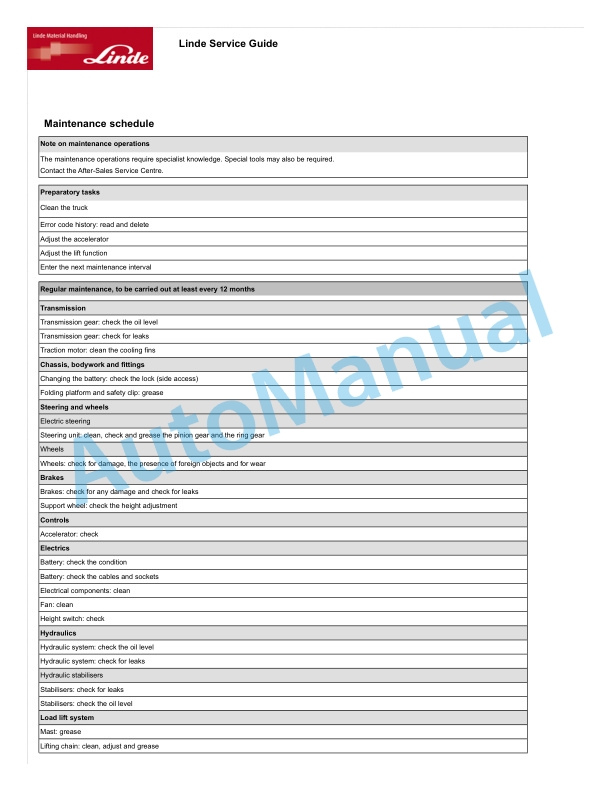
- 4.6.4.2. Maintenance schedule
- 4.6.4.3. Additional service plan for explosion protection
- 4.6.5. Preparatory tasks
- 4.6.5.1. Cleaning the industrial truck
- 4.6.5.2. Diagnostic connector
- 4.6.6. Gearbox
- 4.6.6.1. Checking the transmission gear oil level
- 4.6.6.2. Drain the transmission gear
- 4.6.7. Chassis, bodywork and fittings
- 4.6.7.1. Checking the pressuretight housings
- 4.6.7.2. Other cleaning and greasing
- 4.6.8. Chassis frame
- 4.6.8.1. Checking the condition of the wheels
- 4.6.8.2. Servicing the wheels and rollers
- 4.6.8.3. Brake test
- 4.6.8.4. Testing the safety devices specific to the AP model
- 4.6.8.5. Checking the steering
- 4.6.9. Operating devices
- 4.6.9.1. Checking that the horn is working correctly
- 4.6.9.2. Testing the drive direction twoway switch
- 4.6.9.3. Testing the emergency off switch
- 4.6.9.4. Checking the operating lever
- 4.6.10. Electrical equipment
- 4.6.10.1. Checking the condition and secure attachment of electric cables, cable connectors, cable connections and explosionprotected screw joints
- 4.6.10.2. Connecting.disconnecting the battery male connectors
- 4.6.10.3. Checking the battery charge status
- 4.6.10.4. Cleaning the battery and the battery compartment.
- 4.6.10.5. Battery maintenance
- 4.6.10.6. Charging the battery
- 4.6.10.7. Preparing battery connectors for removal
- 4.6.10.8. Side battery loading
- 4.6.10.9. Battery replacement
- 4.6.10.10. Replacing the battery using a transportation trolley
- 4.6.11. Hydraulics
- 4.6.11.1. Primary hydraulic circuit
- 4.6.11.2. Hydraulic system
- 4.6.12. Load lift system
- 4.6.12.1. Checking the antispark protection on the fork arms for wear
- 4.6.12.2. Specific mast maintenance
- 4.6.12.3. Hoist assembly
- 4.6.12.4. Hoist assembly, greasing the rings and articulations (greased option)
- 4.6.13. Troubleshooting
- 4.6.13.1. Fuses
- 4.6.13.2. Opening the hood
- 4.6.14. Storage of truck
- 4.6.15. Disposal of industrial trucks
- 4.7. Technical data
- 4.7.1. Datasheet for L12 EX AP, L12 EX L SP, L14 EX L AP model 133
- 4.7.2. Datasheet D12SPEx . D14SPEx
- 4.7.3. Ecodesign requirements for electric motors and variable speed drives


There are no reviews yet.