

Description
-
Model List:
- D65EX-17 Bull Dozer
- D65PX-17 Bull Dozer
- D65WX-17 Bull Dozer
- 1. FOREWORD
- 1.1. Before reading this manual
- 1.2. SAFETY INFORMATION
- 1.3. Noise emission levels
- 1.4. Vibration levels
- 1.4.1. Operating condition
- 1.4.2. Guide to Reduce Vibration Levels on Machine
- 1.5. INtroduction
- 1.5.1. Use of machine
- 1.5.2. Directions of machine
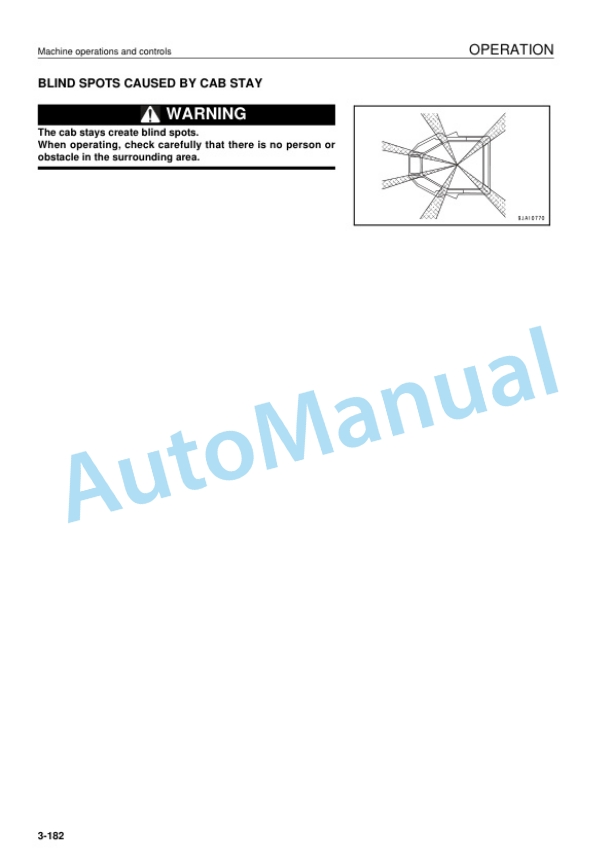
- 1.5.3. Visibility from operators seat
- 1.6. PRODUCT INFORMATION
- 1.6.1. PRoduct information number (PIN)/MachinE SERial No. plate
- 1.6.2. EPA regulatioN, Engine number plate
- 1.6.3. Service meter location
- 1.6.4. Your machinE Serial numbers and distributor
- 1.6.5. MACHINE SERIAL NUMBER PLATE
- 1.6.6. Declaration of conformity (Directive 2006/42/EC)
- 1.6.7. ATTACHMENTS AND OPTIONS
- 1.6.8. Replacement parts
- 1.6.9. Location of safety labels
- 1.6.10. safety labels
- 1.7. general precautions common to operation and maintenance
- 1.7.1. Precautions before starting operation
- 1.7.2. Preparations for safe operation
- 1.7.3. Fire prevention
- 1.7.4. Precautions when getting on or off machine
- 1.7.5. Do NOT GET CAUGHT IN WORK EQUIPMENT
- 1.7.6. Precautions related to protective structures
- 1.7.7. Unauthorized modification
- 1.7.8. Precautions related to attachments and options
- 1.7.9. Precautions when running engine inside building
- 1.8. PRecautions for operation
- 1.8.1. Precautions for jobsite
- 1.8.2. Starting engine
- 1.8.3. Operation
- 1.8.4. TRANSPORTATION
- 1.8.5. Towing
- 1.9. PRecautions for maintenance
- 1.9.1. Precautions before starting inspection and maintenance
- 1.9.2. PRecautions for inspection and maintenance
- 2. OPERATION
- 2.1. General view
- 2.1.1. General view of machine
- 2.1.2. General view of controls and gauges
- 2.2. Explanation of components
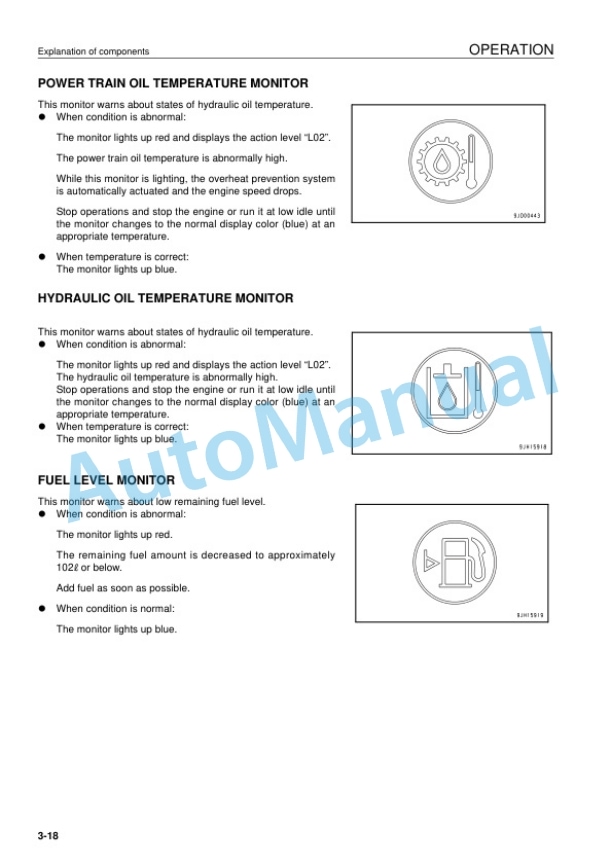
- 2.2.1. Machine monitor
- 2.2.2. Switches
- 2.2.3. Control levers and pedals
- 2.2.4. Dust indicator
- 2.2.5. Fuse
- 2.2.6. Fusible link
- 2.2.7. Accessory socket
- 2.2.8. Auxiliary electric power
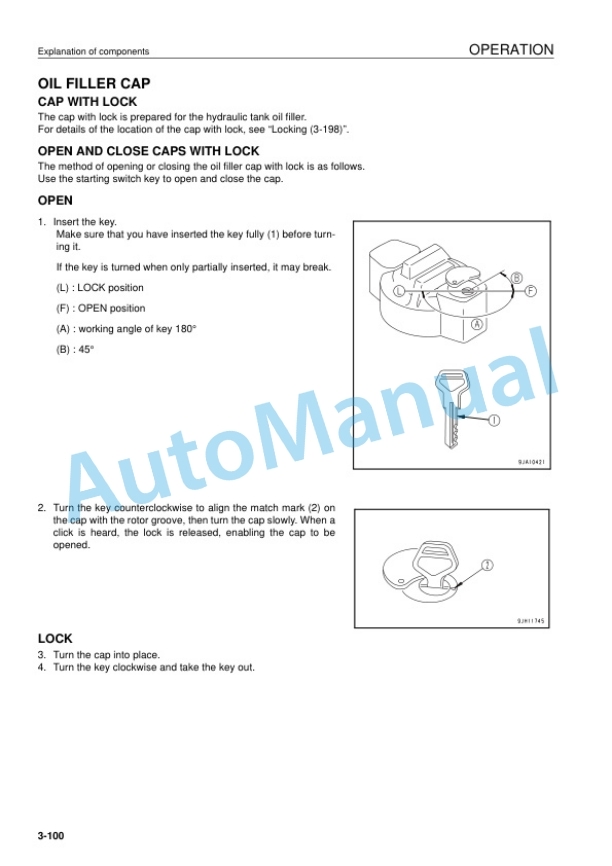
- 2.2.9. Oil filler cap
- 2.2.10. Dooropen lock
- 2.2.11. Sash glass intermediate lock
- 2.2.12. Door pocket
- 2.2.13. Ashtray
- 2.2.14. shovel holder
- 2.2.15. Fire extinguisher
- 2.2.16. Handling air conditioner
- 2.2.17. Handling radio
- 2.2.18. Battery disconnect switch
- 2.2.19. System operating lamp
- 2.2.20. Handling kDPF
- 2.2.21. Handling KCCV filter
- 2.2.22. Handling machines equipped with KOMTRAX
- 2.3. Machine operations and controls
- 2.3.1. Checks and adjustment before starting engine
- 2.3.2. STarting engine
- 2.3.3. Operations and checks after starting engine
- 2.3.4. Stopping engine
- 2.3.5. Machine operation
- 2.3.6. Shifting gears
- 2.3.7. Shifting between FORWARD and REVERSE
- 2.3.8. Steering the machine
- 2.3.9. General operation information
- 2.3.10. RECOMMENDED APPLICATIONS
- 2.3.11. Recommended mode by application
- 2.3.12. Adjusting work equipment
- 2.3.13. Parking machine
- 2.3.14. Check after finishing work
- 2.3.15. Locking
- 2.3.16. Tips for longer undercarriage life
- 2.4. Transportation
- 2.4.1. Transportation means
- 2.4.2. When removing work equipment
- 2.4.3. Loading and unloading with trailer
- 2.4.4. Lifting machine
- 2.4.5. Traveling on roads
- 2.5. COLD WEATHER OPERATION
- 2.5.1. COLD WEATHER OPERATION INFORMATION
- 2.5.2. After daily work completion
- 2.5.3. After cold weather season
- 2.6. Longterm storage
- 2.6.1. Before storage
- 2.6.2. During storage
- 2.6.3. After storage
- 2.6.4. Starting machine after longterm storage
- 2.7. Troubles and actions
- 2.7.1. Running out of fuel
- 2.7.2. TOWING THE MAchine
- 2.7.3. DisCHARGED BATTERY
- 2.7.4. Other trouble
- 3. MAINTENANCE
- 3.1. Rules for maintenance
- 3.1.1. Service Meter Reading
- 3.1.2. Komatsu Genuine Replacement Parts
- 3.1.3. Komatsu Genuine Lubricants
- 3.1.4. Always use clean washer fluid
- 3.1.5. Fresh and Clean Lubricants
- 3.1.6. Check drained oil and used filter
- 3.1.7. CAUTION FOR REFILLING OIL OR FUEL
- 3.1.8. Welding instructions
- 3.1.9. Do not drop things inside machine
- 3.1.10. Precautions for KDPF
- 3.1.11. Dusty jobsites
- 3.1.12. Avoid mixing oil
- 3.1.13. Opening and closing engine side cover
- 3.1.14. Locking inspection covers
- 3.1.15. Bleeding air from hydraulic circuit
- 3.1.16. Precautions when installing hydraulic hoses
- 3.1.17. Checks after inspection and maintenance
- 3.1.18. Fuel and lubricants to match the ambient temperature
- 3.2. Outline of maintenance
- 3.2.1. Handling oil, fuel, coolant, and performing oil clinic
- 3.2.2. HANDLING ELECTRICAL COMPONENTS
- 3.2.3. Hydraulic components
- 3.3. Standard tightening torque for bolts and nuts
- 3.3.1. Tightening torque list
- 3.4. Maintenance schedule
- 3.4.1. Maintenance schedule table
- 3.5. Maintenance procedure
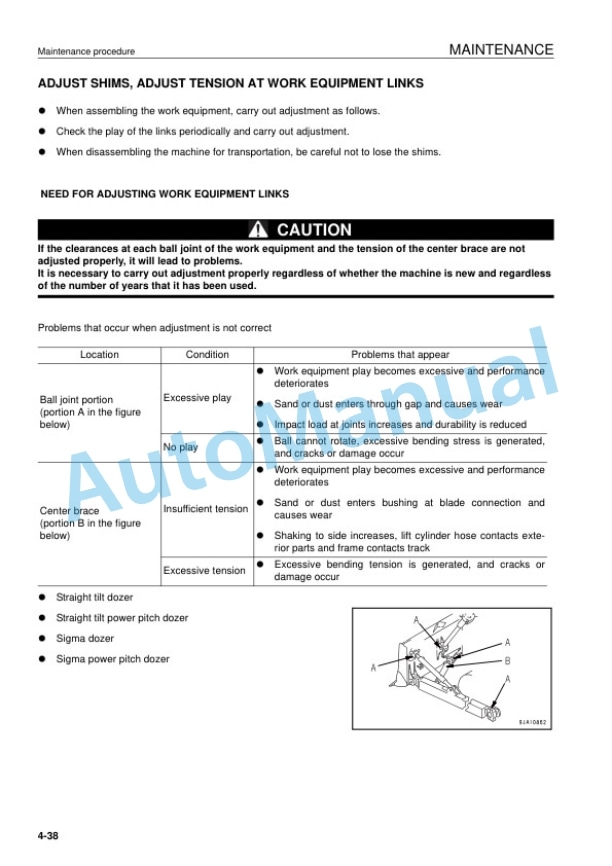
- 3.5.1. When required
- 3.5.2. Checks before starting
- 3.5.3. EVery 50 hours maintenance
- 3.5.4. Every 250 hours maintenance
- 3.5.5. Every 500 hours maintenance
- 3.5.6. Every 1000 hours maintenance
- 3.5.7. Every 2000 hours maintenance
- 3.5.8. EVery 4000 hours maintenance
- 3.5.9. Every 4500 hours maintenance
- 3.5.10. Every 8000 hours maintenance
- 4. SPECIFICATIONS
- 4.1. Specifications
- 5. ATTACHMENTS AND OPTIONS
- 5.1. General precautions
- 5.1.1. Precautions for safety
- 5.2. Handling hydraulic ripper
- 5.2.1. General view
- 5.2.2. Explanation of components
- 5.2.3. Machine operation and controls
- 5.2.4. Troubles and actions
- 5.3. Handling 3 m wide blade
- 5.3.1. General view
- 5.3.2. Machine operation and controls
- 5.3.3. Transportation
- 5.3.4. Checks and maintenance
- 5.3.5. Specifications
- 6. Replacement parts
- 6.1. Safety critical parts
- 6.1.1. Safety critical parts list
- 6.2. Consumable parts
- 6.2.1. Consumable parts list
- 6.3. Recommended fuel, coolant, and lubricant
- 6.3.1. Lubrication chart
- 6.3.2. Fuel, coolant, and lubricants to match the ambient temperature
- 6.3.3. RECOMMENDED BRANDS AND QUALITY FOR PRODUCTS OTHER THAN KOMATSU GENUINE OIL








Reviews
There are no reviews yet.