
Description
-
Model List:
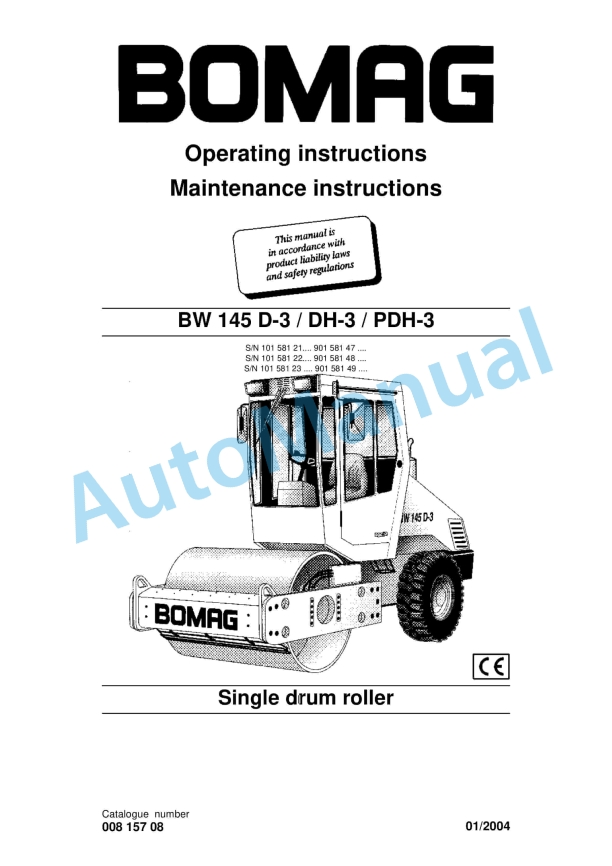
- BW 145 D-3 Single Drum Roller
- BW 145 DH-3 Single Drum Roller
- BW 145 PDH-3 Single Drum Roller
- 1. BW 145 D3 / DH3 / PDH3
- 1.1. S/N 101 581 21…. 901 581 47 ….
- 1.2. S/N 101 581 22…. 901 581 48 ….
- 1.3. S/N 101 581 23 …. 901 581 49 ….
- 2. Single drum roller
- 2.1. BOMAG machines are products from the wide range of BOMAG compaction equipment.
- 2.2. BOMAGs vast experience, together with the most uptodate production and testing methods, includ…
- 2.3. Please note
- 2.4. For your own safety you should only use BOMAGspare parts.
- 2.5. We reserve the right for technical modifications without prior notification.
- 2.6. Please fill in
- 2.7. BW 145 D3
- 2.8. BW 145 DH3
- 2.9. BW 145 PDH3
- 2.10. BW 145 D3
- 2.11. BW 145 DH3
- 2.12. BW 145 PDH3
- 2.13. Weights
- 2.14. Travel characteristics
- 2.15. Steering
- 2.16. Vibration
- 2.17. Tank contents
- 2.18. The following noise and vibration values according to the ECdirective for machines, edition (91/…
- 2.19. During operation these values may vary because of the existing operating conditions.
- 2.20. Noise value
- 2.21. Vibration value
- 2.22. General
- 2.23. Intended use
- 2.24. Unintended use
- 2.25. Who is allowed to work with the machine
- 2.26. Conversions and alterations to the machine
- 2.27. Safety notes in the operating and maintenance instructions
- 2.28. Information and safety stickers/decals on the machine
- 2.29. Loading the machine
- 2.30. Towing the machine
- 2.31. Checking the rollover protection structure (ROPS)
- 2.32. Starting the machine
- 2.33. Driving the machine
- 2.34. Parking the machine
- 2.35. Filling the fuel tank
- 2.36. Maintenance work
- 3. General notes
- 3.1. The control and warning lamps light up while the engine is running
- 4. General notes
- 5. Tests before taking into operation
- 6. Starting the engine
- 6.1. Fig. 25
- 6.2. Fig. 26
- 6.3. Fig. 27
- 6.4. Fig. 28
- 6.5. Fig. 29
- 6.6. Fig. 30
- 6.7. Fig. 31
- 6.8. Fig. 32
- 6.9. Fig. 33
- 7. Starting with jump leads
- 7.1. Fig. 34
- 8. Driving the machine
- 8.1. Fig. 35
- 8.2. Fig. 36
- 8.3. Fig. 37
- 8.4. Important notes on travel operation
- 9. Emergency exit
- 10. Operating the parking brake, stopping the machine
- 10.1. Fig. 38
- 11. Shutting the engine down
- 11.1. Fig. 39
- 11.2. Fig. 40
- 11.3. Fig. 41
- 12. Switching the vibration on and off
- 12.1. Preselecting the vibration
- 12.2. Switching the vibration on
- 12.3. Switching the vibration off
- 13. Adjusting the seat
- 13.1. Fig. 45
- 14. Operating the hood
- 14.1. Fig. 46
- 14.2. Fig. 47
- 15. Towing in case of an engine failure
- 15.1. Fig. 48
- 15.2. Fig. 49
- 15.3. Fig. 50
- 15.4. After towing
- 16. Transport
- 16.1. Fig. 53
- 16.2. Fig. 54
- 16.3. Fig. 55
- 16.4. Weights See technical data
- 17. General notes on maintenance
- 17.1. Notes on the fuel system
- 17.2. Notes on the performance of the engine
- 17.3. Notes on the hydraulic system
- 18. Fuels and lubricants
- 18.1. Engine oil
- 18.2. Hydraulic oil
- 18.3. Oil for drive axle
- 18.4. Lubrication grease
- 19. Table of fuels and lubricants
- 19.1. Assembly
- 19.2. Fuel or lubricant
- 19.3. Quantity approx.
- 20. Runningin instructions
- 20.1. The following maintenance work must be performed when running in new machines or overhauled engines
- 20.2. After 50 operating hours
- 20.3. After 500 operating hours
- 21. Maintenance chart
- 21.1. With all maintenance intervals perform also the work for shorter preceding service intervals.
- 21.2. Designation
- 21.3. Every 10 operating hours
- 21.4. Every 250 operating hours
- 21.5. Every 500 operating hours
- 21.6. Every 1000 operating hours
- 21.7. Every 2000 operating hours
- 21.8. Every 3000 operating hours
- 21.9. Every 5000 operating hours
- 21.10. As required
- 22. Checking the engine oil level
- 22.1. Fig. 57
- 22.2. For quality and quantity of oil refer to the table of fuels and lubricants
- 23. Checking the fuel filter water separator
- 23.1. Fig. 58
- 24. Checking the fuel level
- 24.1. Fig. 59
- 24.2. Fig. 60
- 24.3. For quality of fuel refer to the table of fuels and lubricants.
- 25. Checking the hydraulic oil level
- 25.1. Fig. 61
- 25.2. Normal level
- 25.3. Minimum level
- 25.4. For quality and quantity of oil refer to the table of fuels and lubricants.
- 26. Checking the tire pressure
- 26.1. Fig. 63
- 26.2. Nominal value see technical data.
- 27. Cleaning the cooling fins on the radiator
- 27.1. Cleaning with compressed air
- 27.2. Cleaning with cold cleansing agent
- 28. Cleaning the cooling fins on the hydraulic oil cooler
- 28.1. Cleaning with compressed air
- 28.2. Cleaning with cold cleansing agent
- 29. Check the oil level in the drive axle
- 29.1. Fig. 66
- 29.2. For quality of oil refer to the table of fuels and lubricants.
- 30. Checking the oil level in left/ right wheel hubs
- 30.1. Fig. 67
- 30.2. For quality of oil refer to the table of fuels and lubricants.
- 31. Checking the oil level in the vibration bearings
- 31.1. Fig. 68
- 31.2. For quality of oil refer to the table of fuels and lubricants.
- 32. Servicing the battery
- 32.1. Fig. 69
- 32.2. Fig. 70
- 33. Draining the sludge from the fuel tank
- 33.1. Fig. 71
- 34. Change engine oil and oil filter cartridge
- 34.1. Fig. 72
- 34.2. Fig. 73
- 34.3. Fig. 74
- 34.4. For quality and quantity of oil refer to the table of fuels and lubricants.
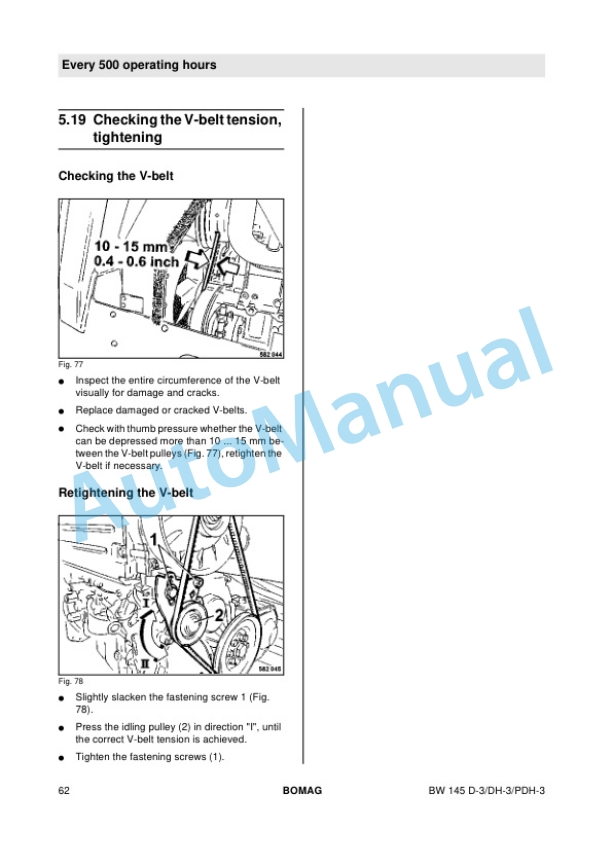
- 35. Checking the Vbelt tension, tightening
- 35.1. Checking the Vbelt
- 35.2. Retightening the Vbelt
- 36. Checking, adjusting the valve clearance
- 36.1. Valve clearance
- 36.2. Adjusting the valve clearance
- 37. Changing the oil in the vibration bearings
- 37.1. Fig. 84
- 37.2. Fig. 85
- 37.3. For quality and quantity of oil refer to the table of fuels and lubricants.
- 38. Change the oil in the drive axle
- 38.1. Fig. 86
- 38.2. Fig. 87
- 38.3. For quality and quantity of oil refer to the table of fuels and lubricants.
- 39. Change the oil in the wheel hubs
- 39.1. Fig. 88
- 39.2. Fig. 89
- 39.3. For quality and quantity of oil refer to the table of fuels and lubricants.
- 40. Changing the fuel prefilter
- 40.1. Fig. 90
- 41. Changing the fuel filter cartridge
- 41.1. Fig. 91
- 42. Checking the fastenings on the diesel engine
- 42.1. Fig. 92
- 42.2. Fig. 93
- 43. Tightening the fastening of the axle on the frame
- 43.1. Fig. 94
- 44. Tightening the wheel nuts
- 44.1. Fig. 95
- 44.2. Tightening torques 550 Nm (405 ftlb) (M22x1,5)
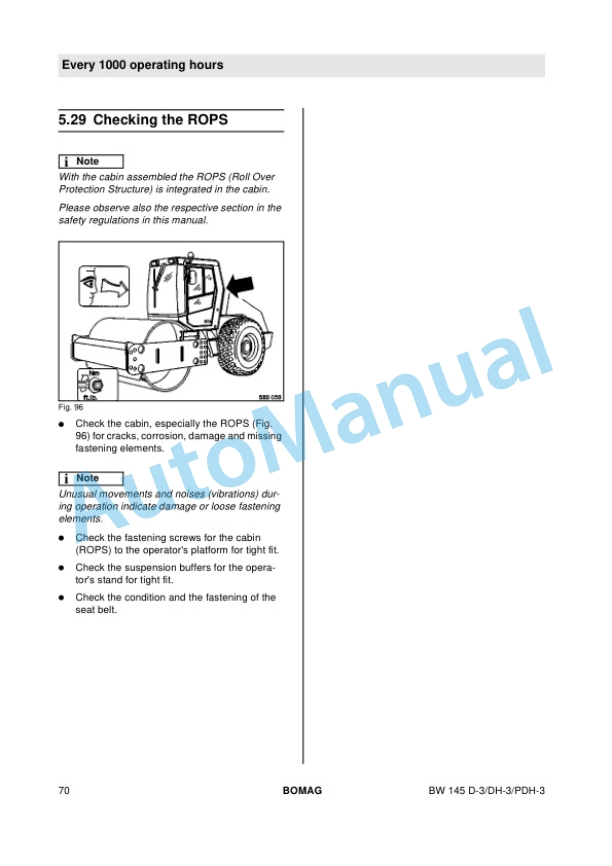
- 45. Checking the ROPS
- 45.1. Fig. 96
- 46. Changing hydraulic oil and breather filter
- 46.1. Fig. 97
- 46.2. Fig. 98
- 46.3. Nominal value
- 46.4. For quality and quantity of oil refer to the table of fuels and lubricants.
- 47. Changing the hydraulic oil filter
- 47.1. Fig. 99
- 48. Checking the injection valves
- 49. Replacing the toothed belt
- 49.1. Fig. 100
- 50. Checking, cleaning, changing the combustion air filter
- 50.1. Fig. 101
- 50.2. Fig. 102
- 50.3. Fig. 103
- 50.4. Fig. 104
- 50.5. Fig. 105
- 50.6. Fig. 106
- 50.7. Fig. 107
- 50.8. Dry cleaning of the main filter element
- 50.9. Changing the safety filter element
- 51. Adjusting the parking brake
- 51.1. Fig. 110
- 51.2. Fig. 111
- 51.3. Fig. 112
- 52. Changing the tires
- 52.1. Fig. 113
- 53. Adjusting the scrapers
- 53.1. smooth drum only
- 53.2. padfoot drum only
- 54. Changing the fresh air filter in the cabin
- 54.1. Fig. 116
- 55. Tightening torques
- 55.1. Fig. 117
- 56. Engine conservation
- 56.1. Anticorrosion oils are those that comply with the specification MILL21260 B or TL 9150 037/2 …
- 56.2. A machine with a conserved engine must be marked by attaching a clearly visible warning tag.
- 57. General notes
- 57.1. The following work must only be carried out by qualified and trained personnel or by the sales se…
- 57.2. Please observe strictly the safety regulations in chapter 2 of these operating and maintenance in…
- 58. Engine
- 58.1. Possible cause


There are no reviews yet.