
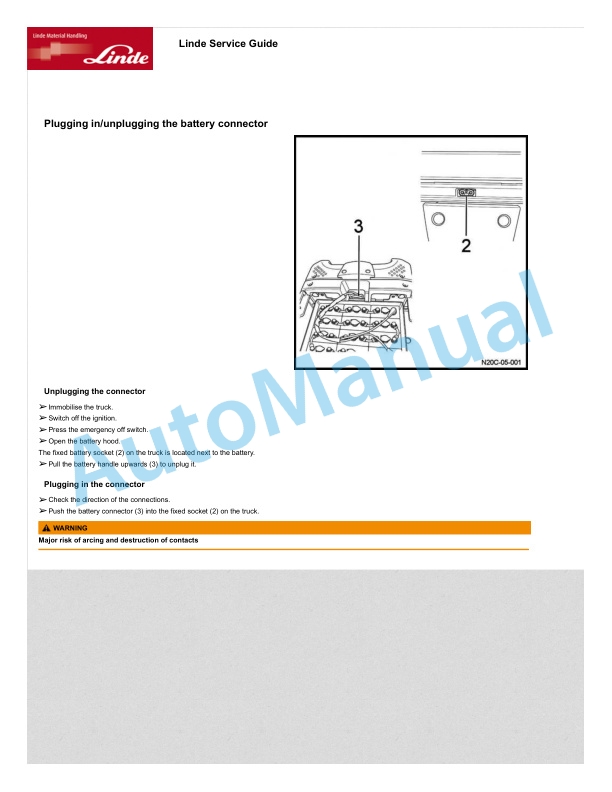
Description
-
Model List:
- N20C
- N20VI
- N20VLI
- 1. EnerSys.Hawker Batteries
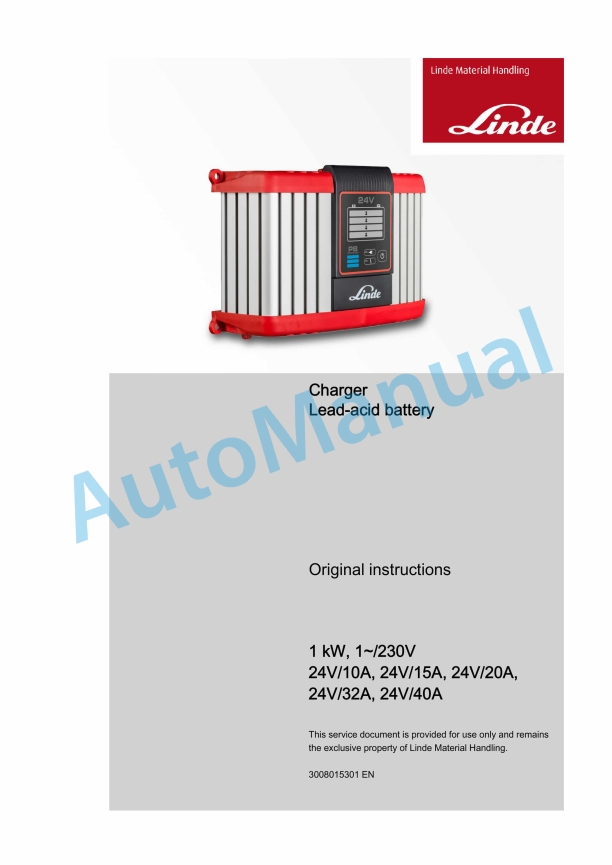
- 2. Leadacid battery charger 24V
- 3. Leadacid battery charger 24V . 48V
- 4. Leadacid battery charger 24V . 48V . 80V
- 5. MIDAC Batteries
- 6. Order pickerN20C, N20C HP
- 6.1. Table of content
- 6.2. Introduction
- 6.2.1. Your truck
- 6.2.2. Legal requirements for marketing
- 6.2.3. Identification label
- 6.2.4. Correct use
- 6.2.5. Description of use and climatic conditions
- 6.2.6. Impermissible use
- 6.2.7. Symbols used
- 6.2.8. Taking delivery of the industrial truck
- 6.2.9. Rules for the operating company of industrial trucks
- 6.2.10. Disposing of gel and lead batteries
- 6.3. Safety
- 6.3.1. Safety regulations
- 6.3.2. Handling consumables
- 6.3.3. Emissions
- 6.3.3.1. Noise emission values
- 6.3.3.2. Vibration characteristic values for bodily vibrations
- 6.3.4. Residual risks
- 6.3.5. Stability
- 6.3.6. Competent person
- 6.3.7. Periodic general checks on the trucks
- 6.4. General views
- 6.4.1. General view
- 6.4.2. View of technical compartment four support points
- 6.4.3. Overview of technical compartment five support points
- 6.4.4. N20C Controls
- 6.4.5. Display function
- 6.4.6. Labels
- 6.5.1. Order picker N20C
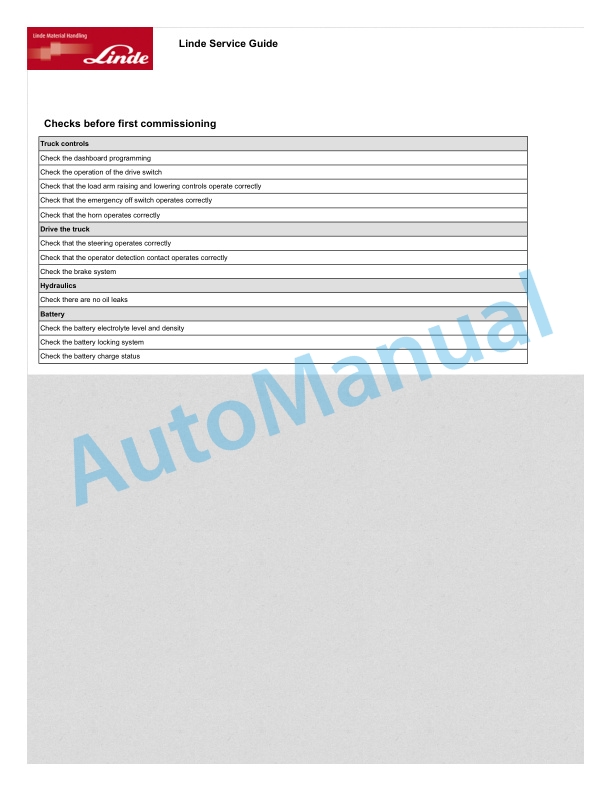
- 6.5.2. Checks before first commissioning
- 6.5.3. Preshift checks
- 6.5.4. Daily checks before starting work
- 6.5.4.1. Checking the drive direction controls
- 6.5.4.2. Checking the load arm lifting and lowering controls
- 6.5.4.3. Checking the safety devices
- 6.5.4.4. Checking the brakes
- 6.5.4.5. Checking the electric steering
- 6.5.5. Truck operating instructions
- 6.5.6. Display
- 6.5.6.1. Display settings
- 6.5.7. Driving regulations
- 6.5.8. Driving the truck
- 6.5.8.1. Adjusting the handlebar height
- 6.5.8.2. Identifying the direction of travel
- 6.5.8.3. Starting up
- 6.5.8.4. Forward travel.reverse travel
- 6.5.8.5. Steering
- 6.5.8.6. Reversing the drive direction
- 6.5.8.7. Driving in rideon or pedestrian mode
- 6.5.8.8. Braking
- 6.5.8.9. Emergency off switch
- 6.5.8.10. Horn
- 6.5.8.11. Use on slopes
- 6.5.9. connect access system (LFM)
- 6.5.10. Transporting loads
- 6.5.10.1. Lifting and lowering the load arms
- 6.5.10.2. Load handling
- 6.5.11. Before leaving the truck
- 6.5.12. Gel and lead battery
- 6.5.12.1. General information on batteries
- 6.5.12.2. Opening.closing the battery hood
- 6.5.12.3. Charging the battery
- 6.5.12.4. Accessing the battery connector
- 6.5.12.5. Plugging in.unplugging the battery connector
- 6.5.12.6. Checking the battery charge status
- 6.5.12.7. Charging the battery using an external charger
- 6.5.12.8. Side access battery selection of battery compartment opening side
- 6.5.12.9. Side access battery unlocking.locking the battery
- 6.5.12.10. Side access battery changing using a roller frame
- 6.5.13. Handling the truck in an emergency
- 6.5.13.1. Towing and transporting the truck
- 6.5.14. Handling the truck in specific situations
- 6.5.14.1. Slinging the truck
- 6.5.14.2. Lifting the truck
- 6.6. Maintenance
- 6.6.1. General information
- 6.6.2. Technical features
- 6.6.3. Recommended lubricants
- 6.6.4. Accessing the technical compartment
- 6.6.5. Maintenance plan
- 6.6.6. Regular maintenance
- 6.6.7. Chassis, bodywork and fittings
- 6.6.7.1. Cleaning the truck
- 6.6.7.2. Checking the condition of the handlebar
- 6.6.8. Motor
- 6.6.8.1. Traction motor, cleaning the cooling fins
- 6.6.9. Steering.Wheels.Braking
- 6.6.9.1. Checking the condition of the wheels
- 6.6.10. Electrical equipment
- 6.6.10.1. Cleaning the battery and its compartment
- 6.6.10.2. Checking the electrolyte level and topping up with water
- 6.6.10.3. Checking the battery connector, the battery cables and the battery terminal
- 6.6.10.4. Checking and cleaning the fan
- 6.6.10.5. Checking the condition and mounting of cables and electrical connections
- 6.6.11. Hydraulic systems
- 6.6.11.1. Main hydraulic system
- 6.6.11.2. Checking and changing the pump motor brushes
- 6.7. Datasheet
- 6.7.1. Datasheet
- 7. Order pickerN20C, N20C HP
- 7.1. Table of content
- 7.2. Introduction
- 7.2.1. Your truck
- 7.2.2. Legal requirements for marketing
- 7.2.3. Identification label
- 7.2.4. Correct use
- 7.2.5. Description of use and climatic conditions
- 7.2.6. Impermissible use
- 7.2.7. Symbols used
- 7.2.8. Taking delivery of the industrial truck
- 7.2.9. Rules for the operating company of industrial trucks
- 7.2.10. Disposing of gel and lead batteries
- 7.3. Safety
- 7.3.1. Safety regulations
- 7.3.2. Handling consumables
- 7.3.3. Emissions
- 7.3.3.1. Noise emission values
- 7.3.3.2. Vibration characteristic values for bodily vibrations
- 7.3.4. Residual risks
- 7.3.5. Stability
- 7.3.6. Competent person
- 7.3.7. Periodic general checks on the trucks
- 7.4. General views
- 7.4.1. General view
- 7.4.2. View of technical compartment four support points
- 7.4.3. Overview of technical compartment five support points
- 7.4.4. N20C Controls
- 7.4.5. Display function
- 7.4.6. Labels
- 7.5.1. Order picker N20C
- 7.5.2. Checks before first commissioning
- 7.5.3. Preshift checks
- 7.5.4. Daily checks before starting work
- 7.5.4.1. Checking the drive direction controls
- 7.5.4.2. Checking the load arm lifting and lowering controls
- 7.5.4.3. Checking the safety devices
- 7.5.4.4. Checking the brakes
- 7.5.4.5. Checking the electric steering
- 7.5.5. Truck operating instructions
- 7.5.6. Display
- 7.5.6.1. Display settings
- 7.5.7. Driving regulations
- 7.5.8. Driving the truck
- 7.5.8.1. Adjusting the handlebar height
- 7.5.8.2. Identifying the direction of travel
- 7.5.8.3. Starting up
- 7.5.8.4. Forward travel.reverse travel
- 7.5.8.5. Steering
- 7.5.8.6. Reversing the drive direction
- 7.5.8.7. Driving in rideon or pedestrian mode
- 7.5.8.8. Braking
- 7.5.8.9. Emergency off switch
- 7.5.8.10. Horn
- 7.5.8.11. Use on slopes
- 7.5.9. connect access system (LFM)
- 7.5.10. Transporting loads
- 7.5.10.1. Lifting and lowering the load arms
- 7.5.10.2. Load handling
- 7.5.11. Before leaving the truck
- 7.5.12. Gel and lead battery
- 7.5.12.1. General information on batteries
- 7.5.12.2. Opening.closing the battery hood
- 7.5.12.3. Charging the battery
- 7.5.12.4. Accessing the battery connector
- 7.5.12.5. Plugging in.unplugging the battery connector
- 7.5.12.6. Checking the battery charge status
- 7.5.12.7. Charging the battery using an external charger
- 7.5.12.8. Side access battery selection of battery compartment opening side
- 7.5.12.9. Side access battery unlocking.locking the battery
- 7.5.12.10. Side access battery changing using a roller frame
- 7.5.13. Handling the truck in an emergency
- 7.5.13.1. Towing and transporting the truck
- 7.5.14. Handling the truck in specific situations
- 7.5.14.1. Slinging the truck
- 7.5.14.2. Lifting the truck
- 7.6. Maintenance
- 7.6.1. General information
- 7.6.2. Technical features
- 7.6.3. Recommended lubricants
- 7.6.4. Accessing the technical compartment
- 7.6.5. Maintenance plan
- 7.6.6. Regular maintenance
- 7.6.7. Chassis, bodywork and fittings
- 7.6.7.1. Cleaning the truck
- 7.6.7.2. Checking the condition of the handlebar
- 7.6.8. Motor
- 7.6.8.1. Traction motor, cleaning the cooling fins
- 7.6.9. Steering.wheels.braking
- 7.6.9.1. Checking the condition of the wheels
- 7.6.10. Electrical equipment
- 7.6.10.1. Cleaning the battery and its compartment
- 7.6.10.2. Checking the electrolyte level and topping up with water
- 7.6.10.3. Checking the battery connector, the battery cables and the battery terminal
- 7.6.10.4. Checking and cleaning the fan
- 7.6.10.5. Checking the condition and mounting of cables and electrical connections
- 7.6.11. Hydraulic systems
- 7.6.11.1. Main hydraulic system
- 7.6.11.2. Checking and changing the pump motor brushes
- 7.7. Datasheet
- 7.7.1. Datasheet
- 8. TAB Batteries


There are no reviews yet.