

Description
-
Model List:
- BW22
- L10
- L10AS
- L10B
- L12
- L12AS
- L12I
- 1. V lithiumion batteries
- 1.1. Table of content
- 1.2. Introduction
- 1.2.1. Important information about the compatibility of the lithiumion battery and truck
- 1.2.2. Before using the truck
- 1.2.3. Important information about this manual
- 1.2.4. Identification label on the lithiumion battery
- 1.2.5. Correct use
- 1.2.6. Dangerous misuse
- 1.2.7. Productspecific risks
- 1.2.8. Information on the conformity of lithiumion batteries
- 1.2.9. Explanations of terms and symbols
- 1.2.10. Qualification of the user
- 1.2.11. Description of use and climatic conditions
- 1.3. Safety
- 1.3.1. Battery management system and safety
- 1.3.2. What to do in an emergency
- 1.3.3. Firstaid measures
- 1.4. General views
- 1.4.1. General view of 24V LiB batteries from 1.7 to 3.5
- 1.4.2. General view of the 24V LiB 7.1 battery
- 1.4.3. General view of the 24V LiB battery from 10.6 to 14.2
- 1.5.1. Description of the battery
- 1.5.2. Safety guidelines
- 1.5.3. Status of the battery on delivery
- 1.5.4. Transport mode
- 1.5.5. Connecting the battery to the truck
- 1.5.6. Switching on the battery
- 1.5.7. Modes of operation
- 1.5.8. Temperature conditions for operating . charging
- 1.5.9. Charging the battery
- 1.5.10. Changing the lithiumion battery
- 1.5.11. Switching off the battery
- 1.5.12. Resolving battery faults
- 1.5.13. Transporting lithiumion batteries
- 1.6. Maintenance
- 1.6.1. Regular maintenance
- 1.6.2. Service plan
- 1.6.3. Cleaning the battery
- 1.6.4. Transporting and storing within the company
- 1.6.5. Disposing of batteries
- 1.7. Technical specifications
- 1.7.1. Lithiumion battery datasheet
- 2. Electric pallet stacker1172_L10, 1172_L10B, 1172_L12, 1172_L12i
- 2.1. Table of content
- 2.2. Introduction
- 2.2.1. Your truck
- 2.2.2. Impermissible use
- 2.2.3. Description of use and climatic conditions
- 2.2.4. Specific use of the equipment
- 2.2.5. Symbols used
- 2.2.6. Legal requirements for placing on the market
- 2.2.7. Technical description
- 2.3. Safety
- 2.3.1. Residual risks
- 2.3.2. Stability
- 2.3.3. Operation of industrial trucks in plant area
- 2.3.4. Competent person
- 2.3.5. Safety regulations
- 2.3.6. Driving regulations
- 2.3.7. Handling consumables
- 2.3.8. Periodic general checks on the trucks
- 2.4. General views
- 2.4.1. Labels
- 2.4.2. Identification label
- 2.4.3. General view
- 2.4.4. Actuation controls
- 2.4.5. Battery charge indicator
- 2.4.6. Digicode option (LFM Go)
- 2.4.7. LFM AccessLFM Basic option
- 2.5.1. Commissioning
- 2.5.2. Checks before first use
- 2.5.3. Daily checks before use
- 2.5.4. Checking the working environment
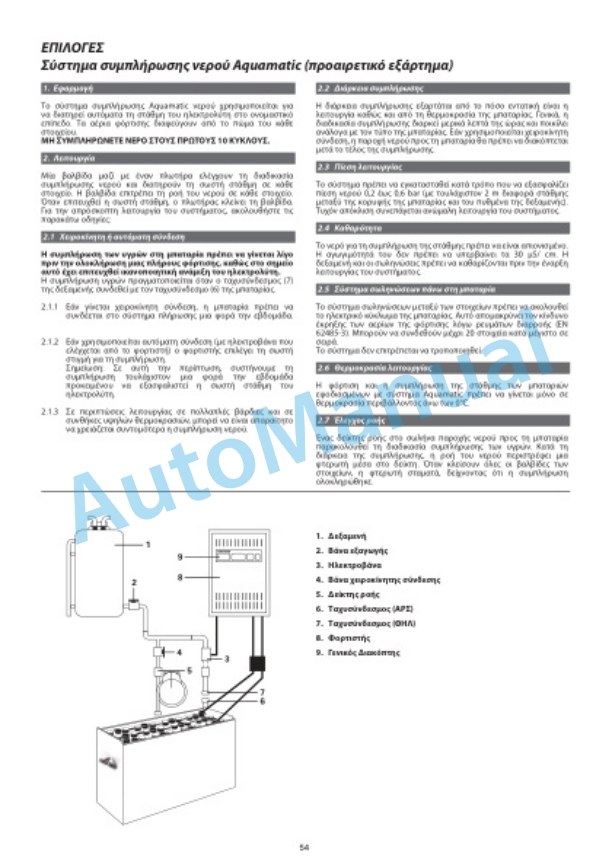
- 2.5.5. General information on batteries
- 2.5.6. Using the onboard charger
- 2.5.7. Adjusting the onboard charger
- 2.5.8. Operating instructions for 1172
- 2.5.9. Driving the 1172
- 2.5.10. Cold store usage (optional)
- 2.5.11. Creep Speed function
- 2.5.12. Proportional Speed Function (Proportional Speed)
- 2.5.13. Use of the truck on a slope
- 2.5.14. Braking, lifting, lowering, horn
- 2.5.15. Initial lift function (only on the L12i model)
- 2.5.16. Load handling
- 2.5.17. Reading the capacity rating plate
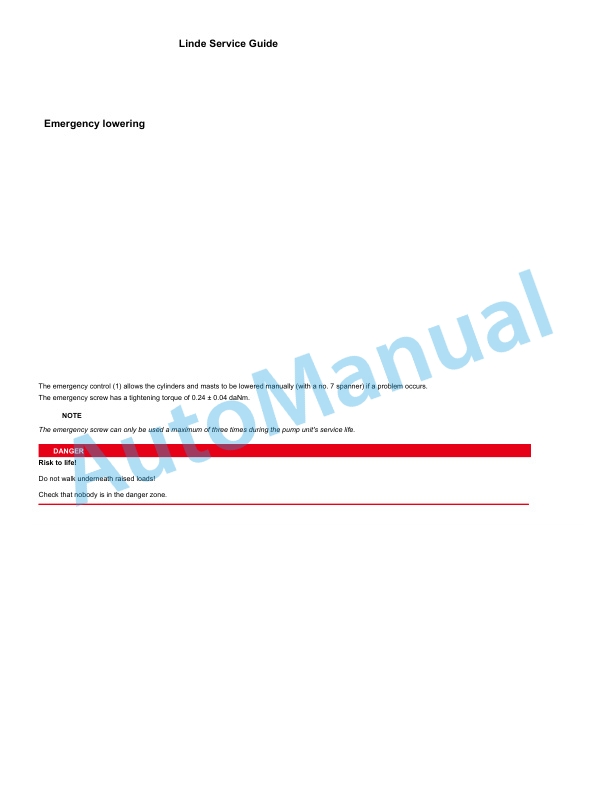
- 2.5.18. Emergency mast lowering
- 2.5.19. Slinging, lifting
- 2.5.20. Truck towing procedure
- 2.5.21. Transporting the machine
- 2.5.22. Storage of truck
- 2.6. Maintenance
- 2.6.1. General information
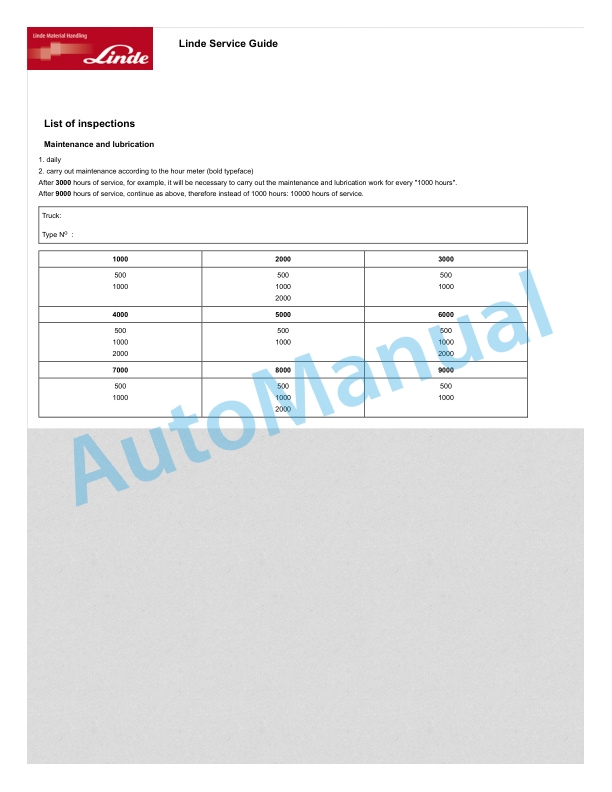
- 2.6.2. Calendar of testing and maintenance operations
- 2.6.3. Recommended lubricants
- 2.6.4. Technical data for inspection and maintenance
- 2.6.5. Daily checks before starting work
- 2.6.6. Maintenance schedule as required
- 2.6.7. Battery
- 2.6.8. Inspection and maintenance overview
- 2.6.9. Forks
- 2.6.10. Transmission
- 2.6.11. Steering.Wheels.Braking
- 2.6.12. Electrical equipment
- 2.6.13. Hydraulic systems
- 2.6.14. Lift mast
- 2.7. Technical datasheet
- 2.7.1. Technical specification
- 2.7.2. Noise emission values
- 2.8. Diagrams
- 2.8.1. Electric diagrams
- 2.8.2. Hydraulic diagrams
- 3. EnerSys.Hawker Batteries
- 4. Industrial truck for battery replacement
- 4.1. Table of content
- 4.2. Introduction
- 4.2.1. Your battery replacement truck
- 4.2.2. Conformity marking
- 4.2.3. Declaration that reflects the content of the declaration of conformity
- 4.2.4. Intended use
- 4.2.5. Impermissible use
- 4.2.6. Description of use and climatic conditions
- 4.2.7. Symbols used
- 4.2.8. Taking delivery of the industrial truck
- 4.2.9. Documentation
- 4.2.10. Disposing of gel and lead batteries
- 4.3. Safety
- 4.3.1. Residual risks
- 4.3.2. Stability
- 4.3.3. Safety regulations
- 4.3.4. Use of lubricants
- 4.3.5. Periodic safety inspection
- 4.4. General views
- 4.4.1. Data plates and adhesive labels
- 4.4.2. Nameplate
- 4.4.3. Overview
- 4.4.4. Operating devices
- 4.4.5. Battery charge indicator
- 4.4.6. Digicode option (LFM Go)
- 4.5. Operation
- 4.5.1. Technical description
- 4.5.2. Instructions for runningin
- 4.5.3. Preshift checks
- 4.5.4. Commissioning and driving
- 4.5.5. Handling loads
- 4.5.6. Error codes
- 4.5.7. Handling the industrial truck in special operating situations
- 4.5.8. Handling the battery
- 4.5.9. Decommissioning
- 4.5.10. Storage
- 4.6. Maintenance
- 4.6.1. Summary of checks and maintenance work
- 4.6.2. Safety regulations for maintenance
- 4.6.3. Preparatory procedures for maintenance
- 4.6.4. Cleaning
- 4.6.5. Maintenance as required
- 4.6.6. hour maintenance schedule
- 4.6.7. hour maintenance schedule
- 4.6.8. hour maintenance schedule
- 4.7. Technical data
- 4.7.1. Technical data
- 4.7.2. Ecodesign requirements for electric motors and variable speed drives
- 4.7.3. Noise emission values
- 5. Lithiumion batteries
- 5.1. Table of content
- 5.2. Introduction
- 5.2.1. Introduction
- 5.2.2. Information on the conformity of lithiumion batteries
- 5.3. Safety
- 5.3.1. Special lithiumion safety rules
- 5.3.2. What to do in the event of incorrect use
- 5.3.3. Personal protective measures following an incident
- 5.3.4. What to do in the event of an accidental spillage
- 5.3.5. Transporting a lithiumion battery
- 5.3.6. Scrapping lithiumion batteries
- 5.4. Labels
- 5.4.1. Identification label for lithiumion batteries
- 5.4.2. Labels on the top of lithiumion batteries
- 5.4.3. Labels on the sides of lithiumion batteries
- 5.5.1. Installing the external charger
- 5.5.2. Charging lithiumion batteries
- 5.5.3. Battery charging times
- 5.5.4. Recharging lithiumion batteries using the onboard charger(se presente)
- 5.5.5. Commissioning a truck equipped with a lithiumion battery
- 5.5.6. Replacing the lithiumion battery
- 5.5.7. Malfunctions
- 5.5.8. Lithiumion batteries longterm storage
- 5.6. Maintenance
- 5.6.1. General Information
- 5.6.2. Maintenance as required
- 5.6.3. Scheduled maintenance
- 6. MIDAC Batteries
- 7. TAB Batteries









There are no reviews yet.