
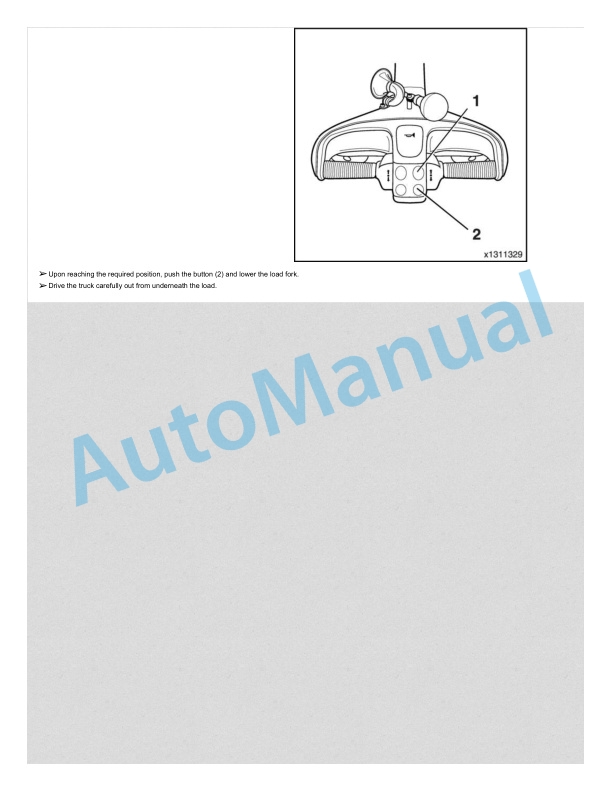
Description
-
Model List:
- T20 EX AP
- T20 EX SP
- T24 EX AP
- T24 EX SP
- 1. Pallet truckT20.24 AP.SP EX3G
- 1.1. Table of content
- 1.2. Introduction
- 1.2.1. Your industrial truck
- 1.2.2. Conformity marking
- 1.2.3. Declaration that reflects the content of the declaration of conformity
- 1.2.4. Intended use
- 1.2.5. Impermissible use
- 1.2.6. Basic information on explosion protection
- 1.2.7. Symbols used
- 1.2.8. Taking delivery of the industrial truck
- 1.2.9. Documentation
- 1.2.10. Disposing of components and batteries
- 1.3. Safety
- 1.3.1. Explosion protection safety guidelines
- 1.3.2. Protective equipment for explosion protection
- 1.3.3. Residual risks
- 1.3.4. Stability
- 1.3.5. Handling consumables
- 1.3.6. Competent person
- 1.4. Overview
- 1.4.1. Labels
- 1.4.2. Identification plate.adhesive label
- 1.4.3. Truck overview
- 1.4.4. Display elements
- 1.4.5. Operating devices
- 1.4.6. Display unit
- 1.5. Operation
- 1.5.1. Technical description
- 1.5.2. Industrial trucks with explosion protection
- 1.5.2.1. Description of use and climatic conditions
- 1.5.2.2. Technical description of explosion protection
- 1.5.2.3. Regular testing
- 1.5.2.4. Batteries for explosion protection
- 1.5.2.5. Wheels and tyres for explosion protection
- 1.5.2.6. Checking the tyres
- 1.5.2.7. Checking the leak resistance
- 1.5.2.8. Handling consumables
- 1.5.2.9. Towing
- 1.5.3. Service plan before initial commissioning
- 1.5.4. Instructions for runningin
- 1.5.5. Preshift checks
- 1.5.6. Switching the truck on and off
- 1.5.7. Driving the T20 SP
- 1.5.8. Driving on gradients with the T20 SP
- 1.5.9. Driving the T20 AP
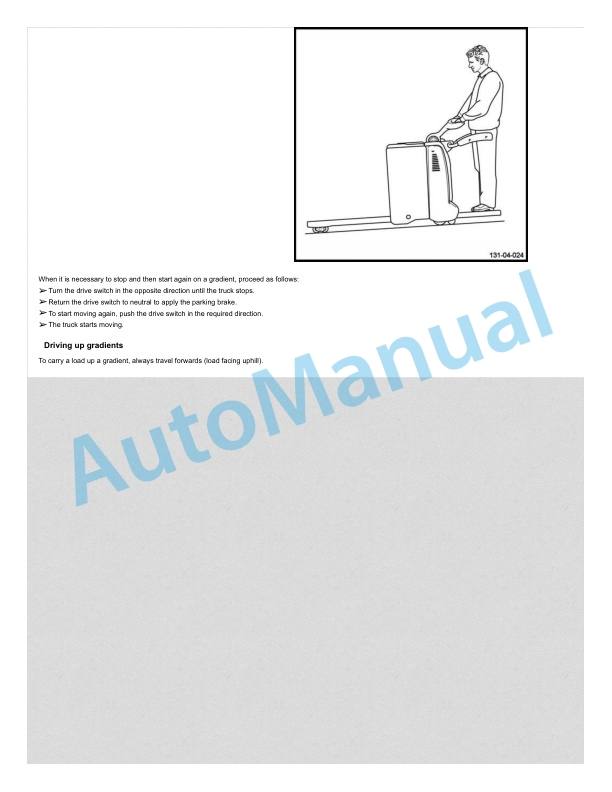
- 1.5.10. Driving on gradients
- 1.5.11. Forward travel
- 1.5.12. Reverse travel
- 1.5.13. Steering
- 1.5.14. Decelerating when cornering
- 1.5.15. Impact button Safety switchover
- 1.5.16. Brakes
- 1.5.17. Horn
- 1.5.18. Emergency off switch
- 1.5.19. Working with a load
- 1.5.19.1. Picking up a load
- 1.5.19.2. Driving with load
- 1.5.20. Loading.transporting
- 1.5.20.1. Crane loading
- 1.5.20.2. Transport
- 1.5.21. Leaving the truck
- 1.5.21.1. Parking the industrial truck securely
- 1.6. Servicing
- 1.6.1. Safety information regarding servicing work
- 1.6.2. Inspection and maintenance data
- 1.6.3. Recommendations for consumables
- 1.6.4. Inspection and maintenance overview
- 1.6.4.1. Service plan after 50 hours after 3 months at the latest
- 1.6.4.2. Service plan every 500 hours after 6 months at the latest
- 1.6.4.3. Service plan every 1000 hours after a year at the latest
- 1.6.4.4. Service plan every 2000 hours after 2 years at the latest
- 1.6.5. Preparatory tasks
- 1.6.5.1. Cleaning the industrial truck
- 1.6.5.2. Reading out the error memory
- 1.6.6. Gearbox
- 1.6.6.1. Wheel gear
- 1.6.7. Chassis, bodywork and fittings
- 1.6.7.1. Checking the pressuretight housings
- 1.6.7.2. Checking and lubricating the bearing points and joints
- 1.6.7.3. Other cleaning and greasing
- 1.6.8. Chassis frame
- 1.6.8.1. Tightening the wheel fastenings
- 1.6.8.2. Checking the wheels for wear and damage
- 1.6.8.3. Lubricating the drive unit steering ring
- 1.6.8.4. Checking the brake system
- 1.6.8.5. Checking the stabilisers
- 1.6.9. Operating devices
- 1.6.9.1. Checking that the horn is working correctly
- 1.6.10. Electrics.electronics
- 1.6.10.1. Checking the battery charge status
- 1.6.10.2. Connecting the battery to an external battery charger
- 1.6.10.3. Replacing the battery
- 1.6.10.4. Checking the electric cables, cable connectors, cable connections and screw joints
- 1.6.11. Hydraulics
- 1.6.11.1. Servicing the hydraulic systems
- 1.6.12. Load lift system
- 1.6.12.1. Checking the antispark protection on the fork arms for wear
- 1.6.13. Troubleshooting
- 1.6.13.1. Fuses
- 1.6.13.2. Diagnostic connector
- 1.6.13.3. Decommissioning the industrial truck
- 1.6.13.4. Disposal of industrial trucks
- 1.6.13.5. Malfunctions during operation
- 1.7. Technical data
- 1.7.1. T20.T24 AP.SP Ex type sheet
- 1.7.2. Ecodesign requirements for electric motors and variable speed drives
- 2. Pallet truckT20.24 EX AP.SP
- 2.1. Table of content
- 2.2. Introduction
- 2.2.1. Your industrial truck
- 2.2.2. Intended use
- 2.2.3. Impermissible use
- 2.2.4. Description of use and climatic conditions
- 2.2.5. Symbols used
- 2.2.6. Technical description
- 2.2.7. Insulation monitoring
- 2.2.8. Insulation monitoring warning
- 2.2.9. Insulation monitoring fault
- 2.2.10. Receiving the industrial truck
- 2.2.11. Legal requirements for placing on the market
- 2.2.12. Service plan before initial commissioning
- 2.3. Safety
- 2.3.1. Safety regulations
- 2.3.2. Residual risks
- 2.3.3. Stability
- 2.3.4. Handling consumables
- 2.3.5. Person qualified in exploseion protection
- 2.3.6. Operation of industrial trucks in plant area
- 2.3.7. Regulations
- 2.4. Overview
- 2.4.1. Labels
- 2.4.2. Identification plate.adhesive label
- 2.4.3. Truck overview
- 2.4.4. Display elements
- 2.4.5. Operating devices
- 2.4.6. Display unit
- 2.5. Operation
- 2.5.1. Instructions for runningin
- 2.5.2. Preshift checks
- 2.5.3. Switching the truck on and off
- 2.5.4. Driving the T20 SP
- 2.5.5. Driving on gradients with the T20 SP
- 2.5.6. Driving the T20 AP
- 2.5.7. Driving on gradients
- 2.5.8. Forward travel
- 2.5.9. Reverse travel
- 2.5.10. Steering
- 2.5.11. Decelerating when cornering
- 2.5.12. Safety switchover impact button
- 2.5.13. Brakes
- 2.5.14. Horn
- 2.5.15. Emergency off switch
- 2.5.16. Working with a load
- 2.5.16.1. Picking up a load
- 2.5.16.2. Driving with load
- 2.5.17. Loading.transporting
- 2.5.17.1. Crane loading
- 2.5.17.2. Transport
- 2.5.18. Leaving the truck
- 2.5.18.1. Parking the industrial truck securely
- 2.6. Maintenance
- 2.6.1. General information
- 2.6.2. Inspection and maintenance data
- 2.6.3. Recommendations for consumables
- 2.6.4. Inspection and maintenance overview
- 2.6.4.1. Service plan after 50 hours after 3 months at the latest
- 2.6.4.2. Service plan every 500 hours after 6 months at the latest
- 2.6.4.3. Service plan every 1000 hours after a year at the latest
- 2.6.4.4. Service plan every 2000 hours after 2 years at the latest
- 2.6.5. Preparatory tasks
- 2.6.5.1. Cleaning the industrial truck
- 2.6.5.2. Reading out the error memory
- 2.6.6. Gearbox
- 2.6.6.1. Wheel gear
- 2.6.7. Chassis, bodywork and fittings
- 2.6.7.1. Checking the pressuretight housings
- 2.6.7.2. Checking and lubricating the bearing points and joints
- 2.6.7.3. Other cleaning and greasing
- 2.6.8. Chassis frame
- 2.6.8.1. Tightening the wheel fastenings
- 2.6.8.2. Checking the wheels for wear and damage
- 2.6.8.3. Lubricating the drive unit steering ring
- 2.6.8.4. Checking the brake system
- 2.6.8.5. Checking the stabilisers
- 2.6.9. Operating devices
- 2.6.9.1. Checking that the horn is working correctly
- 2.6.10. Electrics.electronics
- 2.6.10.1. Checking the battery charge status
- 2.6.10.2. Connecting the battery to an external battery charger
- 2.6.10.3. Replacing the battery
- 2.6.10.4. Checking the condition and secure attachment of electric cables, cable connectors, cable connections and explosionprotected screw joints
- 2.6.11. Hydraulics
- 2.6.11.1. Servicing the hydraulic systems
- 2.6.12. Load lift system
- 2.6.12.1. Checking the antispark protection of the fork arms for wear
- 2.6.13. Troubleshooting
- 2.6.13.1. Fuses
- 2.6.13.2. Diagnostic connector
- 2.6.13.3. Shutting down
- 2.6.13.4. Disposal of old trucks
- 2.6.13.5. Malfunctions during operation
- 2.7. Technical data
- 2.7.1. T20.T24 AP.SP Ex type sheet




There are no reviews yet.