
Description
-
Model List:
- H180
- H200
- H220
- H250
- H280
- H300
- H320
- 1. Linde Forklift Truck1402_H180, 1402_H200, 1402_H220, 1402_H250, 1402_H280, 1402_H300, 1402_H320
- 1.1. Table of content
- 1.2. Introduction
- 1.2.1. Your Linde truck
- 1.2.2. Technical description
- 1.2.3. Intended use
- 1.2.4. Improper use
- 1.2.5. Symbols used
- 1.2.6. Commissioning
- 1.2.7. Truck Takeover
- 1.2.8. EC declaration of conformity
- 1.3. Safety
- 1.3.1. Safety Rules
- 1.3.1.1. Safety Rules
- 1.3.1.2. Handling Fuel, Lubricants and Coolant
- 1.3.1.3. Residual risks
- 1.3.1.4. Stability
- 1.3.2. Frequency characteristic for human body vibrations
- 1.3.2.1. Frequency characteristic for human body vibrations
- 1.3.3. Noise emission data
- 1.3.3.1. Noise emission data
- 1.4. Overview
- 1.4.1. Description
- 1.4.1.1. General view of Truck
- 1.4.1.2. Type Plates
- 1.4.2. Controls and Indicators
- 1.4.2.1. Controls and indicators
- 1.4.2.2. Instruments and switches
- 1.5. Operation
- 1.5.1. Truck access doors and covers
- 1.5.1.1. Beginning operation
- 1.5.1.2. Opening the right hand side window
- 1.5.1.3. Engine Access
- 1.5.1.4. Service station
- 1.5.1.5. Isolating the batteries
- 1.5.1.6. Opening the fuse box cover
- 1.5.1.7. Emergency exit
- 1.5.2. Checks and tasks
- 1.5.2.1. Mirrors
- 1.5.2.2. Checking the fuel
- 1.5.2.3. Engine oil level check
- 1.5.2.4. Checking the coolant level
- 1.5.2.5. Transmission oil level check
- 1.5.2.6. Hydraulic system oil level check
- 1.5.2.7. Tyres check condition and pressure
- 1.5.2.8. Filling the windscreen washer bottle
- 1.5.2.9. Adjusting the drivers seat
- 1.5.2.10. Cab interior light
- 1.5.3. Starting and stopping the engine
- 1.5.3.1. Starting the engine
- 1.5.4. Truck status display
- 1.5.4.1. Truck status display
- 1.5.5. Malfunctions
- 1.5.5.1. Malfunctions during operation
- 1.5.5.2. Emergency Shutdown
- 1.5.5.3. Overload safety switch
- 1.5.6. Driving
- 1.5.6.1. Driving
- 1.5.6.2. Steering
- 1.5.7. Braking system
- 1.5.7.1. Service brake
- 1.5.7.2. Parking brake
- 1.5.8. Truck lighting and turn indicators
- 1.5.8.1. Hazard warning lights, Turn indicators lights, Horn
- 1.5.8.2. Road lights and Working lights
- 1.5.9. Washers and wipers
- 1.5.9.1. Windscreen wipers
- 1.5.10. Ventilation and heating
- 1.5.10.1. Heater, Climate control
- 1.5.11. Fuses
- 1.5.11.1. Fuses
- 1.5.12. Operating the truck
- 1.5.12.1. Before lifting a load
- 1.5.12.2. Lifting a load
- 1.5.12.3. Lift slow down
- 1.5.12.4. Travelling with load
- 1.5.12.5. Depositing the load
- 1.5.12.6. Before leaving the truck unattended
- 1.5.12.7. Loading
- 1.5.12.8. Control levers (joysticks)
- 1.5.12.9. Installation of additional equipment
- 1.5.12.10. Operating optional attachments
- 1.5.13. Mast, lifting device and attachment controls
- 1.5.13.1. Mast, lifting device and attachment controls
- 1.5.14. Trailer coupling
- 1.5.14.1. Trailer coupling
- 1.5.15. Wheel change
- 1.5.15.1. Location of jacks when changing wheels
- 1.5.16. Towing
- 1.5.16.1. Towing
- 1.6. Maintenance
- 1.6.1. General remarks
- 1.6.1.1. Wheel removal drive axle
- 1.6.1.2. Wheel removal steer axle
- 1.6.1.3. Wheel assembly inspection
- 1.6.1.4. Wheel refitting drive axle
- 1.6.1.5. Wheel refitting steer axle
- 1.6.1.6. Examples of restraining devices
- 1.6.1.7. General information
- 1.6.1.8. Inspection and maintenance data
- 1.6.1.9. Fuel and oil recommendations
- 1.6.1.10. Hoisting the truck
- 1.6.1.11. Measures before taking the truck out of operation
- 1.6.1.12. Putting the truck back into operation
- 1.6.1.13. Truck welds inspection
- 1.6.2. Inspection and maintenance schedule
- 1.6.2.1. As required service plan
- 1.6.2.2. First 50 hours service plan
- 1.6.2.3. h service plan
- 1.6.2.4. h service plan
- 1.6.2.5. h Service plan
- 1.6.2.6. h service plan
- 1.6.2.7. h service plan
- 1.6.2.8. h service plan
- 1.6.3. Engine
- 1.6.3.1. Engine oil level check
- 1.6.3.2. Change the engine oil (every 12 months minimum)
- 1.6.3.3. Clean the fuel filter
- 1.6.3.4. Change the fuel prefilter with water monitor
- 1.6.3.5. Change the fuel filter
- 1.6.3.6. Check the condition of the drive belt
- 1.6.3.7. Check the cooling fan belt tensioner
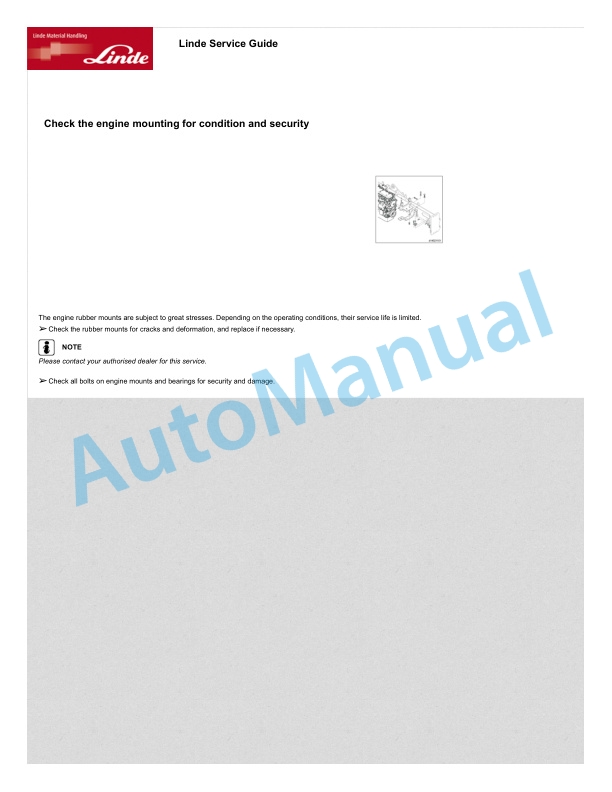
- 1.6.3.8. Check the engine mounting for condition and security
- 1.6.3.9. Check intake and exhaust systems for leaks and security
- 1.6.3.10. Check the fuel tank breather filter
- 1.6.3.11. Check the air filter
- 1.6.3.12. Air filter element renew
- 1.6.3.13. Safety element renew
- 1.6.3.14. Checking the coolant level
- 1.6.3.15. Check coolant strength
- 1.6.3.16. Renew engine coolant
- 1.6.3.17. Clean the radiator and oil cooler, check for leaks
- 1.6.3.18. Check the turbocharger
- 1.6.3.19. Check the vibration damper
- 1.6.3.20. Check valve clearances
- 1.6.4. Gearbox
- 1.6.4.1. Transmission oil level check
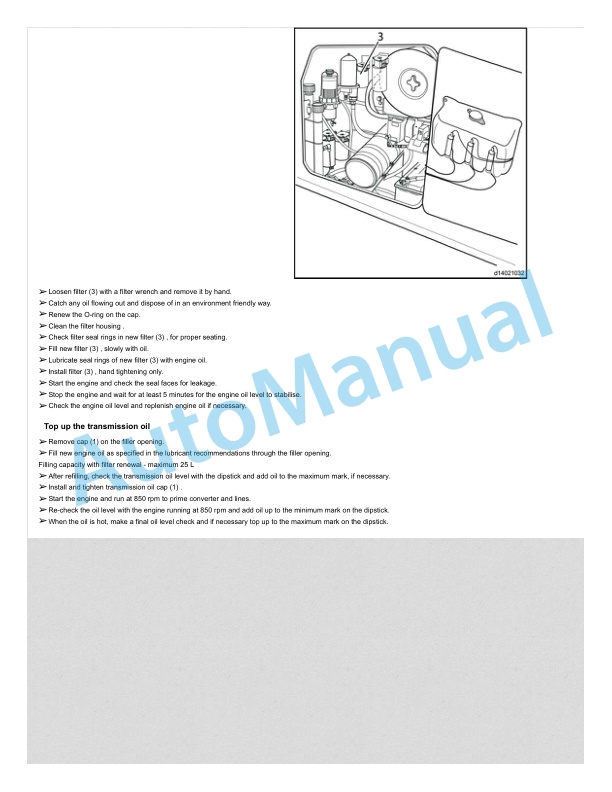
- 1.6.4.2. Change the transmission oil
- 1.6.4.3. Check transmission mountings
- 1.6.5. Chassis bodywork and fittings
- 1.6.5.1. Clean the truck
- 1.6.5.2. Check seat belt for condition and correct operation
- 1.6.5.3. Check the cab mountings
- 1.6.5.4. Check the tyres for damage and foreign objects
- 1.6.5.5. Tighten the wheel nuts
- 1.6.6. Chassis frame
- 1.6.6.1. Truck welds inspection
- 1.6.6.2. Clean and lubricate the steer axle
- 1.6.6.3. Checks various
- 1.6.7. Controls
- 1.6.7.1. Check the parking brake for proper operation
- 1.6.7.2. Brake control mechanism
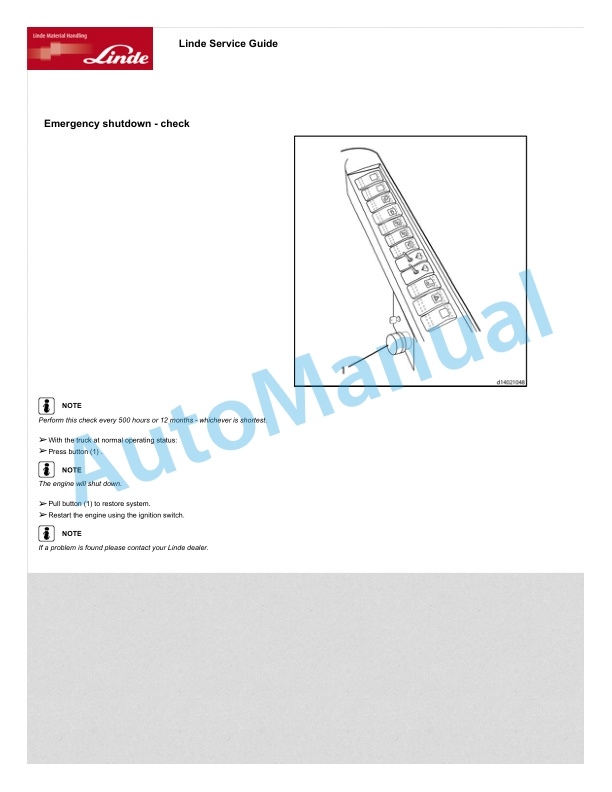
- 1.6.7.3. Emergency shutdown check
- 1.6.8. Electrics
- 1.6.8.1. Check the battery . batteries.
- 1.6.8.2. Check electric cables, connectors and connections for conditionand tightness
- 1.6.9. Hydraulics
- 1.6.9.1. Stored hydraulic energy
- 1.6.9.2. Breather filters replace
- 1.6.9.3. Check the hydraulic tank breather filter
- 1.6.9.4. Check the brake tank breather filter
- 1.6.9.5. Hydraulic system oil level check
- 1.6.9.6. Check the hydraulic system, pumps, valves and lines
- 1.6.9.7. Renew the main hydraulic system oil return line filters
- 1.6.9.8. Renew hydraulic oil of working hydraulic system
- 1.6.9.9. Renew hydraulic oil of brake system
- 1.6.10. Load lift system
- 1.6.10.1. Lubricate the mast and tilt cylinder pivots
- 1.6.10.2. Lubricate fork carriage cylinder bearings
- 1.6.10.3. Check and adjust mast chains, lubricate with chain spray
- 1.6.10.4. Check the tension of double hoses
- 1.6.10.5. Renewing the lift chains (at least every 6000h, 3 years and when 3 stretch has been attained)
- 1.6.11. Special equipment, accessories
- 1.6.11.1. Check the central lubrication lubricating points
- 1.6.11.2. Fill central lubrication canister with grease
- 1.6.12. Troubleshooting
- 1.6.12.1. Troubleshooting guide (Diesel engine)
- 1.6.12.2. Troubleshooting guide (Hydraulic system)
- 1.6.13. User manual feedback
- 1.6.13.1. User manual improvement record.
- 1.7. Technical data
- 1.7.1. Datasheet
- 1.7.1.1. Technical Data
- 1.8. Circuit diagrams
- 1.8.1. Electrical circuit diagrams
- 1.8.1.1. Electrical circuit drawing
- 1.8.2. Hydraulic circuit diagram
- 1.8.2.1. Hydraulic circuit drawing
- 2. Rear view monitor supplement
- 2.1. Table of content
- 2.2. Operation
- 2.2.1. Operation
- 2.3. System Settings
- 2.3.1. System settings


There are no reviews yet.