
Description
-
Model List:
- WA470-3 Wheel Loader
- 1. WA4703
- 2. Introduction
- 2.1. Preface
- 2.2. Safety Information
- 2.3. Introduction
- 2.4. Technical Specifications of the Machine
- 2.5. Table of Contents
- 2.6. Dimensions, Weights and Operating Data
- 2.7. CEConforming Equipment
- 2.8. Loading and Securing
- 3. Safety
- 3.1. General Safety Measures
- 3.2. Safety Precautions During Operation
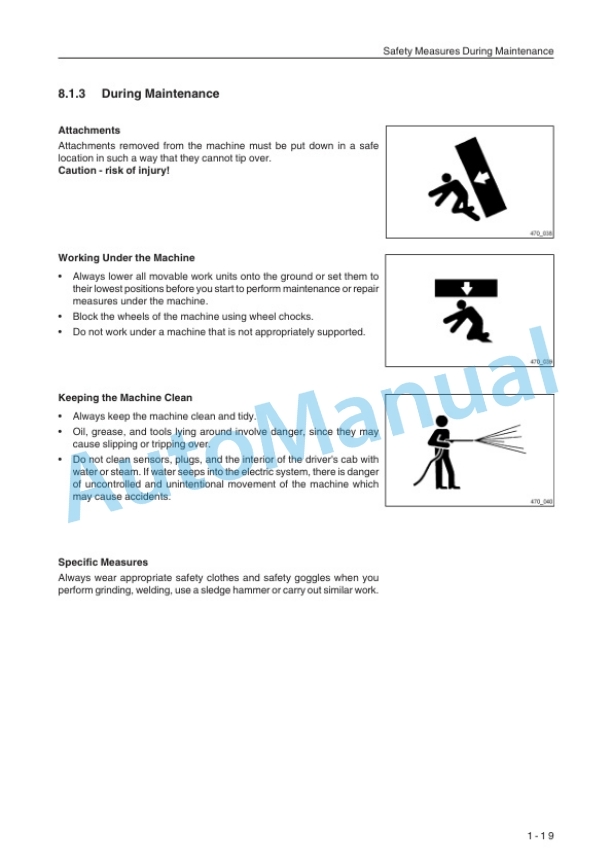
- 3.3. Safety Measures During Maintenance
- 3.4. Safety Labels
- 4. Operation
- 4.1. General View
- 4.1.1. General View of the Machine
- 4.1.2. Control Elements and Measuring Instruments
- 4.2. Description of the Individual Elements
- 4.2.1. Control Monitor
- 4.2.2. Switches
- 4.2.3. Control Levers and Pedals
- 4.2.4. Steering Column Tilt Lever
- 4.2.5. SlowBlow Fuses 1
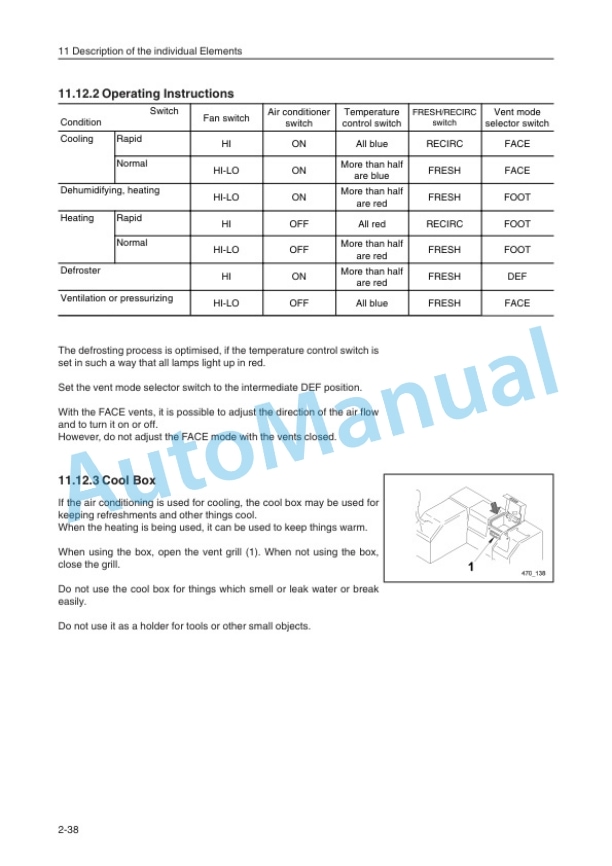
- 4.2.6. Air Conditioning
- 4.3. Operation
- 4.3.1. PreStart Checks
- 4.3.2. Starting the Engine
- 4.3.3. Operation and checks after starting the engine
- 4.3.4. Machine Travel
- 4.3.5. Gear Change
- 4.3.6. Changing Direction
- 4.3.7. Turning and Steering
- 4.3.8. Stopping the Machine
- 4.3.9. Operating the Work Equipment
- 4.3.10. Wheel Loader Operations
- 4.3.11. Precautionary Measures During Operation
- 4.3.12. Adjusting the Position of the Work Equipment
- 4.3.13. Parking the Machine
- 4.3.14. Stopping the Engine
- 4.3.15. Check After Stopping the Engine
- 4.3.16. Locking
- 4.3.17. Tyre Handling
- 4.4. Transport
- 4.4.1. Loading, Unloading
- 4.4.2. Precautions for Loading
- 4.4.3. Precautions during Transport
- 4.5. Cold Weather Operation
- 4.5.1. Precautions for Low Temperatures
- 4.5.2. Precautions after Completion of Work
- 4.5.3. After the Cold Weather Period
- 4.6. LongTerm Storage
- 4.6.1. Before Storage
- 4.6.2. During Storage
- 4.6.3. After Storage
- 5. Troubleshooting
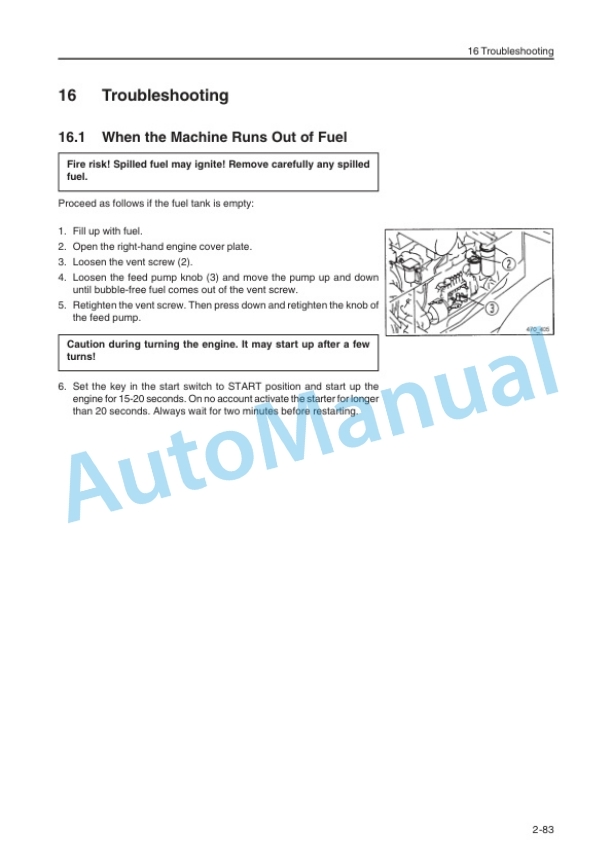
- 5.1. When the Machine Runs Out of Fuel
- 5.2. Towing the Machine
- 5.3. If Battery is discharged
- 5.4. Other Troubles
- 5.4.1. Electrical System
- 5.4.2. Chassis
- 5.4.3. Engine
- 6. Maintenance
- 6.1. Maintenance Guide
- 6.2. Maintenance Basics
- 6.2.1. Oil, Fuel and Coolant Specifications
- 6.2.2. Specifications of the Electrical System
- 6.3. Wearing Parts List
- 6.4. Lubricants and Substances Required for Operation
- 6.4.1. Lubrication Chart
- 6.4.2. Lubricants, Fuel etc. and Filling Capacities
- 6.4.3. Axle Oils (AXO)
- 6.5. Tools and Standard Tightening Torques (Bolts, Nuts)
- 6.5.1. Introduction of recommended Tools
- 6.5.2. Torque List
- 6.6. Periodical Replacement of SafetyCritical Parts
- 6.7. Maintenance Schedule
- 6.8. Service Procedure
- 6.8.1. Initial 250 Hours Service
- 6.8.2. Maintenance upon Demand
- 6.8.3. Checks before Starting
- 6.8.4. Every 50 Hours Service
- 6.8.5. Every 100 Hours Service
- 6.8.6. Every 250 Service Hours
- 6.8.7. Every 500 Service Hours
- 6.8.8. Every 1000 Service Hours
- 6.8.9. Every 2000 Service Hours
- 6.8.10. Every 4000 Service Hours
- 7. Technical Data
- 7.1. Noise Emission Levels
- 7.2. Vibration Level
- 7.3. Limit Values for Slopes
- 8. Special Equipment and Attachments
- 8.1. ALSElectronics
- 9. Index




There are no reviews yet.