

Description
-
Model List:
- WF550-3 Trash Compactor
- 1. WF5503
- 2. Introduction
- 2.1. Foreword
- 2.1.1. EU Directives
- 2.2. Safety information
- 2.3. Introduction
- 2.3.1. Intended use
- 2.3.2. Features
- 2.3.3. Breakingin the machine
- 2.4. Location of plates, table to enter serial no. and distributor
- 2.4.1. Machine identification plate
- 2.4.2. Engine identification plate
- 2.4.3. Position of service meter
- 2.4.4. Table to enter serial no. and distributor
- 2.5. Table of contents
- 2.6. Dimensions, weights and operating data
- 2.6.1. Noise emission levels
- 3. Safety
- 3.1. General safety measures
- 3.1.1. Safety instructions
- 3.1.2. Safety devices
- 3.1.3. Emergency exit
- 3.1.4. Clothing and personal protection
- 3.1.5. Machine modifications
- 3.1.6. Before you leave the drivers seat
- 3.1.7. Mounting and dismounting
- 3.1.8. Fire prevention and fire fighting
- 3.1.9. Protection against asbestos dust
- 3.1.10. Protection against injuries
- 3.1.11. Working at high temperatures
- 3.1.12. Rollover protection system (ROPS)
- 3.1.13. Attachment for protection against falling objects (FOPS)
- 3.1.14. Attachments
- 3.1.15. Battery
- 3.2. Safety precautions during operation
- 3.2.1. Before you start the engine
- 3.2.2. Machine operation
- 3.2.3. Transport
- 3.3. Precautions for maintenance
- 3.3.1. Personnel
- 3.3.2. Before carrying out maintenance
- 3.3.3. During maintenance
- 3.4. Safety labels
- 4. Operation
- 4.1. General view
- 4.1.1. General view of the machine
- 4.1.2. Control elements and measuring instruments
- 4.2. Description of the individual elements
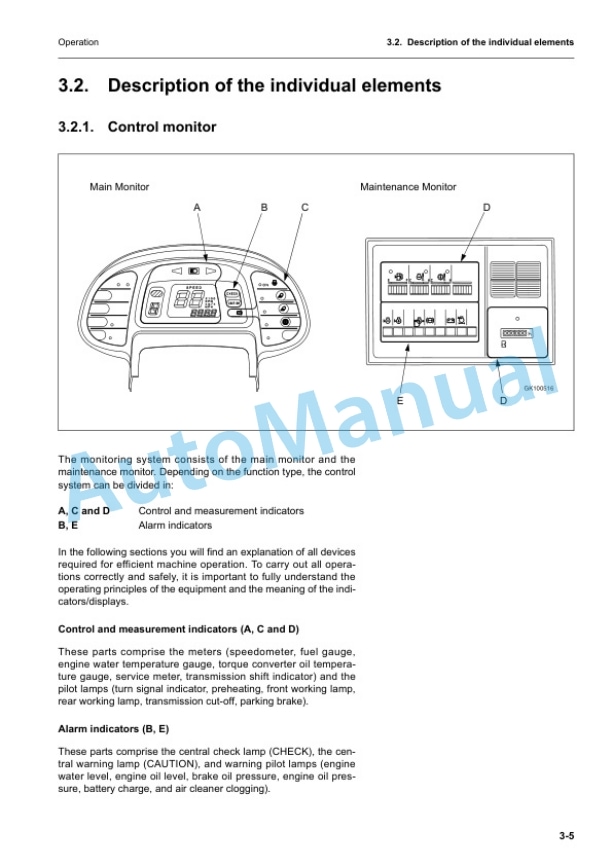
- 4.2.1. Control monitor
- 4.2.2. Switches
- 4.2.3. Control levers and pedals
- 4.2.4. Steering column tilt lever
- 4.2.5. Cap with lock
- 4.2.6. Safety bar
- 4.2.7. Towing pin
- 4.2.8. Backup alarm
- 4.2.9. Fuses
- 4.2.10. Slowblow fuses
- 4.2.11. Storaging place of this manual
- 4.2.12. Taking off power
- 4.2.13. Air conditioning
- 4.2.14. Hydraulic cooling fan
- 4.3. Operation
- 4.3.1. Prestart checks
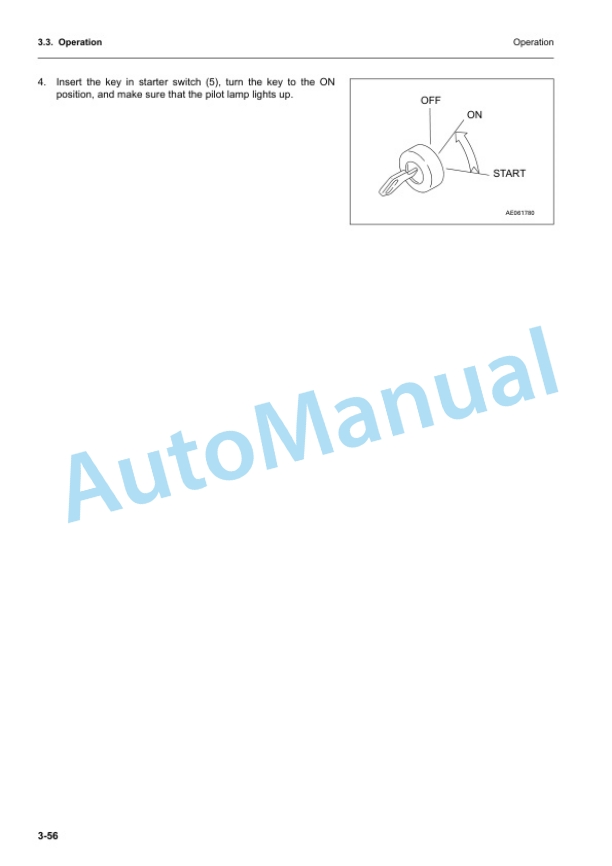
- 4.3.2. Starting the engine
- 4.3.3. Operation and checks after starting the engine
- 4.3.4. Driving the machine
- 4.3.5. Gear change
- 4.3.6. Changing direction
- 4.3.7. Turning and steering
- 4.3.8. Stopping the machine
- 4.3.9. Operating the work equipment
- 4.3.10. Trash loader operations
- 4.3.11. Precautionary measures during operation
- 4.3.12. Adjusting the position of the work equipment
- 4.3.13. Parking the machine
- 4.3.14. Check after completion of work
- 4.3.15. Stopping the engine
- 4.3.16. Check after stopping the engine
- 4.3.17. Locking
- 4.4. Transport
- 4.4.1. Loading and securing
- 4.5. Cold weather operation
- 4.5.1. Precautions for low temperatures
- 4.5.2. Precautions after completion of work
- 4.5.3. After the cold weather period
- 4.5.4. Warmingup operation for steering hydraulic circuit in cold weather
- 4.6. Longterm storage
- 4.6.1. Before storage
- 4.6.2. During storage
- 4.6.3. After storage
- 5. Troubleshooting
- 5.1. When the machine runs out of fuel
- 5.1.1. Procedure for bleeding air
- 5.1.2. Central lubrication system
- 5.1.3. No grease emerging at the lubrication points
- 5.1.4. The pump does not switch on
- 5.2. Towing the machine
- 5.2.1. Engine can still be used
- 5.2.2. Engine cannot be used
- 5.2.3. Releasing the parking brake
- 5.2.4. Emergency travel operation
- 5.3. If battery is discharged
- 5.3.1. Removal and installation of battery
- 5.3.2. Precautions for charging the battery
- 5.3.3. Starting the engine with a booster cable
- 5.4. Other troubles
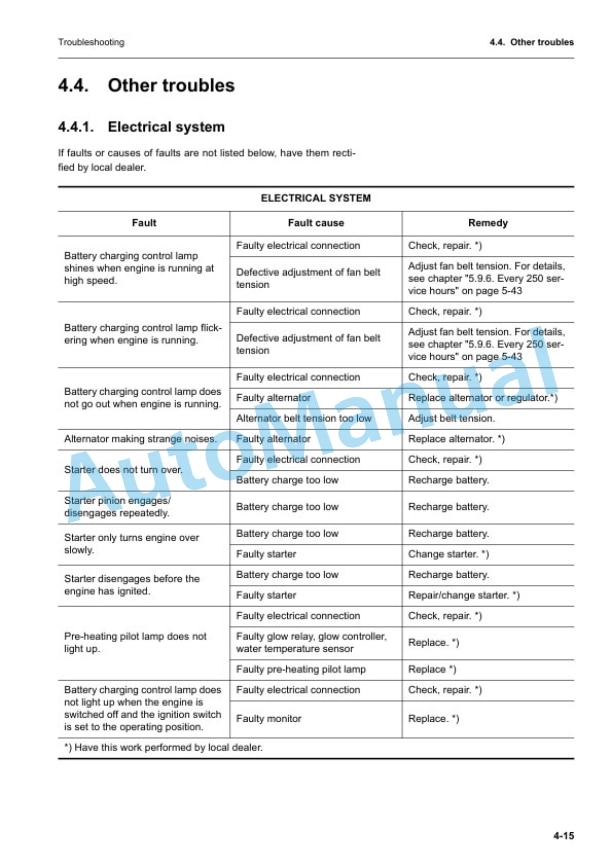
- 5.4.1. Electrical system
- 5.4.2. Chassis
- 5.4.3. Engine
- 5.4.4. RELATIONSHIP OF ELECTRONIC CONTROL SYSTEM
- 6. Maintenance
- 6.1. Maintenance guide
- 6.2. Maintenance basics
- 6.2.1. Oil, fuel and coolant specifications
- 6.2.2. Specifications of the electrical system
- 6.3. Wearing parts list
- 6.4. Use of fuel, coolant and lubricants according to ambient temperature
- 6.4.1. Proper selection of fuel, coolant and lubricants
- 6.5. Tools and grease pump
- 6.5.1. Included tools
- 6.5.2. Grease pump
- 6.6. Standard tightening torques (bolts, nuts)
- 6.7. Periodical replacement of safetycritical parts
- 6.8. Maintenance schedule chart
- 6.9. Service procedure
- 6.9.1. Initial 250 hours service
- 6.9.2. Maintenance upon demand
- 6.9.3. Checks before starting
- 6.9.4. Every 50 hours service.
- 6.9.5. Every 100 hours service
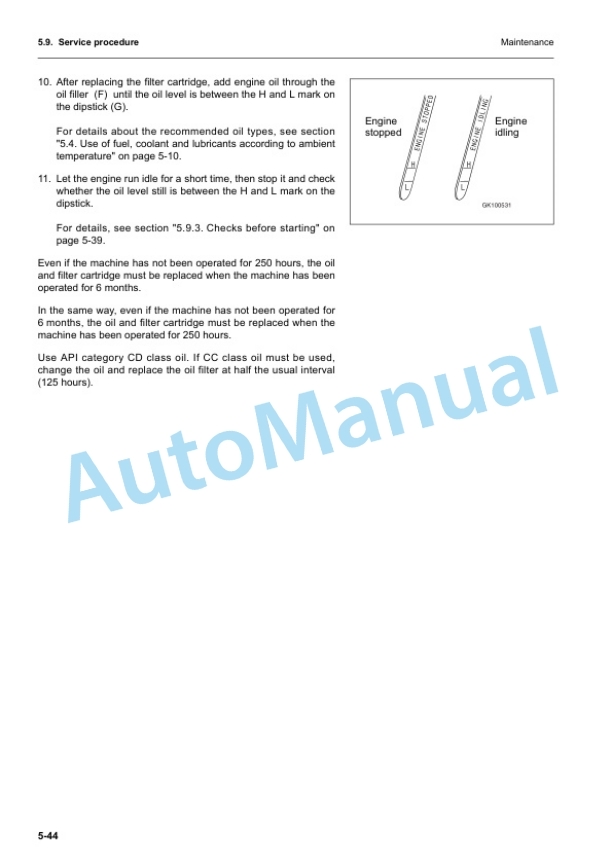
- 6.9.6. Every 250 service hours
- 6.9.7. Every 500 service hours
- 6.9.8. Every 1000 service hours
- 6.9.9. Every 2000 service hours
- 6.9.10. Every 4000 service hours
- 7. Special equipment and attachments
- 7.1. Protective ventilation system SBL30
- 7.1.1. Design and function of the protective ventilation system
- 7.1.2. Operating the machine
- 7.1.3. Starting up the protective ventilation system
- 7.1.4. Working with protective ventilation system switched on
- 7.1.5. After use
- 7.1.6. Operating and monitoring display
- 7.1.7. Signal lamp (on the cab roof)
- 7.1.8. Escape aid device and emergency hammer
- 7.1.9. Combination filter WP21
- 7.1.10. Inspecting and/or exchanging the circulating air filter
- 7.1.11. Safety inspection
- 7.1.12. Technical details and dimensions SBL 30
- 8. Index









There are no reviews yet.