Komatsu WA65-3 Wheel Loader Operation and Maintenance Manual VEAM940400
$30.00
- Type Of Manual: Operation and Maintenance Manual
- Manual ID: VEAM940400
- Format: PDF
- Size: 6.0MB
- Number of Pages: 200
Description
- 1. Main Menu
- 2. Cover
- 3. Product Publications Information
- 4. Table of Contents
- 5. Introduction
- 5.1. Forword
- 5.2. Safety Information
- 5.3. Introduction
- 5.3.1. Features
- 5.3.2. Breaking in a New Machine
- 5.4. Location of Plates, Table to Enter Serial No. and Distributor
- 5.4.1. Machine Serial No. Plate position
- 5.4.2. Engine Serial No. Plate Position
- 5.4.3. Table to Enter Serial No. and Distributor
- 5.5. EMISSION CONTROL WARRANTY
- 5.5.1. EMISSION CONTROL WARRANTY STATEMENT (APPLIES TO CANADA ONLY)
- 5.6. Engine Data Plate
- 5.7. GARANTIE SUR LE CONTR?LE DES ?MISSIONS
- 5.7.1. ?NONC? DE GARANTIE SUR LE CONTR?LE DES ?MISSIONS (APPLICABLE AU CANADA SEULEMENT)
- 5.8. Engine Data Plate
- 5.9. Why You Should Read these Operating Instructions
- 5.10. Notes on Safety Regulations
- 5.10.1. Correct Use
- 5.10.2. Safety Notes in the Operating Instructions
- 5.11. Equipment
- 6. Loading and Transporting the Machine
- 6.1. Loading and Transporting the Machine
- 6.1.1. Securing the Articulated Steering
- 6.1.2. Lifting the Machine
- 6.1.3. Driving Machine Onto Loading Area of Transport Vehicle
- 6.1.4. Securing the Machine During Transport
- 6.1.5. After Transport
- 7. Safety
- 7.1. General Safety Measures
- 7.1.1. Safety Instructions
- 7.1.2. Safety Devices
- 7.1.3. Emergency Exit
- 7.1.4. Clothing and Personal Protection
- 7.1.5. Machine Modifications
- 7.1.6. Before You Leave the Drivers Seat
- 7.1.7. Mounting and Dismounting
- 7.1.8. Fire Prevention and Fire Fighting
- 7.1.9. Protection Against Asbestos Dust
- 7.1.10. Protection Against Injuries
- 7.1.11. Working at High Temperatures
- 7.1.12. RollOver Protection System (ROPS)
- 7.1.13. Attachment for Protection Against Falling Objects (FOPS)
- 7.1.14. Attachments
- 7.1.15. Battery
- 7.2. Safety Measures during Operation
- 7.2.1. Before You Start the Engine
- 7.2.2. Machine Operation
- 7.2.3. Transport
- 7.3. Safety Measures During Maintenance
- 7.3.1. Personnel
- 7.3.2. Prior to Start of Maintenance Measures
- 7.3.3. During Maintenance
- 7.3.4. Tires
- 7.4. Labeling
- 7.4.1. Position of Safety Labels
- 7.4.2. Information Labels
- 8. Controls and InDicators
- 8.1. Overall View of Machine
- 8.2. Controls and Indicators
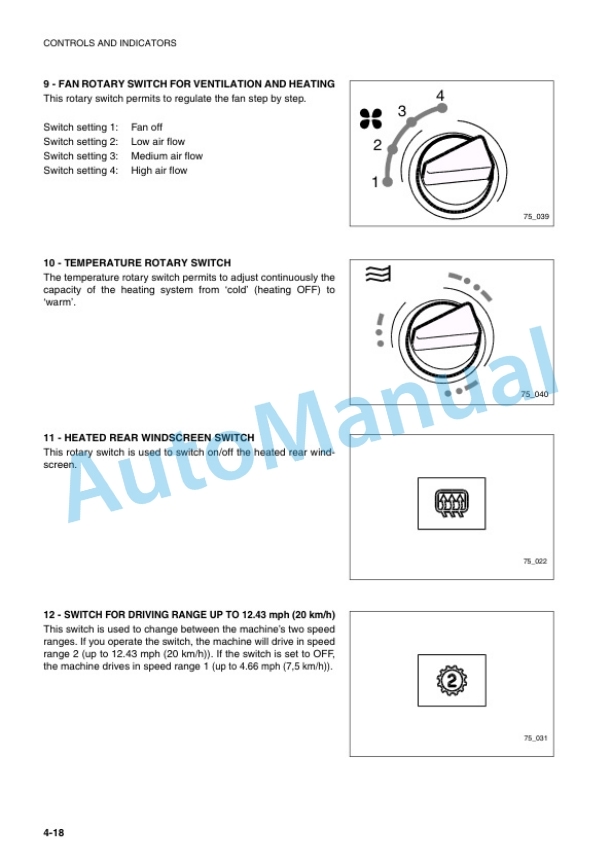
- 8.2.1. SWITCHES AND CONTROLS
- 8.2.2. Instrument Panel
- 8.2.3. Warning Lights
- 8.2.4. Control Lamps
- 8.2.5. Measuring Indicators
- 8.2.6. Switches
- 8.2.7. Control Levers, Pedals
- 8.2.8. Articulated Steering Catch
- 8.2.9. Traction Device
- 8.2.10. Socket
- 8.2.11. Door Unlocking System
- 8.2.12. Alarm Horn for Reverse Driving
- 9. Operation
- 9.1. Running in the Machine
- 9.2. Preparing the Machine Start
- 9.2.1. Visual Checks
- 9.3. Adjustments Prior to Machine Start
- 9.3.1. Adjusting the Drivers Seat
- 9.3.2. Adjusting the Steering Column
- 9.3.3. Adjusting the Armrest
- 9.3.4. Adjusting the RearView Mirrors
- 9.3.5. Adjusting the Heating and Ventilation System
- 9.3.6. Putting on the Safety Belt
- 9.4. Starting and Switching Off the Engine
- 9.4.1. Starting the Engine
- 9.4.2. Switching Off the Engine
- 9.5. Driving
- 9.5.1. StartUp
- 9.5.2. Changing the Driving Direction
- 9.5.3. Reverse Driving
- 9.5.4. Turning
- 9.5.5. Braking
- 9.5.6. Stopping
- 9.5.7. LongerDistance Driving
- 9.6. Operating the Machine
- 9.6.1. Preparing the Work Equipment
- 9.6.2. Tire Service Life
- 9.6.3. Loading
- 9.6.4. Transporting
- 9.6.5. Dumping / Unloading
- 9.6.6. Planing
- 9.6.7. Working With the Forklift Truck Attachment
- 9.6.8. Precautions For Special Operations
- 9.6.9. After the work is finished
- 9.6.10. Instructions for Winter Operation
- 9.6.11. Longer Standstill Periods of the Machine
- 10. Troubleshooting
- 10.1. Troubleshooting
- 10.1.1. Warning Lights and Indicators
- 10.1.2. Electrical System
- 10.1.3. Engine
- 10.1.4. Hydraulic system
- 10.1.5. Brakes
- 10.1.6. Axles
- 10.1.7. drivers cab
- 10.1.8. Emergency Steering Characteristics
- 10.1.9. Emergency Lowering System
- 10.1.10. Starting the Engine with a Battery Jumper Cable
- 10.1.11. Starting the Engine
- 10.1.12. Towing the Machine
- 10.1.13. Towing a Machine with Defective Brakes
- 11. Maintenance
- 11.1. Maintenance Basics
- 11.1.1. Preparing the Machine for Maintenance
- 11.1.2. Cleaning the Machine
- 11.1.3. WorkingAreaDependent Maintenance
- 11.1.4. Lubricants and Operating Agents
- 11.1.5. Axles
- 11.1.6. Spare Parts and Consumable Components
- 11.1.7. Electrical System
- 11.1.8. Tires
- 11.1.9. Torque for Standard Nuts and Bolts
- 11.2. Maintenance Schedule
- 11.3. Maintenance Prior to Start
- 11.3.1. Visual Checks
- 11.3.2. Cooling System, Checking the Coolant Level, Topping off Coolant
- 11.3.3. Engine, Checking the Oil Level, Topping off Oil
- 11.3.4. Engine, Draining off Oil
- 11.3.5. Checking the Fuel Level, Refueling
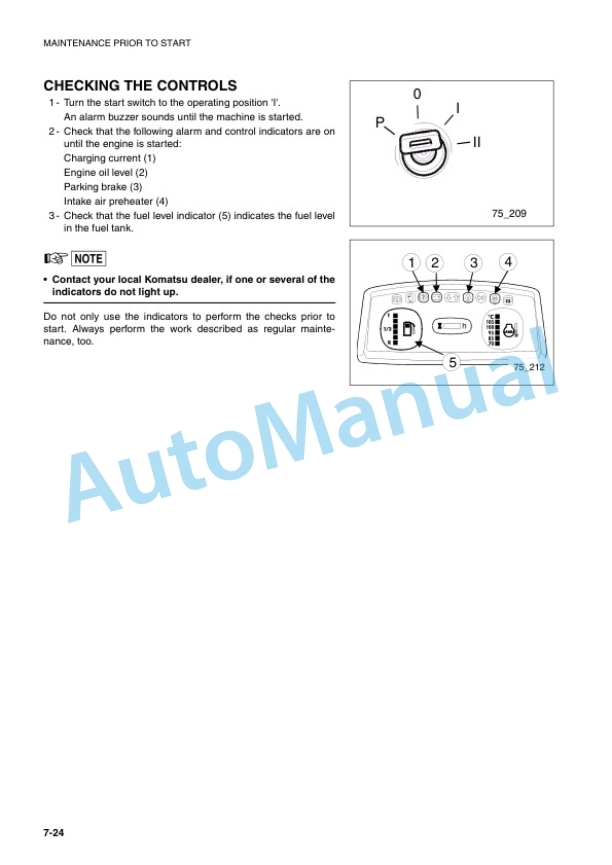
- 11.3.6. Checking the Controls
- 11.3.7. Checking the Parking Brake
- 11.3.8. CHecking the Service Brake
- 11.3.9. Checking the Electrical Connections
- 11.3.10. Heater / ventilation check blower
- 11.3.11. Other Maintenance Measures Prior to Start
- 11.4. Maintenance Every 10 Operating Hours
- 11.4.1. Lubrication
- 11.5. Maintenance After the First 50 Operating Hours
- 11.5.1. Engine, Changing Oil and Replacing the Oil Filter Cartridge
- 11.5.2. VBelt, Checking the Condition
- 11.5.3. VBelt, Checking and Adjusting the Tension
- 11.5.4. Hydraulic System, Replacing the Filter Insert
- 11.5.5. Checking and Tightening the Wheel Nuts
- 11.5.6. Front and Rear Axle, Changing Oil
- 11.5.7. Transfer Gear Changing Oil
- 11.6. Maintenance Every 50 Operating Hours
- 11.6.1. Checking the cooling System, coolant level in the radiator and expansion tank
- 11.6.2. Draining Off Water and Dirt Deposits From the Fuel Tank
- 11.6.3. Checking the Service Brake and Oil Level, Refilling Oil
- 11.6.4. Checking the Battery and Acid Level
- 11.6.5. Lubrication
- 11.7. Maintenance Every 100 Operating Hours
- 11.7.1. Draining the Water Separator, Removing Water and Dirt Deposits
- 11.8. Maintenance Every 250 Operating Hours
- 11.8.1. Changing the Engine Oil and Oil Filter Cartridge
- 11.8.2. Checking the VBelt Condition
- 11.8.3. Checking and Adjusting the Vbelt Tension
- 11.8.4. Front and Rear Axle, Checking the Oil Level
- 11.8.5. Air Filter, Removing and ReInstalling the Filter Insert, Checking and Cleaning the Filter Insert
- 11.8.6. Cleaning the Radiator Segments
- 11.8.7. Lubrication
- 11.9. Maintenance Every 500 Operating Hours
- 11.9.1. Changing the Fuel Filter and Filter Element
- 11.9.2. Changing the Filter Cartridge of the Hydraulic System
- 11.9.3. Cleaning the Water Separator
- 11.9.4. Lubrication
- 11.9.5. Transfer Gear, Checking the Oil Level and Refilling Oil
- 11.9.6. Air Filter, Replacing the Filter Insert, Replacing the Safety Filter
- 11.9.7. Heater / ventilation cleaning / replacing blower filter
- 11.10. Maintenance Every 1000 Operating Hours
- 11.10.1. Cooling System, Exchanging Coolant and Cleaning the System
- 11.10.2. Front Axle, Oil Change
- 11.10.3. Rear Axle, Oil Change
- 11.10.4. Transfer Gear, Oil Change
- 11.10.5. Service Brake
- 11.10.6. Checking and Adjusting System Pressures
- 11.10.7. Checking and Adjusting the Valve clearance
- 11.10.8. Checking and Adjusting the Injection Nozzles, Nozzle Pressure and FuelJet Pattern
- 11.10.9. Checking the Accumulator Gas Pressure
- 11.11. Maintenance Every 2000 Operating Hours
- 11.11.1. Hydraulic System, Oil Change
- 11.11.2. Bleeding the Hydraulic Oil Tank
- 11.11.3. Cooling System, Checking the Antifreeze Content of the Coolant
- 11.11.4. Checking the Cooling System
- 11.11.5. Checking the Fuel Pump
- 11.11.6. Checking the Fuel and Coolant Tubes, Replacing the Tubes (if required)
- 11.11.7. Checking the Water Pump
- 11.11.8. Checking and Adjusting the Fuel Injection and Injection time
- 12. Technical Data
- 12.1. Technical Data
- 12.1.1. Noise Emission Levels
- 12.1.2. Vibration Level
- 12.1.3. Limit Values for Slopes



There are no reviews yet.