
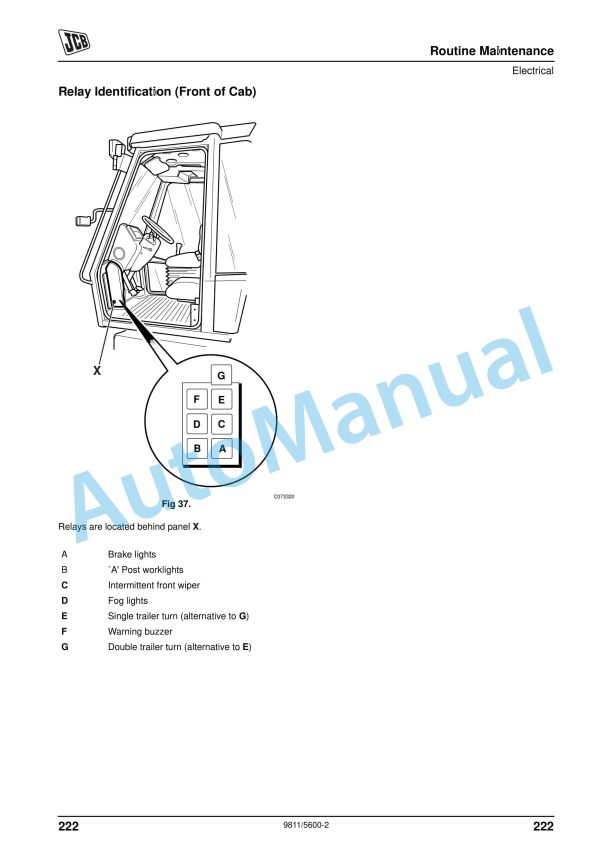
Description
-
Model List:
- 2155, 2170 Fastrac
- 1. Safety Notices
- 2. Important Information …………………………………………………………………………1
- 3. The Operator Manual …………………………………………………………………….1
- 4. Safety Warnings ……………………………………………………………………………1
- 5. Introduction
- 6. About this Manual ………………………………………………………………………………3
- 7. Machine Model and Serial Number ………………………………………………….3
- 8. Using this Manual ………………………………………………………………………….3
- 9. Left Side, Right Side ………………………………………………………………………3
- 10. Using the Machine …………………………………………………………………………3
- 11. Cross References ………………………………………………………………………….3
- 12. Machine Description …………………………………………………………………………..4
- 13. The JCB Fastrac …………………………………………………………………………..4
- 14. Intended Use ………………………………………………………………………………..4
- 15. Component Location ……………………………………………………………………..4
- 16. Safety Check List ……………………………………………………………………………….7
- 17. Safety – Yours and Others ………………………………………………………………7
- 18. General Safety ……………………………………………………………………………..7
- 19. Operating Safety …………………………………………………………………………..9
- 20. Maintenance Safety ……………………………………………………………………..15
- 21. Safety Labels …………………………………………………………………………………..21
- 22. Introduction …………………………………………………………………………………21
- 23. Safety Label Identification …………………………………………………………….22
- 24. Identifying your Machine ……………………………………………………………………25
- 25. Machine Identification Plate ………………………………………………………….25
- 26. Typical Product Identification No. (PIN) ………………………………………..26
- 27. ROPS and FOPS Certification Labels …………………………………………….28
- 28. Operation
- 29. Introduction ……………………………………………………………………………………..29
- 30. Before Entering the Cab ……………………………………………………………………30
- 31. Entering and Leaving the Cab – Doors and Windows …………………………….32
- 32. Opening and Closing the Doors …………………………………………………….33
- 33. Emergency Exit …………………………………………………………………………..34
- 34. Opening and Closing the Windows ………………………………………………..35
- 35. Rear Window ……………………………………………………………………………35
- 36. Opening Roof Panel (optional) ……………………………………………………35
- 37. Visibility Aids ……………………………………………………………………………………36
- 38. Mirrors ……………………………………………………………………………………….36
- 39. Introduction ………………………………………………………………………………36
- 40. Adjusting the Mirror ……………………………………………………………………36
- 41. Checking the Field of Vision ……………………………………………………….36
- 42. Cab Layout – 2155 and 2170 ……………………………………………………………..37
- 43. Controls ……………………………………………………………………………………..37
- 44. Cab Layout – 2155 Plus and 2170 Plus ……………………………………………….41
- 45. Controls ……………………………………………………………………………………..41
- 46. Seats ……………………………………………………………………………………………..44
- 47. Suspension Seat (Standard) …………………………………………………………44
- 48. Fore-Aft Adjustment …………………………………………………………………..44
- 49. Height-Weight Adjustment ………………………………………………………….44
- 50. Backrest Angle Adjustment …………………………………………………………44
- 51. Damper Adjustment …………………………………………………………………..44
- 52. Fore-Aft Isolator ………………………………………………………………………..44
- 53. Armrest Adjustment …………………………………………………………………..44
- 54. Swivel Adjustment …………………………………………………………………….45
- 55. Backrest Extension Height Adjustment (optional) …………………………..45
- 56. Suspension Lockout ………………………………………………………………….45
- 57. Heated Suspension Seat (Optional) ……………………………………………….46
- 58. Fore-Aft Adjustment …………………………………………………………………..46
- 59. Height-Auto Weight Adjustment …………………………………………………..46
- 60. Suspension Damper Adjustment …………………………………………………46
- 61. Fore-Aft Shock Absorber …………………………………………………………….46
- 62. Backrest Extension Height Adjustment …………………………………………46
- 63. Backrest Angle Adjustment …………………………………………………………46
- 64. Armrest Height Adjustment …………………………………………………………46
- 65. Armrest Angle Adjustment ………………………………………………………….46
- 66. Swivel Adjustment …………………………………………………………………….46
- 67. Seat Cushion Depth Adjustment ………………………………………………….47
- 68. Seat Cushion Angle Adjustment ………………………………………………….47
- 69. Lumbar Support Adjustment ……………………………………………………….47
- 70. Seat Heating …………………………………………………………………………….47
- 71. Passenger's Seat ………………………………………………………………………..47
- 72. Backrest Angle Adjustment …………………………………………………………47
- 73. Seat Belts ……………………………………………………………………………………….48
- 74. Introduction …………………………………………………………………………………48
- 75. Fasten the Seat Belt …………………………………………………………………….48
- 76. Check the Seat Belt is Operating Correctly ……………………………………..48
- 77. Release the Seat Belt …………………………………………………………………..49
- 78. Drive Controls, Switches and Instruments ……………………………………………50
- 79. Steering Column Adjustment …………………………………………………………50
- 80. Front Console ……………………………………………………………………………..51
- 81. Steering Column Multi-Purpose Switch …………………………………………..52
- 82. Right Hand Switch Panel ………………………………………………………………53
- 83. Rear Switch Panel ……………………………………………………………………….54
- 84. Instrument Cluster ……………………………………………………………………….55
- 85. Warnings (Audible-Visual) …………………………………………………………….58
- 86. Warnings (Visual only) ………………………………………………………………….60
- 87. Instrument Cluster Programming …………………………………………………..62
- 88. Level `0' Programming Mode (Normal Operation) ………………………….62
- 89. Level 1 Programming Mode ………………………………………………………..65
- 90. Level 1 Programming Mode (continued) ……………………………………….67
- 91. System Error Codes …………………………………………………………………….69
- 92. Number Error Codes ………………………………………………………………….69
- 93. Fault Identification and Rectification …………………………………………….69
- 94. Wheel Slip ………………………………………………………………………………….70
- 95. Slip Control Re-calibration ………………………………………………………….70
- 96. Slip Control – Normal Operations …………………………………………………70
- 97. Air Conditioning and Heater Controls ……………………………………………..72
- 98. Heating ……………………………………………………………………………………72
- 99. Air Conditioning ………………………………………………………………………..72
- 100. Defrosting ………………………………………………………………………………..72
- 101. Cab Interior Light …………………………………………………………………………73
- 102. Spot Light …………………………………………………………………………………73
- 103. Safety Equipment …………………………………………………………………………….74
- 104. Transport Locks …………………………………………………………………………..74
- 105. To free the lever for operation (G) ………………………………………………..74
- 106. To lock the lever in neutral (H) …………………………………………………….74
- 107. Transport Lock – Plus Models ………………………………………………………..75
- 108. Before Starting the Engine …………………………………………………………………76
- 109. Starting the Engine …………………………………………………………………………..78
- 110. Normal Starting ……………………………………………………………………………78
- 111. Cold Starting ……………………………………………………………………………….79
- 112. Testing the Park Brake ……………………………………………………………………..80
- 113. Preparing for Travel ………………………………………………………………………….81
- 114. Before Travelling on Public Roads …………………………………………………81
- 115. Getting the Machine Moving ………………………………………………………….81
- 116. Travelling ………………………………………………………………………………………..83
- 117. Utilisation of Gears ………………………………………………………………………83
- 118. Six Speed Gearbox ……………………………………………………………………83
- 119. JCB Powershift …………………………………………………………………………84
- 120. JCB Selectronic ………………………………………………………………………..87
- 121. General Precautions …………………………………………………………………….90
- 122. Four Wheel Drive and Differential Lock …………………………………………..92
- 123. Automatic Differential Lock Cut-out ……………………………………………..92
- 124. Field Speed Control ……………………………………………………………………..93
- 125. Four Wheel Steering (4WS) ………………………………………………………….94
- 126. Introduction ………………………………………………………………………………94
- 127. Steer Mode Selection …………………………………………………………………94
- 128. Two-Wheel Steer Mode (2WS) ……………………………………………………95
- 129. Crab Steer Mode (A) ………………………………………………………………….96
- 130. Proportional Steer Mode (B) ……………………………………………………….96
- 131. True Tracking Mode (C) ……………………………………………………………..97
- 132. Delay Mode (D) …………………………………………………………………………97
- 133. Headland Management System (HMS) ………………………………………..98
- 134. Stopping and Parking the Machine ……………………………………………………100
- 135. Anti-lock Braking System (ABS) (if fitted) ………………………………………102
- 136. Working with your Machine ……………………………………………………………..103
- 137. Operating Practices and Site Safety …………………………………………….103
- 138. Clothing and Safety Equipment ……………………………………………………103
- 139. Danger Zone …………………………………………………………………………….103
- 140. Safety Must Come First ………………………………………………………………103
- 141. Risk Assessment ……………………………………………………………………….105
- 142. General ………………………………………………………………………………….105
- 143. Personnel ……………………………………………………………………………….105
- 144. The machine with attachment (if fitted) ……………………………………….105
- 145. The load or attachment …………………………………………………………….105
- 146. Loading-unloading area ……………………………………………………………106
- 147. The route to be traversed …………………………………………………………106
- 148. Weather …………………………………………………………………………………106
- 149. Lifting and Loading Operations ………………………………………………….106
- 150. Rear Electronic Linkage Control …………………………………………………..107
- 151. Introduction …………………………………………………………………………….107
- 152. Attaching an Implement – Using Controls in Cab ………………………….108
- 153. Attaching an Implement- using External Controls (on fender) ………..109
- 154. Transport ………………………………………………………………………………..109
- 155. System Activation …………………………………………………………………… 110
- 156. FIeld Operation ………………………………………………………………………. 110
- 157. At the Headland (or when finishing the operation) ……………………….. 110
- 158. Area Cut-out System (optional) ………………………………………………… 112
- 159. Rear 3-point Linkage Mechanical Connections and Adjustment ………. 114
- 160. Linkage Type …………………………………………………………………………. 114
- 161. Implement Attachment …………………………………………………………….. 114
- 162. Lift Rods ………………………………………………………………………………… 115
- 163. Stabilizers ……………………………………………………………………………… 116
- 164. Front 3-point Linkage – Mechanical Connections and Adjustment ……. 117
- 165. Linkage Type and Connection ………………………………………………….. 117
- 166. Road Travel …………………………………………………………………………… 118
- 167. External Hydraulics – Manual Spool Valve …………………………………….. 119
- 168. Control Layout ……………………………………………………………………….. 119
- 169. Variable Flow Spool Operation ………………………………………………….120
- 170. Fixed Flow Spool Operation ………………………………………………………121
- 171. Front 3-point Linkage Operation ………………………………………………..122
- 172. External Hydraulics – Plus Models ………………………………………………..123
- 173. Control Layout ………………………………………………………………………..123
- 174. Flow and Kick-out Controls ……………………………………………………….124
- 175. Ram Operation ……………………………………………………………………….124
- 176. Motor Operation ………………………………………………………………………125
- 177. Front 3 point linkage Operation …………………………………………………126
- 178. External Hydraulics – All Models …………………………………………………..127
- 179. Connecting Equipment …………………………………………………………….127
- 180. Front Linkage Lock-out Valve ……………………………………………………128
- 181. Priority Flow Service ………………………………………………………………..130
- 182. Quick Release Couplings ……………………………………………………………131
- 183. Quick Release Couplings – Do's & Don'ts ……………………………………131
- 184. Connecting and Disconnecting ………………………………………………….131
- 185. Drawbars and Hitches ………………………………………………………………..133
- 186. Pick-up Hitch (PUH) …………………………………………………………………133
- 187. Clevis Drawbar ……………………………………………………………………….135
- 188. Roller Drawbar (optional) ………………………………………………………….137
- 189. Swinging Drawbar (optional) ……………………………………………………..139
- 190. Connecting Trailer Brakes …………………………………………………………..141
- 191. Connecting Two-Line Air Brakes ……………………………………………….141
- 192. Connecting Single-Line Air Brakes …………………………………………….141
- 193. Connecting Hydraulic Brakes ……………………………………………………142
- 194. Trailer Anti-lock Braking System (ABS) ………………………………………142
- 195. Independent Power Take-off (PTO) ………………………………………………143
- 196. Introduction …………………………………………………………………………….143
- 197. Fitting the Rear PTO Output Shaft ……………………………………………..144
- 198. Attaching Equipment to Rear PTO ……………………………………………..146
- 199. Checking the Implement Driveshaft Length …………………………………147
- 200. Rear PTO Operation ………………………………………………………………..148
- 201. Attaching Equipment to Front PTO …………………………………………….150
- 202. Front PTO Operation ……………………………………………………………….151
- 203. PTO Static Guards …………………………………………………………………..152
- 204. Automatic Trailer Coupling ………………………………………………………….153
- 205. Automatic Coupling Procedure ………………………………………………….153
- 206. Manual Coupling Procedure ……………………………………………………..154
- 207. De-Coupling ……………………………………………………………………………154
- 208. Height Adjustment …………………………………………………………………..154
- 209. Operating Environment ……………………………………………………………………155
- 210. Operating in Low Temperatures …………………………………………………..155
- 211. Using the Engine and Gearbox Heaters ………………………………………..155
- 212. Operating in High Temperatures ………………………………………………….155
- 213. Protection offered by the Cab ………………………………………………………157
- 214. Definition of Category 1 ……………………………………………………………157
- 215. Definition of Category 2 ……………………………………………………………157
- 216. Comfort and Safety inside the Cab …………………………………………….157
- 217. Refuelling the Machine ……………………………………………………………………158
- 218. Low Fuel Levels ………………………………………………………………………..158
- 219. Filling the Tank ………………………………………………………………………….158
- 220. Moving a Disabled Machine …………………………………………………………….160
- 221. General …………………………………………………………………………………….160
- 222. Limp Home Mode ………………………………………………………………………160
- 223. Preparation for Towing ……………………………………………………………….161
- 224. Connect the towing vehicle ……………………………………………………….161
- 225. Prepare the machine. ………………………………………………………………161
- 226. Release the Park Brake ……………………………………………………………161
- 227. Removing the Propshafts ………………………………………………………….162
- 228. Transporting the Machine ………………………………………………………………..164
- 229. Storage of the Machine …………………………………………………………………..166
- 230. Introduction ……………………………………………………………………………….166
- 231. Storage Area …………………………………………………………………………….166
- 232. Prepare the Machine for Storage …………………………………………………166
- 233. Put the Machine into Storage ………………………………………………………166
- 234. During Storage ………………………………………………………………………….166
- 235. Take the Machine Out of Storage …………………………………………………167
- 236. Routine Maintenance
- 237. Service Requirements …………………………………………………………………….169
- 238. Introduction ……………………………………………………………………………….169
- 239. Owner-Operator Support …………………………………………………………….169
- 240. Service-Maintenance Agreements ……………………………………………….169
- 241. Initial Service and Inspection ……………………………………………………….169
- 242. Obtaining Replacement Parts ………………………………………………………170
- 243. Health and Safety …………………………………………………………………………..171
- 244. Lubricants …………………………………………………………………………………171
- 245. Introduction …………………………………………………………………………….171
- 246. Hygiene ………………………………………………………………………………….171
- 247. Storage ………………………………………………………………………………….171
- 248. Waste Disposal ……………………………………………………………………….171
- 249. Handling …………………………………………………………………………………171
- 250. First Aid – Oil …………………………………………………………………………..172
- 251. Spillage ………………………………………………………………………………….172
- 252. Fires ………………………………………………………………………………………172
- 253. Battery ……………………………………………………………………………………..173
- 254. Warning Symbols …………………………………………………………………….174
- 255. First Aid – Electrolyte ………………………………………………………………..174
- 256. Service Schedules ………………………………………………………………………….175
- 257. Introduction ……………………………………………………………………………….175
- 258. How to Use the Service Schedules ………………………………………………175
- 259. Calendar Equivalents …………………………………………………………………175
- 260. Pre-start Cold Checks, Service Points and Fluid Levels ………………….176
- 261. Functional Test and Final Inspection …………………………………………….180
- 262. Fluid, Lubricants and Capacities ………………………………………………………182
- 263. Coolant Mixtures ……………………………………………………………………….182
- 264. Fuel …………………………………………………………………………………………184
- 265. Recommended Fuel Specification ……………………………………………..184
- 266. Acceptable Fuel Specification ……………………………………………………184
- 267. Sulphur Content ………………………………………………………………………184
- 268. Aviation Kerosene Fuels …………………………………………………………..184
- 269. Low Temperature Fuels ……………………………………………………………184
- 270. Fatty Acid Methyl Ester Fuels as a Replacement for diesel Fuels …..185
- 271. Tools …………………………………………………………………………………………….186
- 272. Carrying Tools onto the Machine ………………………………………………….186
- 273. Preparing the Machine for Maintenance …………………………………………….187
- 274. Making the Machine Safe ……………………………………………………………187
- 275. Cleaning the Machine ……………………………………………………………………..188
- 276. Introduction ……………………………………………………………………………….188
- 277. Detergents ……………………………………………………………………………..188
- 278. Pressure Washing and Steam Cleaning ……………………………………..188
- 279. Preparing the Machine for Cleaning ……………………………………………..188
- 280. Cleaning the Machine …………………………………………………………………189
- 281. Checking for Damage ……………………………………………………………………..191
- 282. Check the Machine Body and Structure ………………………………………..191
- 283. Check the Tyres ………………………………………………………………………..191
- 284. Check the Seat and Seat Belt ……………………………………………………..191
- 285. Check the Hydraulic Hoses and Fittings ……………………………………….191
- 286. Checking the ROPS Structure ……………………………………………………..192
- 287. Engine Cover …………………………………………………………………………………193
- 288. Opening the Engine Cover ………………………………………………………….193
- 289. Closing the Engine Cover ……………………………………………………………194
- 290. Greasing ……………………………………………………………………………………….196
- 291. Introduction …………………………………………………………






There are no reviews yet.