JCB JS500 Tier 2 Operator Manual 9821-9550
$20.00
- Type Of Manual: Operator Manual
- ManualID: 9821-9550
- Number of Pages: 231
- Size: 18.9MB
- Format: PDF
Description
- 1. Safety Notices
- 2. Important Information ………………………………………………………………………..xii
- 3. The Operator Manual ……………………………………………………………………xii
- 4. Safety Warnings …………………………………………………………………………..xii
- 5. Introduction
- 6. About this Manual ………………………………………………………………………………1
- 7. Name of Manufacturer ……………………………………………………………………1
- 8. Product Compliance ………………………………………………………………………1
- 9. Machine Model and Serial Number ………………………………………………….1
- 10. Using this Manual ………………………………………………………………………….1
- 11. Left Side, Right Side ………………………………………………………………………2
- 12. Cross References ………………………………………………………………………….2
- 13. Machine Description …………………………………………………………………………..3
- 14. The JCB Tracked Excavator ……………………………………………………………3
- 15. Intended Use ………………………………………………………………………………..3
- 16. Component Location ……………………………………………………………………..4
- 17. Safety Check List ……………………………………………………………………………….6
- 18. Safety – Yours and Others ………………………………………………………………6
- 19. General Safety ……………………………………………………………………………..6
- 20. Operating Safety …………………………………………………………………………..8
- 21. Maintenance Safety …………………………………………………………………….. 11
- 22. Safety Labels …………………………………………………………………………………..16
- 23. Introduction …………………………………………………………………………………16
- 24. Safety Label Identification …………………………………………………………….17
- 25. Part Numbers and Description …………………………………………………….19
- 26. Identifying Your Machine …………………………………………………………………..21
- 27. Machine Identification Plate ………………………………………………………….21
- 28. Typical Product Identification Number …………………………………………….21
- 29. Component Identification Plates …………………………………………………….22
- 30. FOPS Data Plate ………………………………………………………………………22
- 31. ROPS Data Plate ………………………………………………………………………22
- 32. Engine Identification Plate ………………………………………………………….23
- 33. Machine Security ……………………………………………………………………………..24
- 34. Introduction …………………………………………………………………………………24
- 35. JCB Plantguard …………………………………………………………………………..24
- 36. Construction Equipment Security And Registration Scheme (CESAR) .24
- 37. LiveLink ……………………………………………………………………………………..24
- 38. Immobiliser …………………………………………………………………………………24
- 39. Operation
- 40. Introduction ……………………………………………………………………………………..25
- 41. Before Entering the Cab ……………………………………………………………………26
- 42. Entering and Leaving the Cab ……………………………………………………………27
- 43. Standard Cab Machines ……………………………………………………………….27
- 44. Entering the Cab ……………………………………………………………………….27
- 45. Leaving the Cab ………………………………………………………………………..27
- 46. Emergency Exit …………………………………………………………………………..28
- 47. Doors and Windows …………………………………………………………………………29
- 48. Opening and Closing the Door ………………………………………………………29
- 49. Opening and Closing the Front Upper Window ………………………………..29
- 50. Opening …………………………………………………………………………………..29
- 51. Closing …………………………………………………………………………………….29
- 52. Opening and Closing The Front Lower Window ……………………………….30
- 53. Door Sliding Window ……………………………………………………………………31
- 54. Opening and Closing the Sunblind …………………………………………………31
- 55. Standard Sun Blind ……………………………………………………………………31
- 56. Optional Sun Blind – Type 1 ………………………………………………………..32
- 57. Optional Sun Blind – Type 2 ………………………………………………………..32
- 58. Access to the Upper Structure ……………………………………………………………33
- 59. Standard Machines ………………………………………………………………………33
- 60. Seat Controls …………………………………………………………………………………..34
- 61. Introduction …………………………………………………………………………………34
- 62. Operators Seat-Console ……………………………………………………………….34
- 63. Operators Seat – Standard-Heated …………………………………………………34
- 64. Fore-Aft ……………………………………………………………………………………34
- 65. Weight ……………………………………………………………………………………..34
- 66. Cushion Height-Angle ………………………………………………………………..34
- 67. Backrest …………………………………………………………………………………..34
- 68. Headrest (if fitted) ……………………………………………………………………..34
- 69. Armrest ……………………………………………………………………………………34
- 70. The Operator Manual …………………………………………………………………34
- 71. Heated Seat (if fitted) …………………………………………………………………34
- 72. Air Suspension Seat …………………………………………………………………….35
- 73. Raising-Lowering the Seat ………………………………………………………….35
- 74. Seat Belts (if fitted) …………………………………………………………………………..36
- 75. Static Seat Belt ……………………………………………………………………………36
- 76. Fasten the Seat Belt ………………………………………………………………….36
- 77. Release the Seat Belt ………………………………………………………………..36
- 78. Adjusting the Seat Belt ………………………………………………………………36
- 79. Visibility Aids ……………………………………………………………………………………37
- 80. Mirrors ……………………………………………………………………………………….37
- 81. Introduction ………………………………………………………………………………37
- 82. Installation ………………………………………………………………………………..37
- 83. Adjusting the Mirrors ………………………………………………………………….38
- 84. Checking the Field of Vision ……………………………………………………….39
- 85. Cab Layout ……………………………………………………………………………………..40
- 86. Components Key …………………………………………………………………………40
- 87. Drive Controls, Switches and Instruments ……………………………………………42
- 88. Drive Controls ……………………………………………………………………………..42
- 89. Track Controls …………………………………………………………………………..42
- 90. Switches …………………………………………………………………………………….43
- 91. Console Switches ……………………………………………………………………..43
- 92. Starter Switch ……………………………………………………………………………46
- 93. Cab Interior Lights …………………………………………………………………….46
- 94. Courtesy Light …………………………………………………………………………..46
- 95. Fascia Panel …………………………………………………………………………….47
- 96. Emergency Back-up Switch ………………………………………………………..48
- 97. Instruments …………………………………………………………………………………49
- 98. Monitor Panel ……………………………………………………………………………49
- 99. Heater-Air Conditioning Controls ……………………………………………………54
- 100. Heater Controls …………………………………………………………………………54
- 101. Using the Air Conditioning ………………………………………………………….54
- 102. Operating Levers-Pedals …………………………………………………………………..55
- 103. Excavating Controls …………………………………………………………………….55
- 104. ISO-SAE Controls ……………………………………………………………………..55
- 105. Boom and Bucket ……………………………………………………………………..57
- 106. Superstructure and Dipper ………………………………………………………….58
- 107. One Touch – Automatic Idle Switch ………………………………………………59
- 108. Travel Speed Change Button ………………………………………………………..59
- 109. Operation Levers …………………………………………………………………………60
- 110. Slewing ……………………………………………………………………………………60
- 111. Optional Circuit Pedal (if fitted) ………………………………………………………61
- 112. Locking Pedal …………………………………………………………………………..61
- 113. ISO Operating Method …………………………………………………………………61
- 114. Safety Equipment …………………………………………………………………………….62
- 115. Control Locks ……………………………………………………………………………..62
- 116. Servo Controls Immobilisation …………………………………………………….62
- 117. Enable the Controls …………………………………………………………………..62
- 118. Controls Isolation Lever ……………………………………………………………..62
- 119. Dipper Stroke Limiter (If fitted) ……………………………………………………….63
- 120. Operation …………………………………………………………………………………63
- 121. Adjust the Clearance …………………………………………………………………64
- 122. Check the Clearance …………………………………………………………………65
- 123. Overload Warning System …………………………………………………………….65
- 124. Before Starting the Engine …………………………………………………………………66
- 125. Starting the Engine …………………………………………………………………………..67
- 126. Warming-Up ……………………………………………………………………………….68
- 127. JCB Immobiliser System ………………………………………………………………68
- 128. Disarm the Immobiliser ………………………………………………………………68
- 129. Immobiliser Configuration …………………………………………………………..69
- 130. Getting the Machine Moving ………………………………………………………………71
- 131. Stopping and Parking the Machine ……………………………………………………..72
- 132. Stopping and Parking …………………………………………………………………..72
- 133. Engine Shutdown ………………………………………………………………………..72
- 134. Working with your Machine ……………………………………………………………….73
- 135. Undercarriage ……………………………………………………………………………..73
- 136. Extending the Undercarriage into the Working Position ………………….73
- 137. Retracting the Undercarriage into the Transport Position ………………..75
- 138. Operating Practices and Site Safety ………………………………………………77
- 139. Clothing and Safety Equipment ……………………………………………………..77
- 140. Danger Zone ………………………………………………………………………………77
- 141. Log Moving-Handling ……………………………………………………………………77
- 142. Safety Practices ………………………………………………………………………….77
- 143. Working With the Excavator ………………………………………………………….79
- 144. Digging …………………………………………………………………………………….79
- 145. Bucket ……………………………………………………………………………………..80
- 146. Backfilling …………………………………………………………………………………84
- 147. Travelling with a Load (Pick and Carry) ………………………………………..84
- 148. Dumping into a Truck …………………………………………………………………85
- 149. Lifting (Object Handling) ……………………………………………………………….86
- 150. Introduction ………………………………………………………………………………86
- 151. Lifting With the Excavator …………………………………………………………..86
- 152. Load Charts ……………………………………………………………………………..88
- 153. Use of Machines on Gradients and Slopes ……………………………………..89
- 154. Travelling on Slopes ………………………………………………………………….89
- 155. Working on Slopes …………………………………………………………………….90
- 156. Getting Out of Soft Ground ……………………………………………………………92
- 157. Water …………………………………………………………………………………………93
- 158. Towing Other Equipment ………………………………………………………………93
- 159. Machine Stability …………………………………………………………………………94
- 160. Reducing Wear ……………………………………………………………………………95
- 161. Operating Environment ……………………………………………………………………..98
- 162. Maintenance in Cold Climates ……………………………………………………….98
- 163. On Completion of Work ………………………………………………………………98
- 164. Operating in a Cold Climate (Below 0°C) ………………………………………..98
- 165. Operating in a Hot Climate (Above 35°C) ……………………………………….98
- 166. Operating in Dusty or Sandy Areas ………………………………………………..99
- 167. Operating in Coastal Regions ……………………………………………………….99
- 168. Operating on Wet or Soft Ground …………………………………………………..99
- 169. Cab Filters ………………………………………………………………………………….99
- 170. Refuelling the Machine ……………………………………………………………………100
- 171. Low Fuel Levels ………………………………………………………………………..100
- 172. Filling the Tank ………………………………………………………………………….100
- 173. Fuel Level …………………………………………………………………………………101
- 174. Refuelling Pump ………………………………………………………………………..102
- 175. Auto mode ……………………………………………………………………………..102
- 176. Manual mode ………………………………………………………………………….102
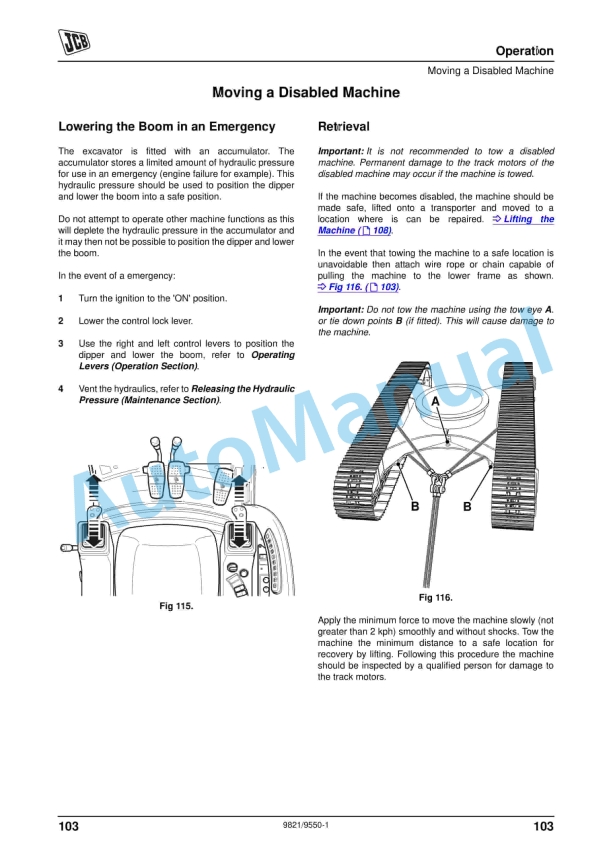
- 177. Moving a Disabled Machine …………………………………………………………….103
- 178. Lowering the Boom in an Emergency …………………………………………..103
- 179. Retrieval …………………………………………………………………………………..103
- 180. Limp Mode ………………………………………………………………………………..104
- 181. Mechanical Engine RPM Override ……………………………………………….104
- 182. Transporting the Machine ………………………………………………………………..105
- 183. Lifting the Machine …………………………………………………………………………108
- 184. Storage of the Machine ………………………………………………………………….. 110
- 185. Introduction ………………………………………………………………………………. 110
- 186. Storage Area ……………………………………………………………………………. 110
- 187. Prepare the Machine for Storage ………………………………………………… 110
- 188. Put the Machine into Storage ……………………………………………………… 110
- 189. During Storage …………………………………………………………………………. 110
- 190. Take the Machine Out of Storage ………………………………………………… 111
- 191. Anti-Vandalism Guards (option) ……………………………………………………….. 112
- 192. Unpacking the Guards ……………………………………………………………….. 112
- 193. Fitting the Guards ……………………………………………………………………… 112
- 194. Guard 7 (7), Front top panel – position A ……………………………………. 112
- 195. Guard 6 (3), Front bottom panel – position B ………………………………. 112
- 196. Guard 1 (4), Door front panel – position C …………………………………… 112
- 197. Guard 5 (1), Door rear panel – position D …………………………………… 112
- 198. Guard 2 (5) and 3 (6) (Hinged), Boom side panels – position E and F …..
- 199. 112
- 200. Guard 4 (2), Rear window panel – position G ………………………………. 113
- 201. Removing the Guards ……………………………………………………………….. 113
- 202. Storing the Guards ……………………………………………………………………. 113
- 203. Guards ………………………………………………………………………………….. 113
- 204. Older guards ………………………………………………………………………….. 113
- 205. Routine Maintenance
- 206. Service Requirements ……………………………………………………………………. 115
- 207. Introduction ………………………………………………………………………………. 115
- 208. Owner-Operator Support ……………………………………………………………. 115
- 209. Service-Maintenance Agreements ………………………………………………. 115
- 210. Fit for Purpose Tests for Lifting Equipment ……………………………………. 116
- 211. Obtaining Replacement Parts ……………………………………………………… 116
- 212. Health and Safety ………………………………………………………………………….. 117
- 213. Lubricants ………………………………………………………………………………… 117
- 214. Introduction ……………………………………………………………………………. 117
- 215. Hygiene …………………………………………………………………………………. 117
- 216. Storage …………………………………………………………………………………. 117
- 217. Waste Disposal ………………………………………………………………………. 117
- 218. Handling ………………………………………………………………………………… 117
- 219. First Aid – Oil ………………………………………………………………………….. 118
- 220. Spillage …………………………………………………………………………………. 118
- 221. Fires ……………………………………………………………………………………… 118
- 222. Battery …………………………………………………………………………………….. 119
- 223. Warning Symbols …………………………………………………………………….120
- 224. First Aid – Electrolyte ………………………………………………………………..120
- 225. Service Schedules ………………………………………………………………………….121
- 226. Introduction ……………………………………………………………………………….121
- 227. How to Use the Service Schedules ………………………………………………121
- 228. Calendar Equivalents …………………………………………………………………121
- 229. Pre Start Cold Checks, Service Points and Fluid Levels ………………….122
- 230. Functional Test and Final Inspection …………………………………………….126
- 231. Service Intervals for Attachments …………………………………………………128
- 232. Periodic Replacement of Safety Related Components ……………………129
- 233. Fluids, Lubricants and Capacities ……………………………………………………..130
- 234. Specifications ……………………………………………………………………………130
- 235. Typical Lubrication Chart …………………………………………………………….131
- 236. Coolant Mixtures ……………………………………………………………………….132
- 237. Fuel …………………………………………………………………………………………133
- 238. Acceptable and Unacceptable Fuels ………………………………………….133
- 239. Cleanliness …………………………………………………………………………….135
- 240. Fuel Bulk Storage ……………………………………………………………………135
- 241. Fuel Analysis ………………………………………………………………………….135
- 242. Tools …………………………………………………………………………………………….136
- 243. Carrying Tools onto the Machine ………………………………………………….136
- 244. Location ……………………………………………………………………………………136
- 245. Prepare the Machine for Maintenance ………………………………………………137
- 246. Introduction ……………………………………………………………………………….137
- 247. How to Make the Machine Safe (Excavator Lowered) …………………….137
- 248. Cleaning the Machine ……………………………………………………………………..138
- 249. Introduction ……………………………………………………………………………….138
- 250. Detergents ……………………………………………………………………………..138
- 251. Pressure Washing and Steam Cleaning ……………………………………..138
- 252. Preparing the Machine for Cleaning ……………………………………………..138
- 253. Cleaning the Machine …………………………………………………………………139
- 254. Exterior ………………………………………………………………………………….139
- 255. Interior ……………………………………………………………………………………139
- 256. Cleaning the Tracks ……………………………………………………………………139
- 257. Cleaning the Radiator and Oil Cooler ……………………………………………139
- 258. Checking for Damage ……………………………………………………………………..140
- 259. Check the Machine Body and Structure ………………………………………..140
- 260. Check the Seat and Seat Belt ……………………………………………………..140
- 261. Check the Tyres ………………………………………………………………………..140
- 262. Check the Electrical Circuits ………………………………………………………..140
- 263. Checking the FOPS Structure ……………………………………………………..141
- 264. Introduction …………………………………………………………………………….141
- 265. Frame Mounted ………………………………………………………………………141
- 266. Cab Mounted ………………………………………………………………………….141
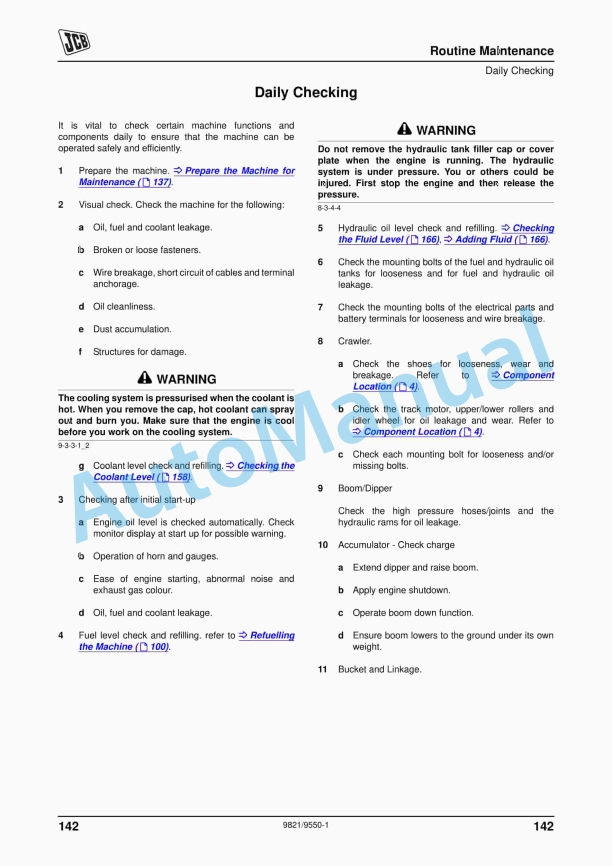
- 267. Daily Checking ……………………………………………………………………………….142
- 268. Greasing ……………………………………………………………………………………….144
- 269. Introduction ……………………………………………………………………………….144
- 270. Slew Ring Bearing ……………………………………………………………………..144
- 271. Slew Ring Teeth and Slew Pinion …………………………………………………144
- 272. Greasing Points …………………………………………………………………………145
- 273. Electrical System ……………………………………………………………………………147
- 274. Battery ……………………………………………………………………………………..147
- 275. Battery Isolator ………………………………………………………………………..147
- 276. Battery Disconnection-Connection ……………………………………………..148
- 277. Terminal Cleaning ……………………………………………………………………148
- 278. Checking the Electrolyte Level – Low Maintenance Batteries …………149
- 279. Breather Cleaning – Low Maintenance Batteries ………………………….150
- 280. Battery Inspection – Maintenance Free Batteries ………………………….150
- 281. Jump-Starting the Engine ……………………………………………………………151
- 282. Fuses – Cab ………………………………………………………………………………152
- 283. Fuses and Relays – Battery Compartment …………………………………….153
- 284. Bolt and Nut Torque Specifications ……………………………………………………154
- 285. JS500 ………………………………………………………………………………………154
- 286. Engine ………………………………………………………………………………………….157
- 287. Oil and Filter ……………………………………………………………….







There are no reviews yet.